
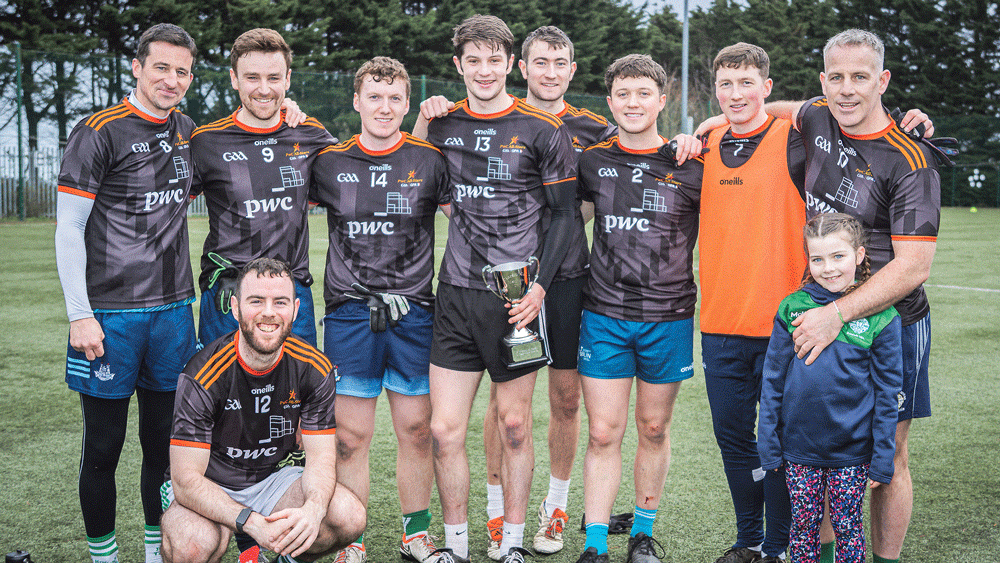
Annual Ciaran Carr 7s proves another success
THE Annual Ciaran Carr 7’s tournament was held in Round Towers Clondalkin last weekend in memory of former player Ciaran Carr who passed away during a training session in 2012 aged just 20 years old.
The tournament now sees his former teammates and those associated within the club honour and remember him.
Ciaran’s family have since set up the Ciaran Carr foundation which campaigns to prevent deaths from Sudden Adult Death Syndrome, also known as SADS. The foundation is now in its 13th year of existence.
His father Philip spoke at the annual game held in Round Towers.
“It’s more of a social gathering for the lads who are still playing. Most of those guys would now be in their mid 30s and we also try to get some of the younger lads involved.”
The event itself sees a combination of football and hurling played across all different age brackets and different abilities.
“It’s great, you get some of the lads playing who are in Senior, some of the guys who might be playing at Junior level and even those who might be playing in the GAA for Dads or something like that.”
Despite being an exhibition the game was heated with a real sense of competitiveness throughout.
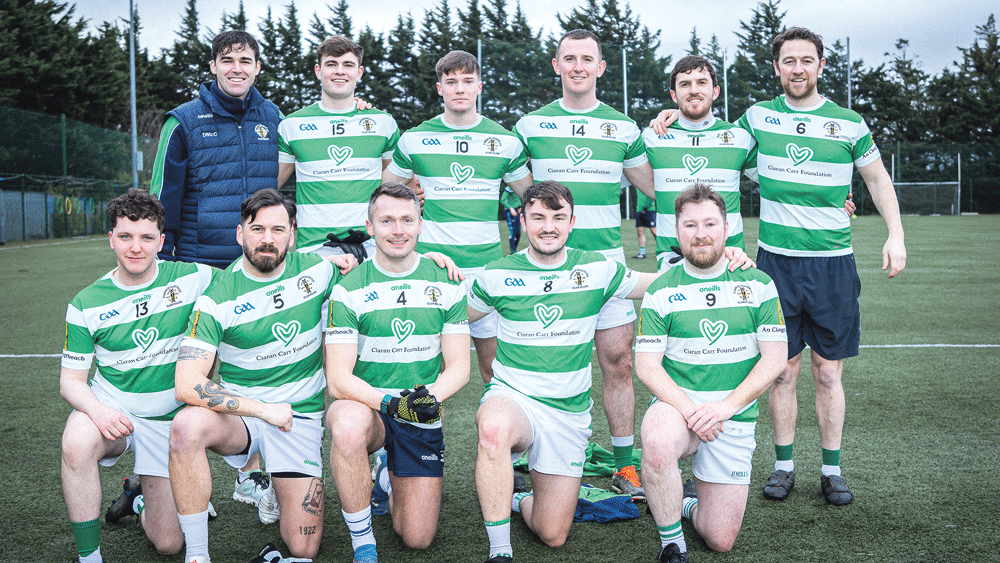
“It was very competitive and very enthusiastic anyway! At the end of the day nobody was hurt and everyone left in a good frame of mind, we went back to the club and had a presentation there.”
Philip also touched on the role of the Ciaran Carr foundation and what it aims to achieve.
“Our main objective is to provide people, not only in sporting clubs but in communities with Defibrillators and first aid training.”
The foundation has not only been limited to their local area of Clondalkin but has defibrillators put in place in various locations across the country including Skibbereen Co. Cork, Manorhamilton Co. Leitrim, Galway and even on the Hill of Tara.
“The Ciaran Carr foundation has donated those defibrillators, people have gotten in touch. Normally it comes after they have had an incident and they realise they should have one on site. If there’s nothing there and people don’t have training then that is the worst case scenario that anyone could find themselves in.
“If there is a defibrillator on site and you have someone who has experience or done a course then the survival rate skyrockets compared to someone standing, making a phone call and waiting for the emergency services to arrive.”
Carr also spoke about possible things that could be implemented in the future which would improve people’s knowledge on a far more broad scale.
“We actually had an initiative with local schools a few years ago where training and courses were part of the Gasice award for transition year students. It would be great if we could push it onto the actual curriculum for schools so that as part of the transition year for all students, this course must be completed. It would be perfect. It is something that we will probably look at a bit harder going forward.”
TAGS Sport

