
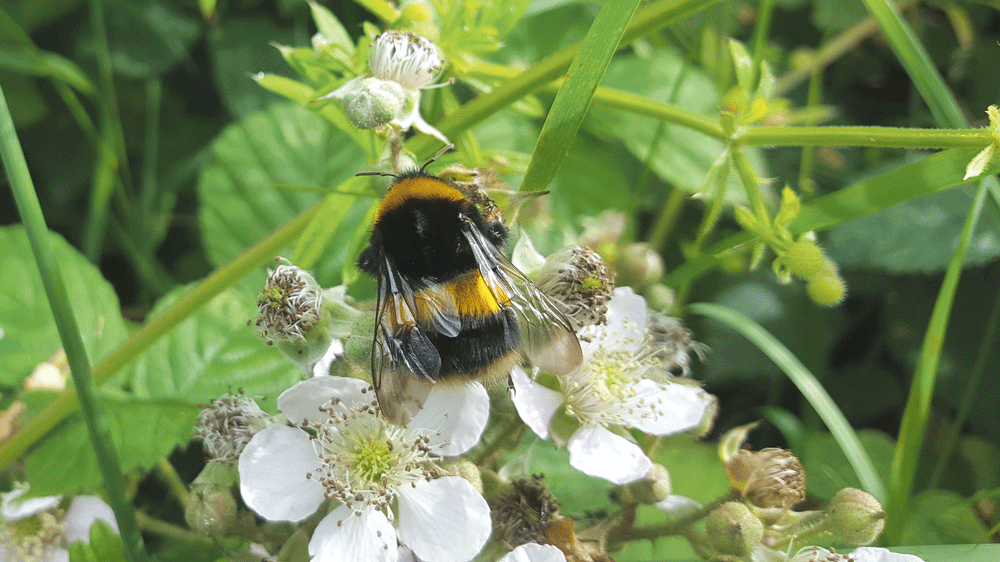
Late-flowering Blackberry can provide food for Buff-tailed bumblebees in early winter
Nature on our doorsteps: Bumblebees in wintertime
Rosaleen Dwyer is the County Heritage Officer at South Dublin County Council – every week she gives us an insight into the natural heritage around us and the beautiful biodiversity of the plants and creatures.
For colony insects like bumblebees, new queens mature and leave the nest or hive in late summer. Without the queens, the worker bumblebees eventually die away, while the new queens spend autumn searching out a suitable place to spend the winter.
They also need to build up their energy reserves before the cold weather arrives.
Once the cold weather arrives the queens become dormant. This allows them to survive the chill until springtime arrives.
What happens, however, if the cold weather does not arrive?
During the unusually mild winters that we have been experiencing in the last few years, it has been noticed that some bumblebee queens remain active for longer than normal.
Some queens have even been observed to set up a new hive and produce worker bees.
This can particularly happen when both daytime and night-time temperatures are above average for the season.
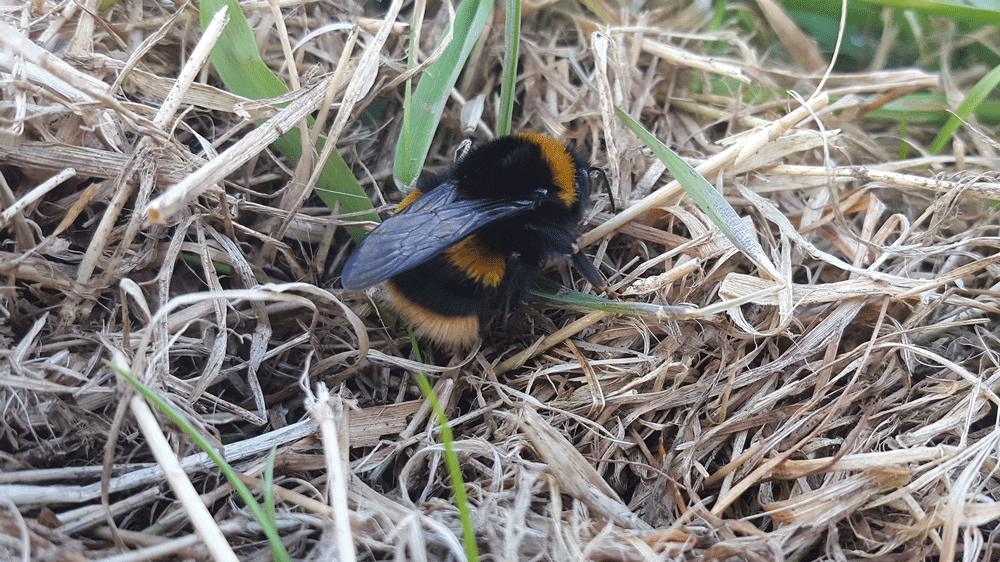
Queen Buff-tailed bumblebees can sometimes be seen in mild winter weather
This behaviour has been mostly observed by the queens of Buff-tailed bumblebees.
These appear to take advantage of warming weather patterns by continuing to form new colonies into winter.
Some wildflowers often send out late season flowers, and so it is not too unusual to see occasional Buttercups or Dandelions in bloom in early winter.
While these late bloomers will certainly attract winter-active bumblebees, the insects also appear to be taking advantage of the many winter-flowering plants and shrubs that we are now growing in our gardens and parks.
Another advantage for the bumblebees is that there are few other insects flying in winter.
This reduces the competition for food for the bumblebees, and some winter hives appear to do well, with busy workers coming and going.
Winter hives are very vulnerable, however. A sudden and prolonged drop to more normal winter temperatures can have dire consequences. The entire colony can be destroyed by the cold. If the queen also dies, there will be no new hive created for next year when the warmer days of springtime arrive.
Trying to adapt to changes in weather patterns and climate is truly a risky business for insects.
TAGS Life

