
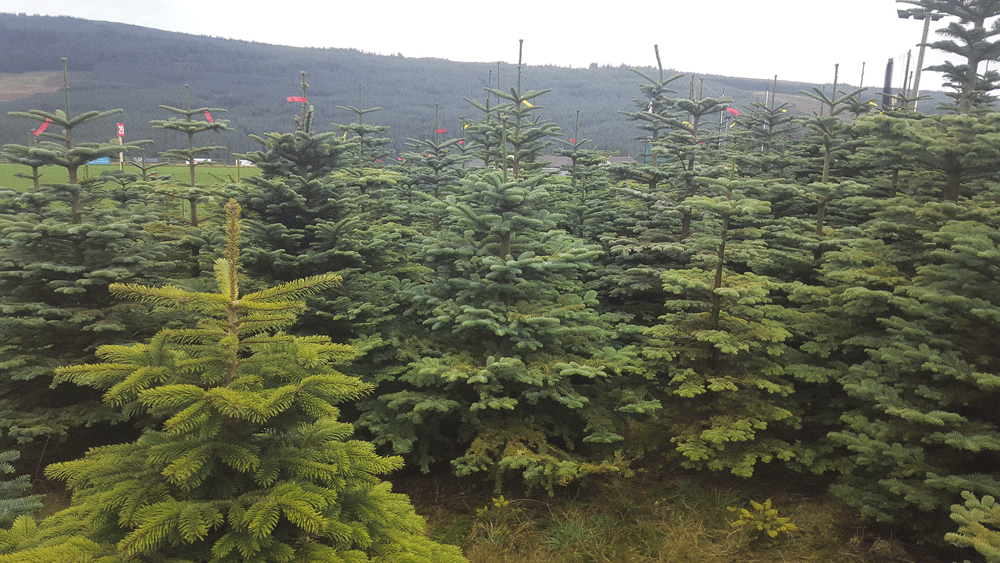
Young rapidly growing Christmas trees soak up high volumes of carbon dioxide
Nature on our doorsteps: Decisions, decisions …
Rosaleen Dwyer is the County Heritage Officer at South Dublin County Council – every week she gives us an insight into the natural heritage around us and the beautiful biodiversity of the plants and creatures.
Every year, the choice of whether to buy a real Christmas tree or an artificial tree raises a lot of different opinions.
Buying a real tree every year can be expensive.
Artificial trees can also be costly, but many buyers see this as a once-off expense or investment as the trees will be used again over many years.
For some people, only a real tree will do.
The buyers look forward to the scent of pine trees in the house which they strongly associate with happy childhood celebrations during Christmas.
Other people, however, find the scent to be too intense in an enclosed room, and particularly sensitive people might even experience allergic symptoms similar to summertime hay-fever.
Having to regularly sweep up the tree’s falling needles or leaves is an annoyance for some.
In recent years, however, the availability of new Christmas tree varieties that do not shed their leaves so easily has helped reduce this problem.
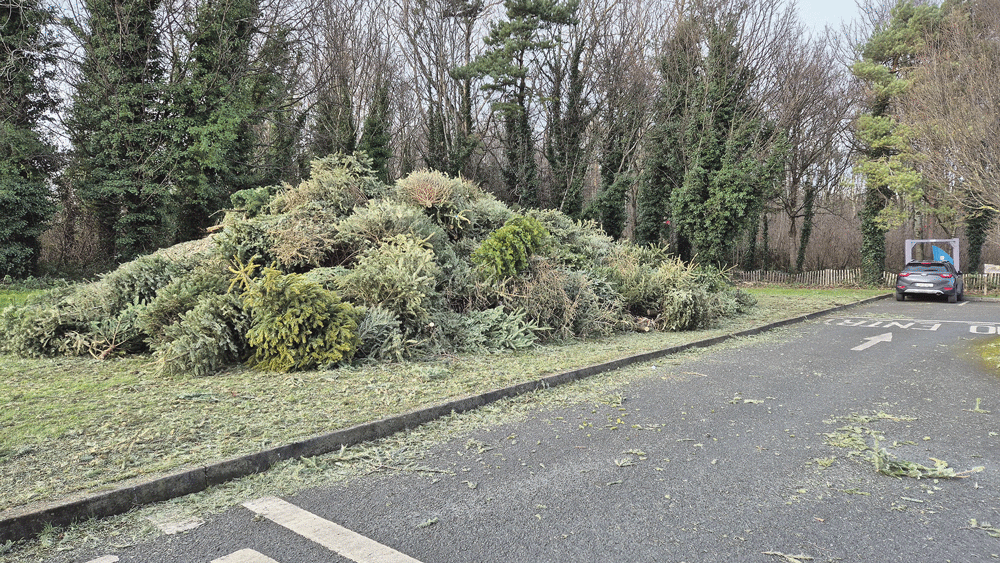
Thousands of Christmas trees are recycled by SDCC every year
Today, over 650,000 high quality trees are grown and harvested from Irish Christmas tree farms. Most of these are sold locally in Ireland, while a market for Irish trees in Britain and France has been increasing in the last few years.
The entire industry contributes over €25 million to the Irish economy, and the tree farms themselves also support local seasonal employment.
Unfortunately, artificial trees are mainly made from PVC plastic and are not easily recyclable.
Also, because they are transported long distances from abroad where they are made, their carbon footprint is quite high, unlike natural trees that are grown, sold locally, and then recycled.
Christmas trees grow rapidly in our climate, absorbing significant levels of carbon from the atmosphere which they convert into the food they need to grow. This helps reduce carbon volumes in the air.
The rows of trees in a tree farm also provide a temporary habitat for species like birds, insects, mammals, and fungi.
While both options have advantages and disadvantage, at the end of the day the choice of a natural or an artificial tree will be a personal one.
TAGS Life

