
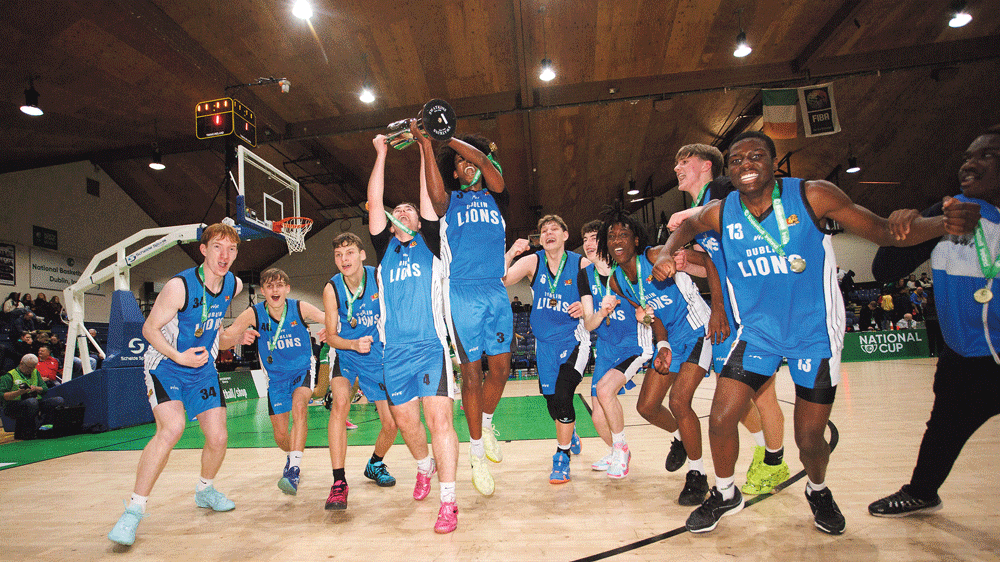
Dublin Lions celebrate their Billy Coffey U18 National Cup win earlier this month
Photo by ©INPHO/Tom Maher
Basketball Club has a huge €115,000 bill for renting halls
DUBLIN Lions are recent winners of the U18 men’s Billy Coffey National Cup and possess some of the most talented young basketball players in the country.
Their development and the growth of the club however are being hampered by large operational costs with rent for halls being around €115,000 per year, the total figure being closer to €140,000 with all costs included.
The club currently operates in three locations across Clondalkin and Palmerstown including Colaiste Bride, Collinstown and Palmerstown College and are extremely thankful for the support that they have received from these local institutions as well as the wider community as a whole.
Yet despite all the support, the question of funding unfortunately still remains for the club with needs for finances having a major impact on development of players within the club and for clubs across the country as a whole.
About 70% of revenue generated for the club comes in from parents paying subscription/membership fees for kids while 30% has to be generated from within using fundraising events.
Rob White spoke on the difficulties of juggling being an actual coach and also trying to fund raise for the teams.
“If Basketball Ireland could find a way to give clubs a base then we could focus on development. Half of my time is focused on raising money and the other half is coaching. If we could have more time to focus on coaching than fundraising then we’d all be a lot better than where we are.”
White spoke on how in order for Basketball in Ireland to improve this needs to change.
“If you can only train twice a week as a basketball team you are only going to be a certain level, if you can double that and train four times a week like most European countries we’d have a much higher chance of doing well.”
“If you go to Spain they are training six days a week and two games. In Ireland the max is we train twice a week and then have a game. In European standards we are never going to overtake the European giants unless we can match their training.”
White acknowledged the difficulty of solving this problem.
“I’m not sure what the best way to approach it would be. I think the biggest thing would be if there was a way to subsidise the training or halls which is very difficult to do.
‘If there was a way to build halls so that we aren’t sharing facilities with other sports as well. It would make a huge difference in my opinion.”
TAGS Sport

