
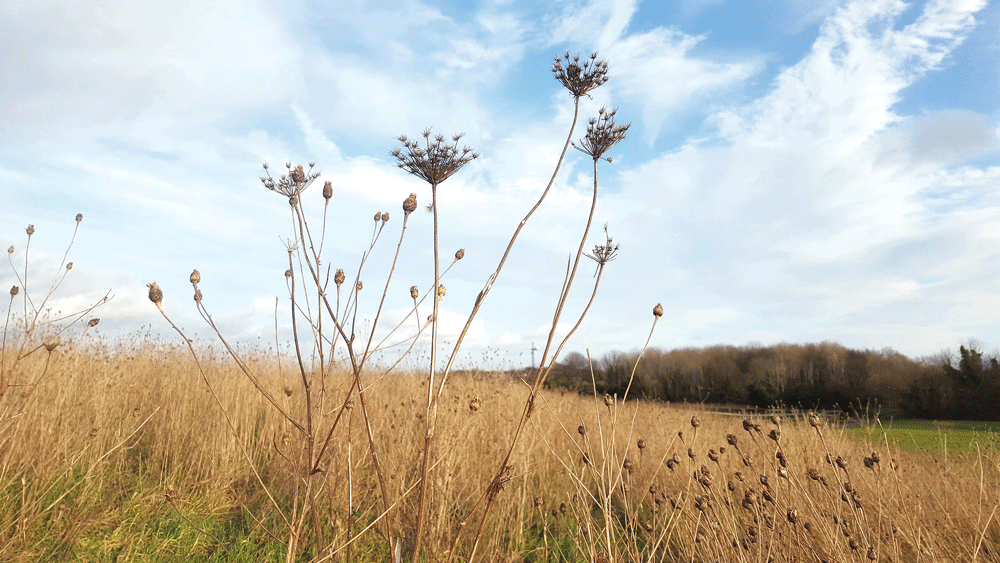
The hollow stems of Hogweed offer hiding spaces for insects
Nature on our doorsteps: A winter oasis
Rosaleen Dwyer is the County Heritage Officer at South Dublin County Council – every week she gives us an insight into the natural heritage around us and the beautiful biodiversity of the plants and creatures.
Across South Dublin County Council’s parks, many areas of meadows and open space are left uncut over winter.
This feature is an important element of SDCC’s meadow management programme which has been in operation now for a number of years.
As autumn turns to winter, insects look for places in which to survive the winter chill.
Adults and larvae will burrow deep into grassy tussocks, or will hide under deep layers of decaying plants and leaves to avoid the cold.
In mild weather, some insects, including overwintering caterpillars, will continue to feed.
The caterpillars and larvae of moths and other insects spin cocoons which fall to the ground amongst the dying plants.
Protected under the layers, the new adults slowly develop over winter, ready to emerge in springtime.
Bumble bee queens will also search out spaces in dense grass tussocks or in old mouse holes.
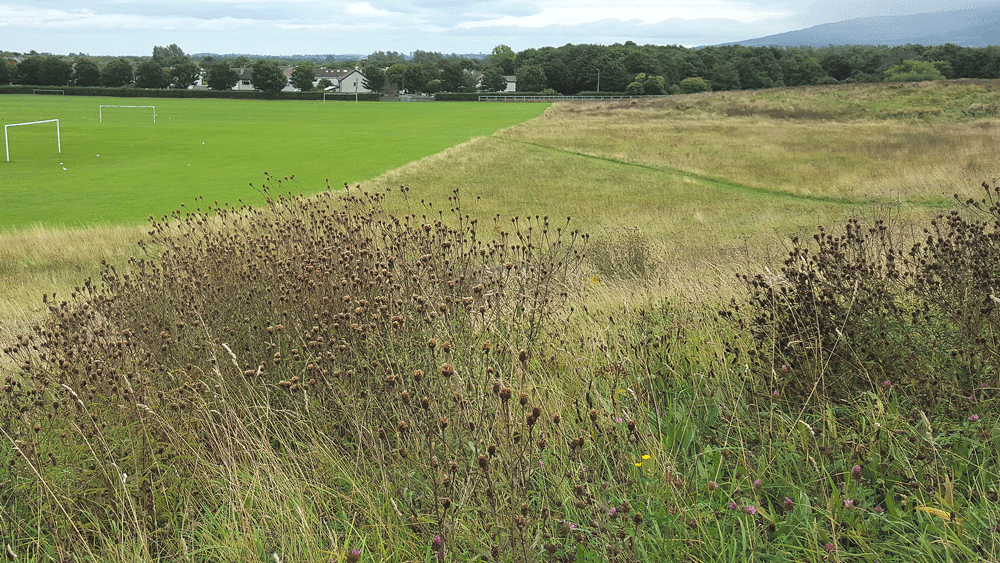
Winter meadows are a vital source of food and shelter for insects and birds.
Here they will hibernate for the winter, coming out occasionally in milder weather to feed on any available early nectar or pollen.
The hollow stems of dead plants are also good places to survive.
Sturdy grass stems and the tube-like stalks of plants like Hogweed offer spaces for insects, including adult Ladybirds, to safely overwinter.
Leaving some seeding flowerheads also benefits the birds.
Flocks of finches are regularly seen swooping down to feed on the seed heads of plants like Knapweed, Common Hogweed, Dock, and Oil-seed Rape.
Birds will also search for overwintering insects amongst the seed heads or in the broken stems.
Allowing some areas of ‘winter meadows’ to remain uncut therefore offers a significant oasis for insects and birds.
Without some uncut areas, the diversity of next summer’s insect populations would be significantly reduced, and this would also impact on birds and bats that feed over the meadows.
Brown winter meadows can be interesting for the human park users too, offering a nice contrast to the more regularly cut green spaces.
The shapes of many of the brown seed heads can also be quite elegant and beautiful.

