
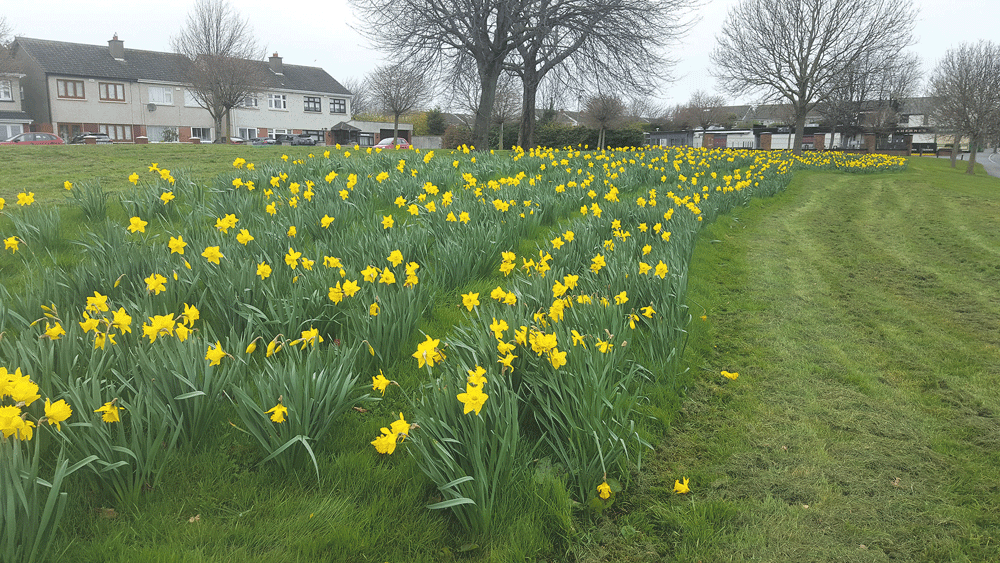
A host of dancing Daffodils
Nature on our doorsteps: Dancing Daffodils
Rosaleen Dwyer is the County Heritage Officer at South Dublin County Council – every week she gives us an insight into the natural heritage around us and the beautiful biodiversity of the plants and creatures.
The yellow Daffodil is a very characteristic plant of springtime gardens and parks, blooming as early as late January.
The main burst of colour, however, is normally between the end of February and the middle of April.
Experts are unsure if Daffodils are native to Ireland.
While clumps are sometimes found growing wild in the countryside, some suggest that Daffodils were in fact introduced to Ireland at some point in the past.
Over time they then ‘escaped’ from their garden homes into the countryside to become naturalised in the wild.
Originally, Daffodils were plants of deciduous woodland, blooming early in spring before the woodland floor is shaded by new leaf growth on the trees above.
The wild form is smaller and simpler than the cultivated Daffodils of today, with drooping heads comprising of yellow petals and darker yellow trumpets.
After flowering, the work of the Daffodil is not yet finished. Its long green leaves continue to make food for several more weeks.
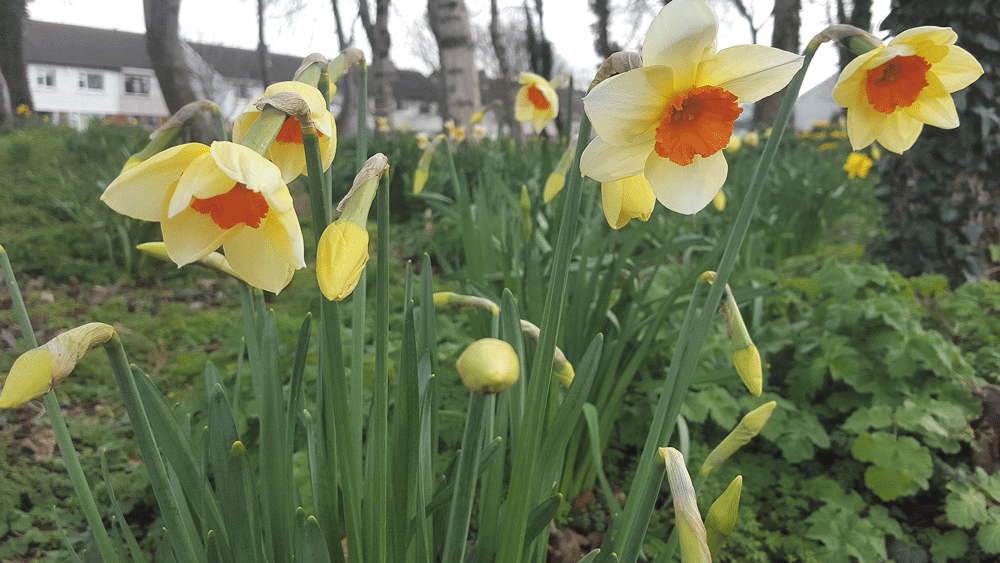
There are many different colour combinations of Daffodils available
This food is returned to the underground bulbs where it builds up the store of energy that the plant will need for the next spring’s growth and flowering.
It could be expected that Daffodil’s fleshy green leaves might attract grazing animals like deer or rabbits.
Daffodil leaves, however, contain a strong chemical compound that can be poisonous for grazing animals.
This alkaloid compound also occurs in the plant’s underground bulbs, where it helps to protect the plant’s food store from burrowing insect larvae. The alkaloid can also be harmful for humans if eaten.
Many of today’s cultivated Daffodil varieties have been highly bred to produce different colour combinations and multi-petalled flowers.
This enormous variety comes at a cost to the plants, however, and many varieties do not produce pollen or nectar.
While insects might still come to investigate, they receive little or no reward from these varieties, and they waste crucial energy early in the season when few other flowers are open.
In Irish, Daffodils are called Lus an Chromchinn, which translates as ‘plant with the drooping head’.
TAGS Life

