
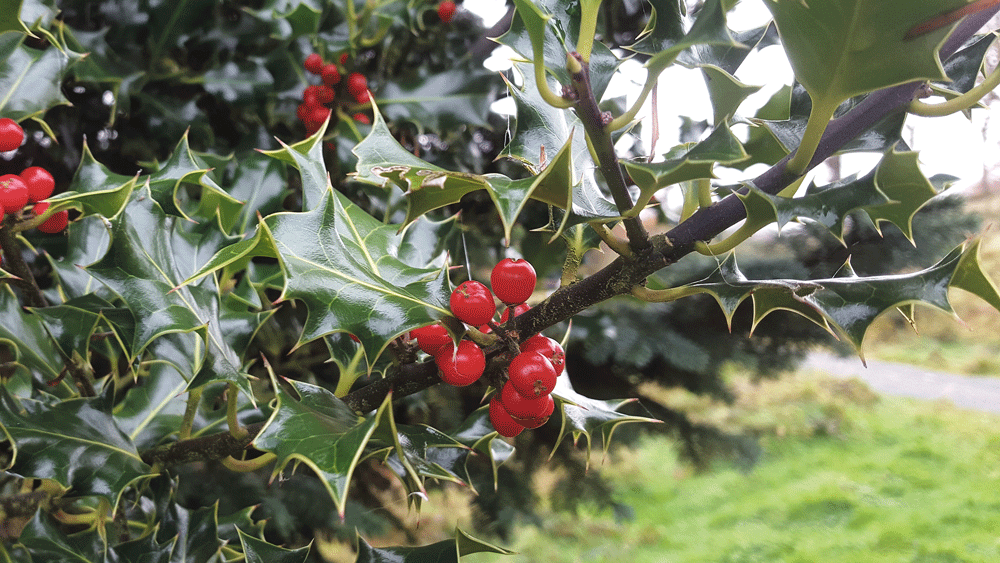
Holly's familiar red berries develop only from the flowers of the female tree.
Nature on our doorsteps: Deck the halls with boughs of Holly …
Rosaleen Dwyer is the County Heritage Officer at South Dublin County Council – every week she gives us an insight into the natural heritage around us and the beautiful biodiversity of the plants and creatures.
Holly is one of our few native evergreen species, and it is for this reason that Holly holds a deep association with mid-winter.
Its combination of glossy green leaves and bright red berries makes it ideal as a decoration in our homes during the celebrations at Christmas time.
Some Holly bushes, however, never produce the recognisable red berries.
This is because Holly trees produce either female or male flowers, and only the trees with female flowers produce berries.
Both the female and the male trees produce small clumps of flowers along their branches in early springtime.
From a distance, these small female and male flowers look very similar, having four pink-tinged white petals.
A closer look shows that the male flowers have four small stalk-like structures called stamens which carry the pollen sacs at their tips.
These sacs, or anthers, produce the pollen needed for fertilisation of the female flower.
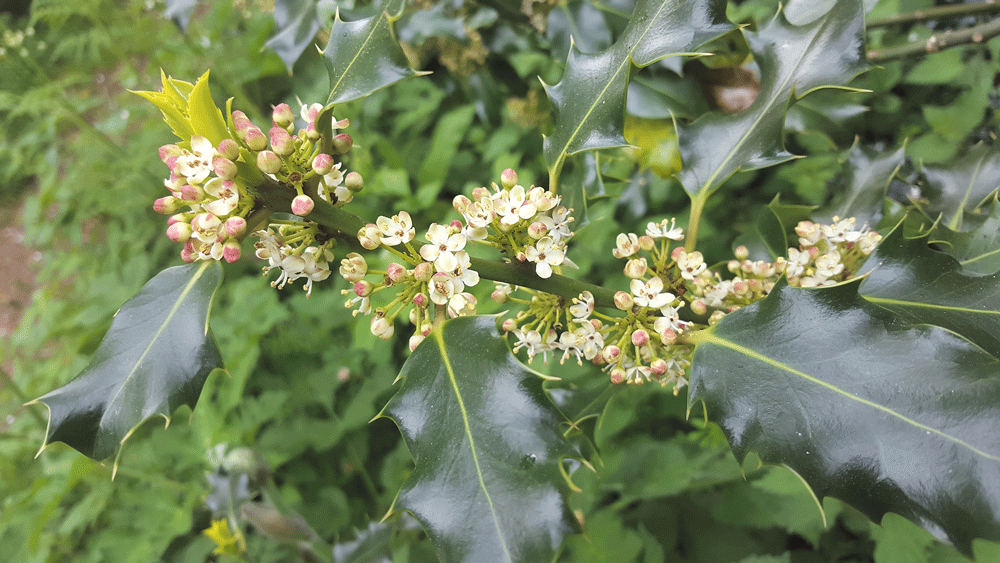
The flowers of the male Holly tree produce pollen, not berries.
The female flower is identified by a little oval, green, berry-shaped ovary in the centre of the four petals. This ovary develops into the berry after it is fertilised by pollen from the flowers on a nearby male Holly tree.
Both female and male flowers produce nectar. This attracts pollinating bees and flies which transfer the pollen from the flowers on the male trees to the flowers on the female trees where the berries will develop.
Holly also attracts the dainty female Holly Blue Butterfly in springtime.
She lays her eggs on the flowers and on the developing green berries. On hatching, the caterpillars feed on the flowers, on any developing berries, and on the soft undersides of surrounding new Holly leaves.
Plenty of berries escape the caterpillars however, and these go on to produce clumps of red berries which the birds to eat in wintertime. These are an important winter source of food for Irish Thrushes, Blackbirds, Starlings, and Wood Pigeon.
The berries are also welcomed by birds like Fieldfares and Redwings that migrate temporarily from Scandinavia whenever winters are harsh across northern Europe.
TAGS Life

