
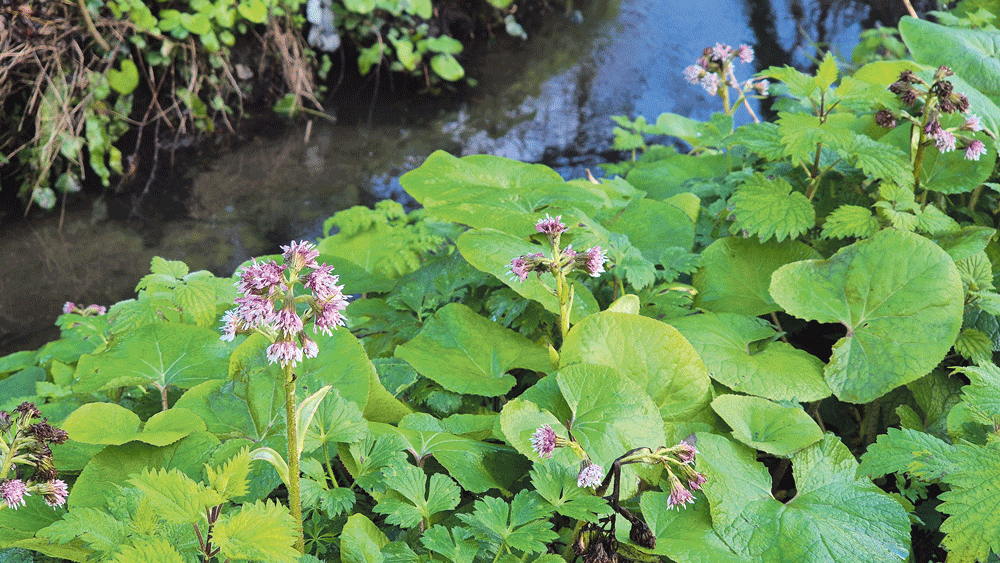
WInter Heliotrope can carpet shady riverbanks, hedgerows, and roadsides
Nature on our doorsteps: Winter Heliotrope
Rosaleen Dwyer is the County Heritage Officer at South Dublin County Council – every week she gives us an insight into the natural heritage around us and the beautiful biodiversity of the plants and creatures.
One of the earliest plants to flower along woodland edges, shady riverbanks and roadsides is the Winter Heliotrope.
In mild winters, this plant can start flowering as early as November, and it can continue to bloom well into February.
Winter Heliotrope’s sturdy rounded kidney-shaped leaves are low-growing and can grow to 20cm wide.
Its small pink and white flowers grow in little tufts towards the top of stems that can reach to 25cm tall.
While the plant’s individual little flowers are perhaps not very spectacular, their intense vanilla-scented fragrance certainly is.
This scent can hang in the air on still winter days, attracting the attention of any pollinating insects that may be venturing out in mild weather.
Winter Heliotrope is not a native Irish species.
It originates from the Mediterranean region, and was introduced to Ireland in the early 1800s.
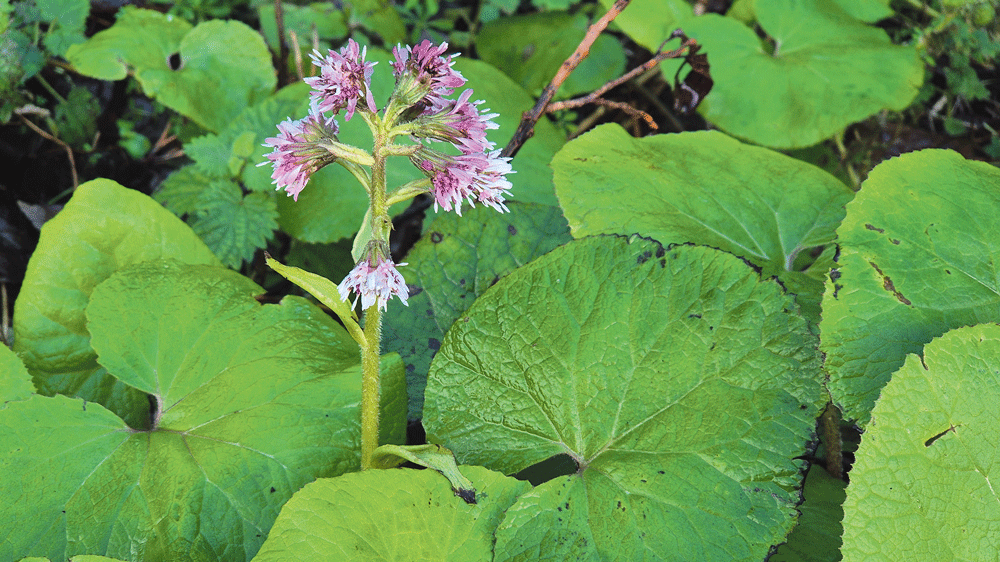
Winter Heliotrope’s pinky white flowers are vanilla scented
Today, it is naturalised and widespread in Ireland.
Because it flowers so early in springtime, it is thought that it was initially introduced to help beekeepers manage their hives over winter.
When it flowers in mild winters, the boost of nectar and pollen can help bee hives survive until native wildflowers came into bloom later in springtime,
The disadvantage of Winter Heliotrope, however, is that the plant can form extensive carpets of densely packed leaves wherever it takes a hold.
Its rapid growth helps the plant to spread very quickly, particularly in shady damp places such as along rivers and hedgerows.
The plant can often dominate these locations, to the exclusion of other native wild plants. For this reason, Winter Heliotrope is referred to as being an invasive plant.
In its own native range in the Mediterranean, there are likely to be grazing insects, animals, or plant diseases that might help manage it.
Here in Ireland, however, it has no natural predators, and because its roots can grow rapidly there is nothing to prevent it from spreading.
Gardeners, however, have noted that if they constantly mow Winter Heliotrope in their gardens, the plant is weakened and it may eventually die back.
TAGS Life

