
This was created in line with the development standard of Dublin City Development plan
Development will have names from Irish Revolutionary era
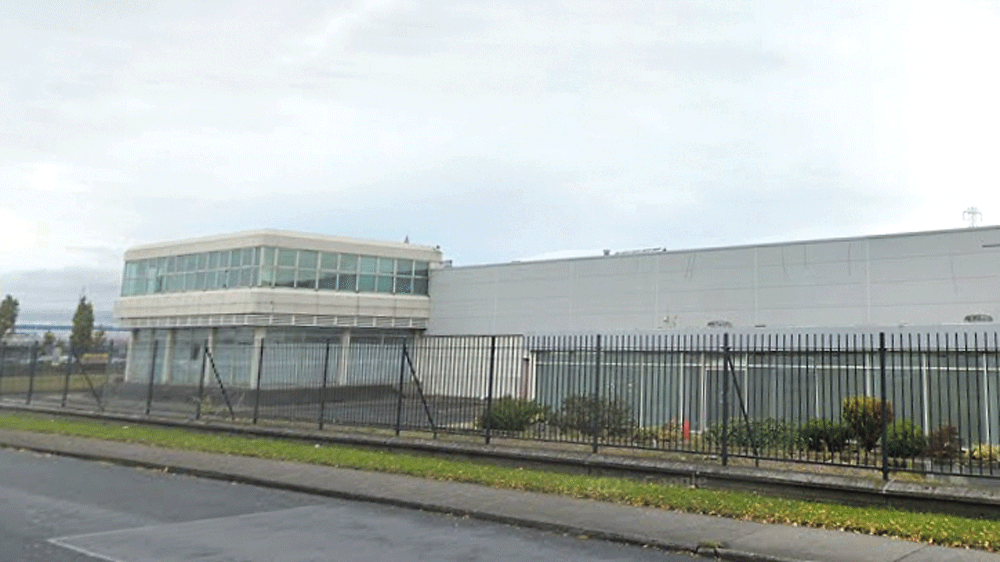
A new development at the Old Nissan site on the Long Mile Road is set to have 13 residential blocks with bilingual names referencing local figures from the Irish Revolutionary Era.
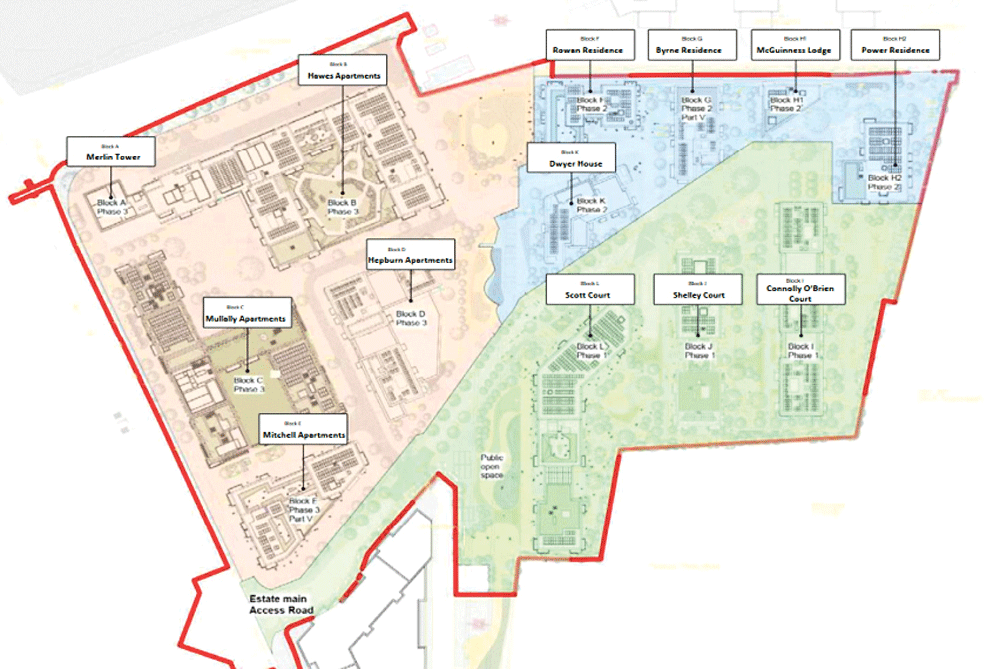
The Landsowne Quarter development situated on the former Nissan site at the junction of Walkinstown Avenue and Naas Road is expected to have its 13 residential blocks named in tribute of figures involved in the 1916 Rising, War of Independence and the Spanish Civil War.
Mernin Tower (Túr Ní Mhearnáin), McGuinness Lodge (Lóiste Mhic Aonghusa) and Connolly O’Brien Court (Cúirt Ní Chonghaile Uí Bhriain) are among the names of the blocks in the new development.
The names were created following a research process undertaken by the genealogy and research company Eneclann and ongoing preplanning compliance submission discussions with the Heritage Officer.
Mernin Tower refers to Irish Intelligence agent Elizabeth ‘Lily’ Mernin, also known as the ‘Little Gentleman.’
McGuinness Lodge is named in reference to Joseph McGuinness, an Irish revolutionary who participated in the ambush at the Halfway House, Drimnagh.
Connolly O’Brien Court will pay homage to Nora Connolly O’Brien, a labour activist and revolutionary organiser, and the daughter of James Connolly.
Other names of blocks include Dwyer House (Teach Uí Dhuibhir), Byrne Residence (Áras Uí Bhroin), Hawes Apartments (Árasáin Hawes), Mullaly Apartments (Árasáin Uí Mhaolalaidh), Mitchell Apartments (Árasáin Mistéil), Rowan Residence (Árasán Uí Ruáin), Power Residence (Áras de Paor), Shelley Court (Cúirt Uí Shealbhaigh), Scott Court (Cúirt Scott) and Hepburn Apartments (Árasáin Hepburn), all referring to local revolutionary era figures.
This was created in line with the development standard of Dublin City Development plan
Four new access routes and two new public open spaces will also be included as part of the development.
Esker Road, Berneval Avenue, Grand Canal Way and Camac Way, as well as Portlester Square and Esker Park were all named after geological features, industrial heritage, natural features and a prominent Anglo-Norman historical family.
The naming strategy was created in line with the development standard of the Dublin City Development Plan 2016-2022, as planning permission was granted in 2021 following an application by O’Flynn Construction Co. Unlimited Company.
Dublin City Council recommended that the developer install a heritage sign in a prominent public space that explains the origins and significance of the chosen place and block names.
The planning authority will approve the naming of residential developments in order to avoid confusion with similar names in other locations.
Funded by the Local Democracy Reporting Scheme.

