
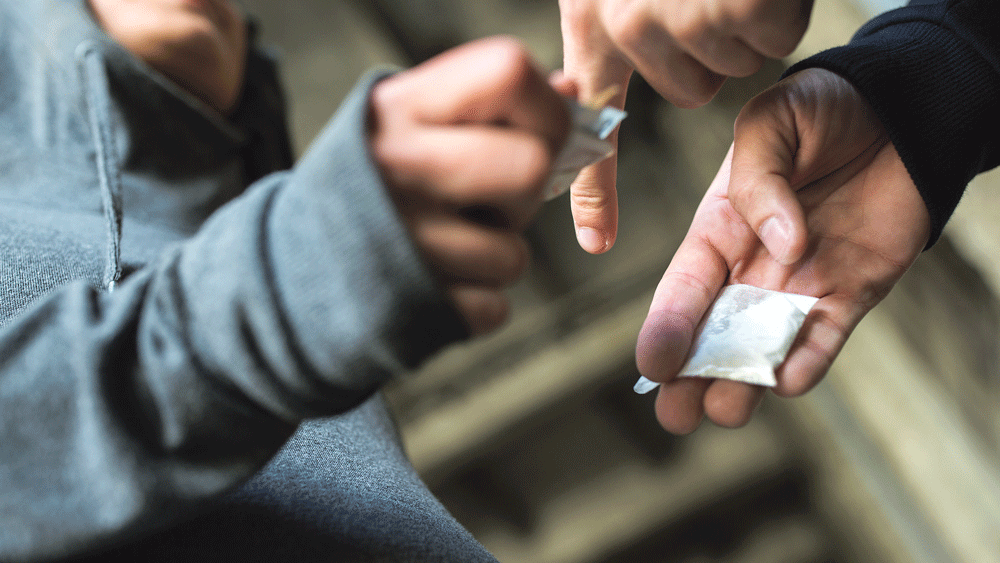
Drug dealers have become very elaborate
Drug dealers take over homes as way to pay back debt
Drug dealers in south Dublin take over homes belonging to drug users or their family members as a means to claim back drug debts.
Drug related intimidation can take many forms for drug users, or for their families who are either caught up in the intimidation or forced to take on the drug debt themselves.
“Drug dealers have become very elaborate in their techniques to intimidate people to get money off them,” Grace Hill, coordinator for the Tallaght Drugs and Alcohol Taskforce (TDATF), said.
She noted that her organisation has seen a concerning increase in the levels of drug related intimidation across Tallaght and other parts of south Dublin over the past two years.
“We have seen some homes taken over as a result of drug debts, but also drug dealers might use your property as a place to wash drugs or deal drugs from,” she said.
“We’ve heard examples where there’s some intimidators who would have lenders on board and ready to remortgage your house, we’ve seen loans of up to €100,000 from credit unions, we’re aware of people who opt into prostitution, all as a means to pay drug debt.”
While TDATF have a good working relationship with An Garda Síochána and the dedicated inspector for intimidation, half the battle can be encouraging those subject to drug intimidation to come forward.
“We’ve always found that shame and blame have always been an issue where addiction is concerned,” Grace said.
“But that’s what dealers do, they will use any means and any tools necessary to make sure that you’re in fear for your life, or in fear for your child’s life, so that you’ll pay up or else you’ll pay in other ways.”
Cathy Murray is the manager of WASP (Whitechurch/Rathfarnham Addiction Support Programme), which for the last two years have run a dedicated outreach programme helping people across the county dealing with drug intimidation.
“The kind of people that are coming in, they’re all walks of life,” she told The Echo.
Their programme has a dedicated caseworker who works with individuals and families affected by drug intimidation, and Cathy reckons they’re supported upwards of 100 families over the two years.
“We’ve had cases of people selling their homes and cars being gifted over to drug dealers to pay off debts, and we’ve had people take their own lives over this, so it’s a big piece of work,” she said.
The project at WASP has been funded for the last two years by the Community Safety Fund, which redirects proceeds of crime seized by the Criminal Assets Bureau (CAB) and An Garda Siochana back into communities.
However Cathy said they were told recently by the Department of Justice that that funding would not be renewed into 2026, with “no room to appeal this”.
“We’re being told very clearly that oh, you knew you were only getting this funding for two years,” she said.
“But we’re after building on that, and the money is coming from CAB so what better way to spend the money back on the families who are suffering at the hands of the people you’re taking it from?”
She said while they are looking into replacement funding, they are facing the reality that they will have to wind down their case loads in February when the current funding runs out.
“It’s just this time of year now, grants won’t come out till the middle of the year, and so we’re kind of stuck.”
Cathy said it can take anywhere from four to five months of working with an individual or a family for them to truly open up and “fully trust us”.
“Once we get the person who’s in the addiction into a treatment, then we can start working with the family, and they feel safer then because their loved one isn’t going to get beaten up or whatever.”
The project also launched a book in September this year, called Love Is Not Enough, which compiles stories from the families they have helped over the past two years.
“Their stories are just so powerful,” she said.
“And you know a drug debt is a drug debt, it doesn’t matter whether it’s €500 or €55,000, it doesn’t make a difference.”

