
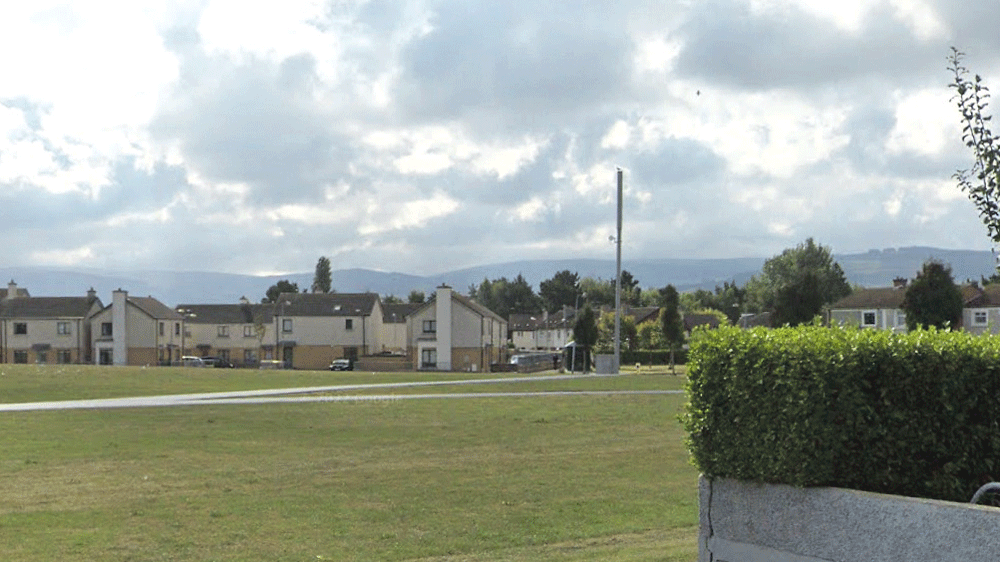
The mast in St Aongus Park
Mast licence extension refused in housing estate
South Dublin County Council have refused to grant a licence extension for a telecommunications mast located in the heart of a Tymon North housing estate.
Cignal Infrastructure Ltd had been granted a three-year licence to install a telecommunications mast and an associated ground-level cabinet in St Aongus Park in Tymon North in 2022.
This was despite major opposition from local residents at the time, who claimed there had been no engagement by Cignal Infrastructure before the 15-metre mast was installed.
The company applied for a three year extension to the licence for the mast in February 2025, which would have allowed them to keep the mast in the middle of the green area until 2028.
However, the council’s planning department asked Cignal Infrastructure to prove that no suitable alternative locations for the mast were available.
“While it is acknowledged that the structure is already in place, the role and relevance of this infrastructure within the broader telecommunications network may have evolved since its initial erection,” the planner’s report for the council noted.
It noted that since the licence had been granted in 2022, “a number of telecommunication structures have been supported across the county”, and that the applicant had “not demonstrated to the satisfaction of the Planning Authority why this structure cannot now be co-located elsewhere”, recommending that the licence extension be refused.
Cllr Jess Spear (PBP-S) welcomed the council’s decision, stating that she and residents in St Aongus are “delighted that the council is pushing for the company to locate the mast in a better spot”.
She called for a swift removal and relocation of the existing mast.
“I will be following up with the Council to make sure this company comply with the law and remove this unlicenced mast as soon as possible.
“There are far more suitable locations, in compliance with the planning guidelines, which they could consider instead.”
Funded by the Local Democracy Reporting Scheme

