
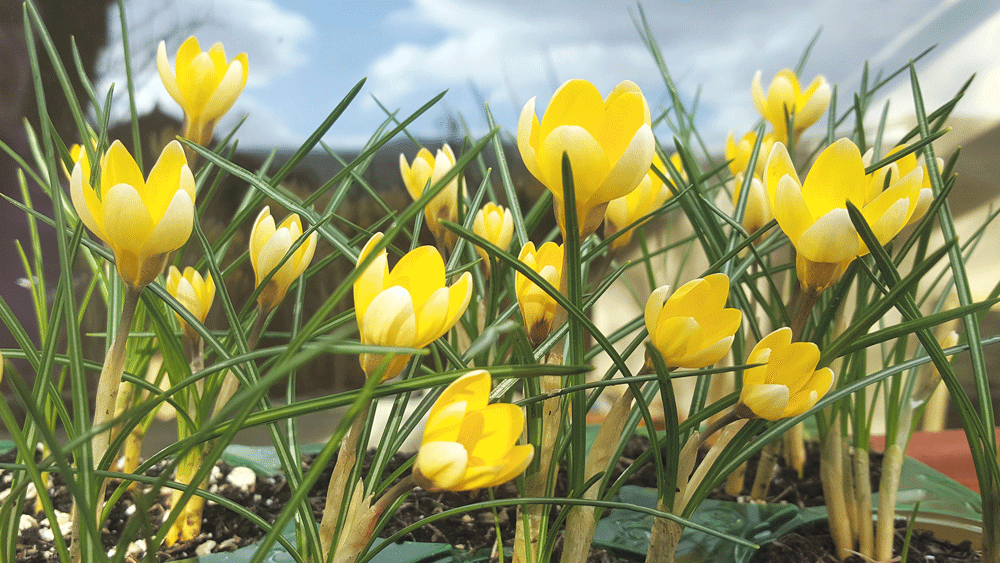
Crocuses are easy to grow in windoow boxes for springtime colour
Nature on our doorsteps: Crocuses, welcoming in the springtime
Rosaleen Dwyer is the County Heritage Officer at South Dublin County Council – every week she gives us an insight into the natural heritage around us and the beautiful biodiversity of the plants and creatures.
One of the iconic springtime flowers that welcomes spring into our gardens is the Crocus.
Although it is not a native plant, it is a much-loved flower that is widely planted in garden lawns, flower beds, under trees or hedges, and in pots and baskets.
Crocuses are short, low-growing plants that grow from an underground bulb-like structure known as a corm.
In late winter these corms begin to send up pointed green leaves which are followed quickly by flowering stems that produce white, orange, purple, or yellow flowers.
These flowers open in bright sunshine and close at night and in overcast weather conditions.
Crocuses are protected from frosty weather by a thin layer of waxy skin on their leaves and flowers.
This allows the plants to grow through shallow snow and frosty conditions in early spring.
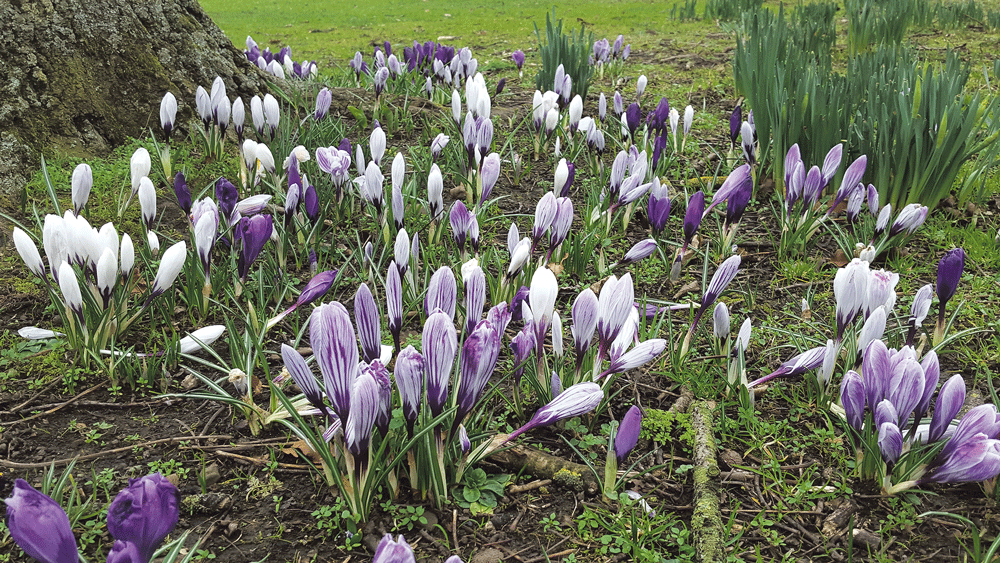
Crocuses are native to central Europe and North Africa
In the wild, crocuses are naturally found across the Mediterranean, extending from Spain and North Africa all the way to central Asia and western China.
Most of the Crocus species planted in gardens today originated from the wider area of the Balkans where they grow in woodlands and meadows from sea level to high into the mountains.
They were first brought to northern Europe by the Romans for use in cloth dyeing.
A second introduction occurred with returning crusaders in the Middle Ages, and a third with merchants during the 1600s.
Crocus species from Turkey have become the most valued as ornamental plants across the world.
While we may be more familiar with the Crocus that flowers in springtime, some species flower in autumn.
One of these autumn-blooming flowers is the Crocus that produces one of the world’s most expensive spices, saffron.
Saffron is collected from the very small central female parts of the autumn Crocus flower.
Approximately 60,000 cultivated flowers are needed to produce just 1 kilogram of saffron, which is why saffron costs so much to produce.
While spring Crocuses do not produce saffron, they are rich in sugary nectar, and this provides a very valuable source of food for early season bees and bumblebees.

