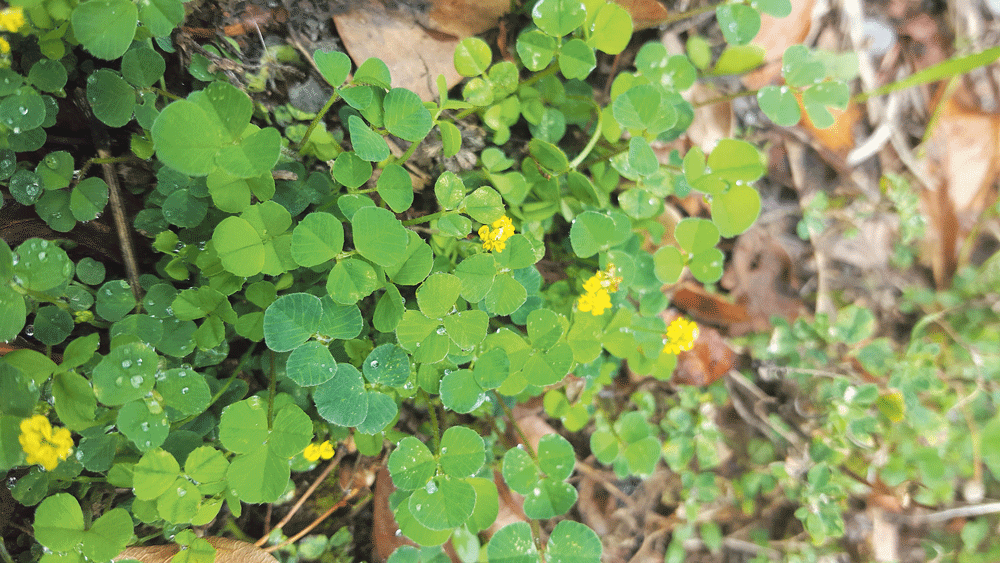
This yellow-flowering Clover, Lesser Trefoil, may be the origin of the 'Shamrock' plant.
Nature on our doorsteps: The Irish Shamrock
Rosaleen Dwyer is the County Heritage Officer at South Dublin County Council – every week she gives us an insight into the natural heritage around us and the beautiful biodiversity of the plants and creatures.
The three-leaved Shamrock is a well-recognised emblem for Ireland, and it is widely used all over the world to represent all things Irish.
It is most associated with 17th March, the day which was selected to commemorate the nation’s first patron saint, St. Patrick.
In terms of its botanical identity, the structure of the plant’s three little leaflets clearly identifies Shamrock as being a member of the Clover family.
The precise species of Clover it might be, however, has long been debated, and there is no single Clover species that has been confirmed as being ‘The Shamrock’ that is recognised all over the world today.
It has been suggested that ‘Shamrock’ could be one of three possible Clover species, either White Clover, Red Clover or Yellow Clover.
The most likely candidate would appear to be the Yellow Clover, which is also known as Lesser Trefoil.
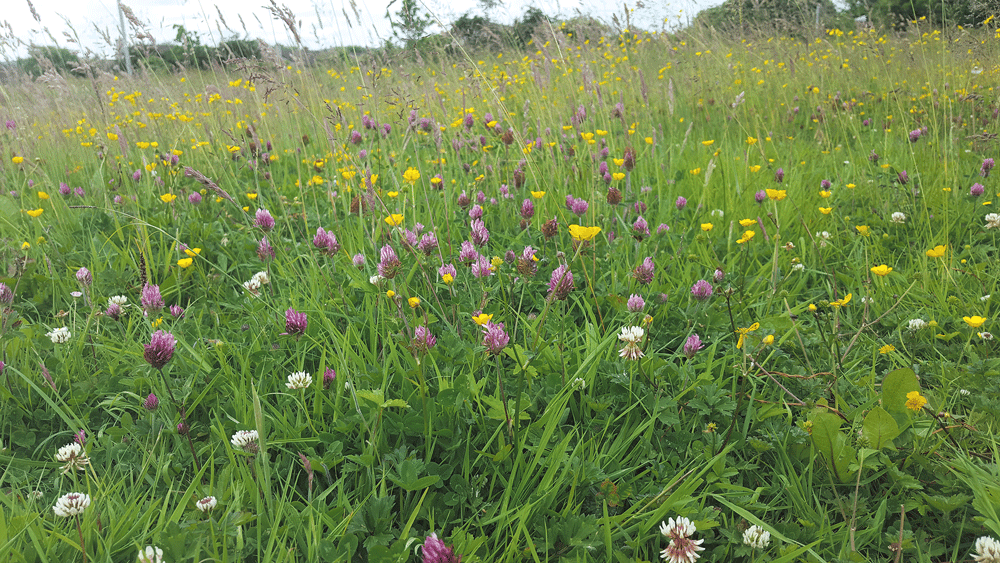
The Shamrock clover grows with other Clovers in flowering meadows and wild places
Yellow Clover has small green leaves without any lighter markings on the leaflets, and it tends to remain relatively small throughout its life cycle. Its small yellow flowers bloom later in May and June.
Legend suggests that Patrick used the structure of the clover plant to explain the mystery of the Christian Trinity to the pre-Christian tribes in Ireland.
The arrangement of the plant’s three little leaflets emerging from a central point on a single stem was a useful visual representation of the Christian god, with the three elements of the Father, Son, and Holy Spirit presenting as one entity.
The pre-Christian tribes, however, would not have had any difficulty understanding the concept of a trinity, as they already represented some of their gods as three-faced deities.
This is most often recognised in the presentation of the goddess Brigid, as being the Maiden, the Mother, and the Crone.
The name Shamrock is derived from the plant’s Irish name, ‘seamair óg’ which means ‘young clover’. This name best describes the growth stage of any Clover plant in March, at the time when the plants are most widely worn.
Shamrock’s precise botanical identity therefore perhaps remains another little trinity mystery.