
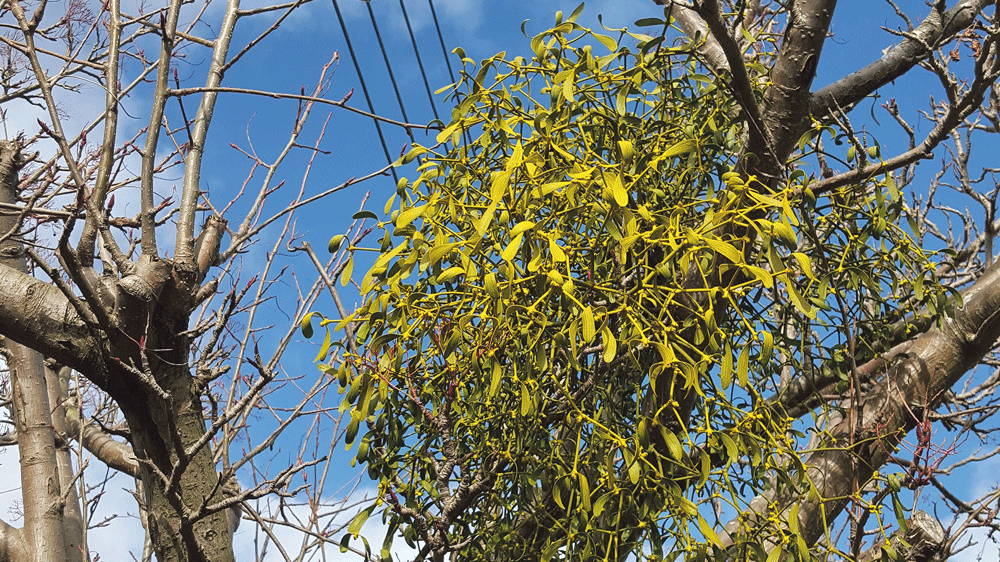
Ivy remains green in long cold winters, offering hope for new life in spring time
Nature on our doorsteps: The shortest day
Rosaleen Dwyer is the County Heritage Officer at South Dublin County Council – every week she gives us an insight into the natural heritage around us and the beautiful biodiversity of the plants and creatures.
In Celtic tradition, the New Year begins at the darkest point of the year.
That day marks the winter solstice, the shortest day of the year.
When compared with the longest day of the year in mid-summer, the day of the winter solstice has 9 hours and 30 minutes more hours of darkness.
Since mid-summer, the days have very gradually been getting shorter. Our prehistoric ancestors were keen observers of the world around them.
They carefully watched and listened to nature, and they noted the passing of the seasons by the life cycles of the plants, birds, and animals around them.
They particularly observed the sun.
They knew that as the seasons progressed through the year, the point on the horizon where the sun rises every morning appears to move in a regular direction towards the south.
They would have then observed that a time came in winter when this daily movement of sunrise along the horizon appeared to stop for a few days.
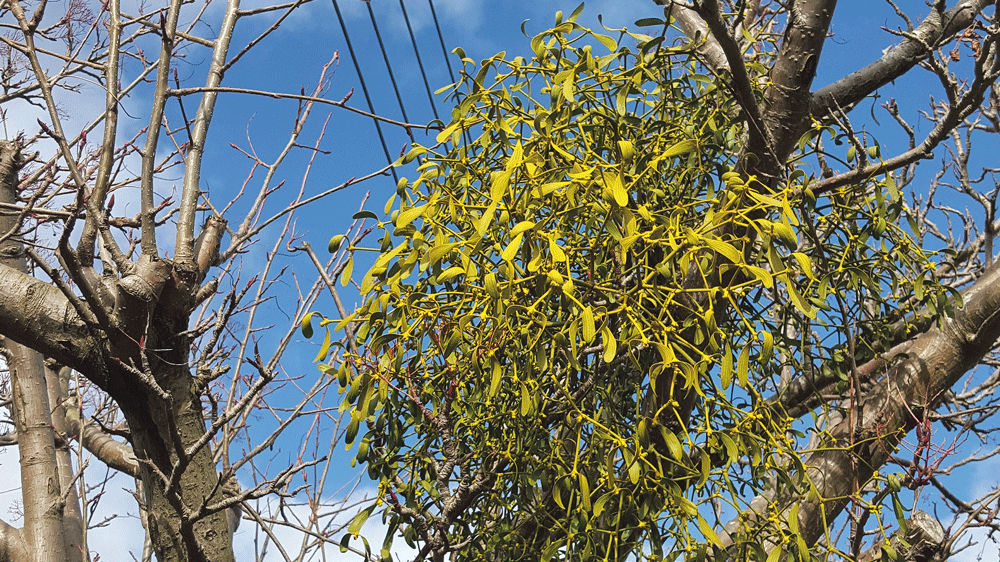
Mistletoe grows on bare branches, and was revered by ancient Celts as a symbol of fertility
This period is the winter solstice, and in Irish it is referred to as An Grian Stad, ‘the sun stop’.
In Celtic tradition this marks the New Year when the season changed from winter to spring.
Our prehistoric ancestors marked this time of hope and resilience with bonfires and celebrations.
They also constructed their sacred tombs in such a way as to ‘catch’ the rays of the rising sun during those days of the solstice.
After this ‘stop’, the location for sunrise begins to reverse its direction and move slowly once again back towards due east by mid-summer.
In 2025, mid-winter occurs on Sunday 21st December, and after this date the days will begin to lengthen once again.
This lengthening happens very, very slowly.
While it is hardly noticeable to us from day to day, the slow build up to springtime and new growth change is not missed by birds, animals and plants.
TAGS Life

