
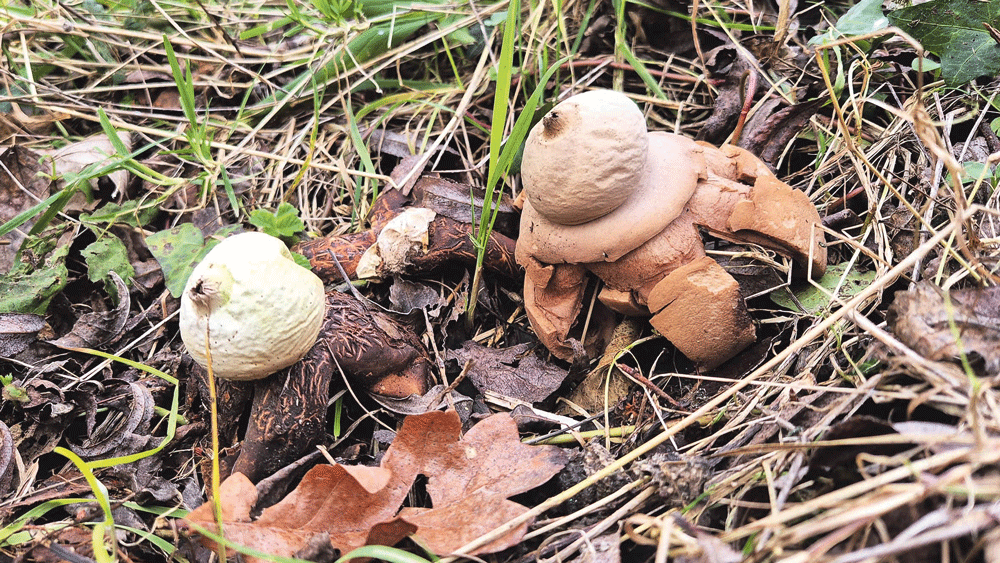
As the Earth Star matures, it pushes the spore sac high into the air
Nature on our doorsteps: The very unusual Earth Star fungus
Rosaleen Dwyer is the County Heritage Officer at South Dublin County Council – every week she gives us an insight into the natural heritage around us and the beautiful biodiversity of the plants and creatures.
The Earth Star is a type of fungus that can sometimes be seen growing in woods, gardens, and under trees.
It has recently been spotted growing along the banks of the River Dodder.
When the fruiting part of the fungus pops up overground it looks very much like a small onion or even a spring bulb, sitting on the surface of the soil.
This grows and swells over a few weeks and then, when it is ready, it begins to peel open from the top of the onion-shape.
As the layers of tissue peel back, the outer skin splits.
This results in the formation of a number of ‘arms’ that peel backwards into a star shape – hence its name, the Earth Star.
In the middle of the star-shaped formation, a spherical spore sac is revealed which sits on a little platform.
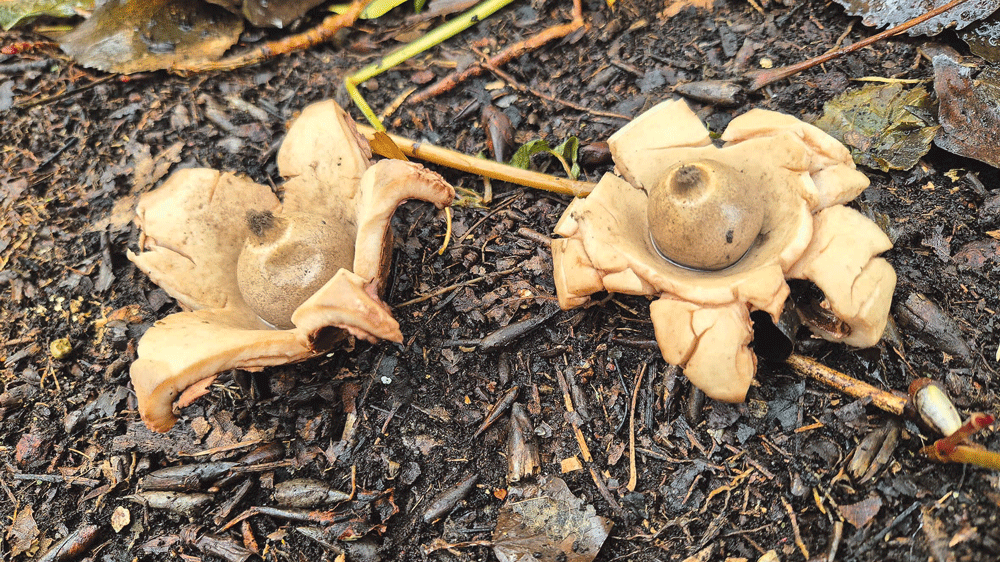
The Earth Star’s unfolding ‘arms’ form the shape of a star
This sac contains the many microscopic spores that the fungus will spread into the wind, releasing them through a small little hole, or pore, at the top.
This is not, however, the end of the process.
Because Earth Stars grow in leafy, organic-rich soils under trees, it helps if the spore sac is lifted as high as possible out of the leaf litter.
Therefore, as the arms of the star begin to flatten out they arch back down towards the soil, pushing the whole structure higher up into the air.
When the breeze moves gently across the top of the open pore, minute spores are sucked out and carried away in the breeze.
Drops of rain falling onto the soft sac can also cause small clouds of spores to puff out and disperse.
Depending on the species of Earth Star, it can take a month for the entire process to occur.
The spore sac and its platform can persist for just as long afterwards, and as it grows older, the Earth Star’s folded-back arms appear to go brown and wood-like.
Earth Star fungi can be seen from mid-summer right into wintertime, and some can even persist into springtime.
TAGS Life

