
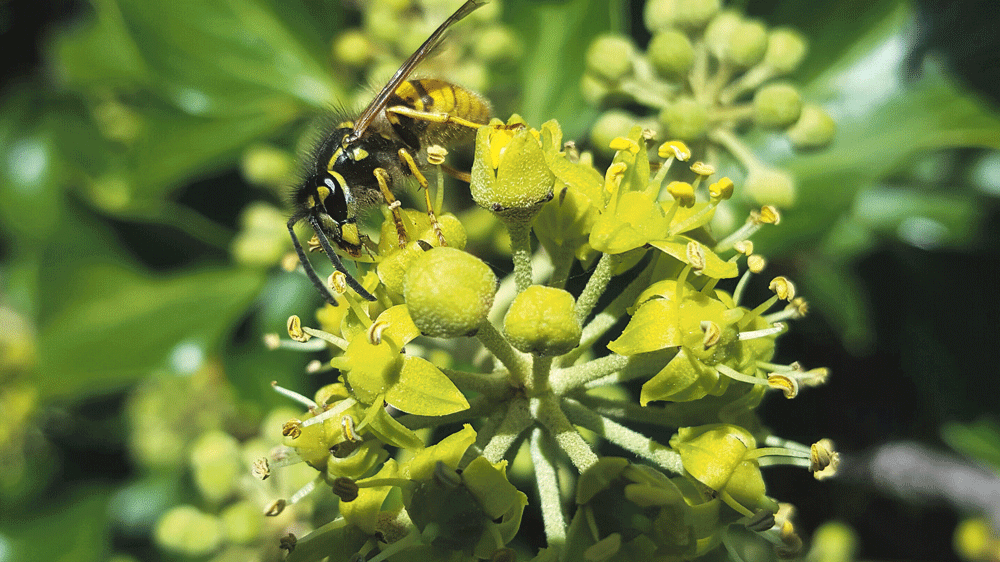
Wasps feed only on nectar and other sources of sugar
Nature on our doorsteps: Are wasps any benefit in nature?
Rosaleen Dwyer is the County Heritage Officer at South Dublin County Council – every week she gives us an insight into the natural heritage around us and the beautiful biodiversity of the plants and creatures.
Because they sting, yellow and black striped wasps are often seen as a challenge to our enjoyment of the outdoors, particularly in autumn when they seem to bother us most.
Like honeybees, yellow and black wasps are social insects.
They live together in a colony in a nest where they work together to raise their young.
Similar to honeybees, social wasps also provide a very vital role in the environment, but for different reasons.
Social wasps are predators, which makes them a very important part of the food chain.
They hunt greenfly, caterpillars, and other small insects and spiders, some of which can be pests in food crops.
The wasps, however, do not feed on its prey. Adult social wasps cannot digest solid food.
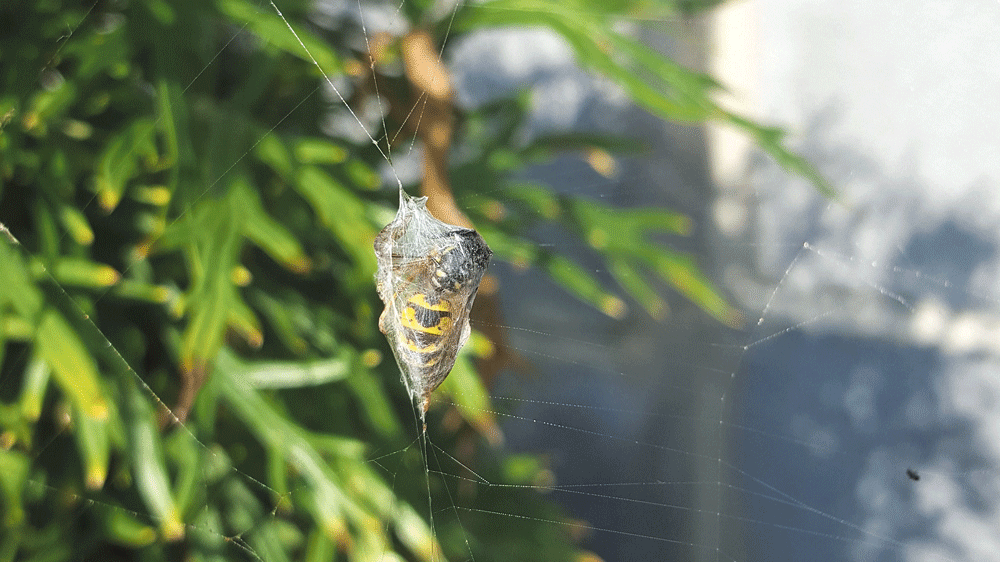
Wasps themselves are also prey for other creatures like spiders
They feed mainly on sugary liquids in nectar, tree sap, aphid honeydew, and ripe fruit.
They bring their captured prey back to the nest where they chew them up into a protein-rich paste, and they feed this to their carnivorous larvae.
On being fed, the larvae produce a little drop of liquid containing sugars and amino acids which the adult needs. This ‘bribe’ ensures that the adult wasp focusses on hunting prey to feed the larvae.
Adult wasps can also act as pollinators. As they fly from flower to flower to look for prey and to also sip on nectar to feed themselves, they are helping to transfer pollen.
Wasps themselves are also food for other creatures, and are eaten by other predators.
Badgers and foxes will dig out underground wasp nests to feed on the protein-rich larvae, while birds like magpies, blackbirds, and starlings are said to catch the adult wasps.
Dragonflies will also catch wasps in flight, while spiders are happy to feed on wasps that become trapped in their sticky webs.
So, while they might bother us for a short time in late summer, social wasps perform a very important role in healthy natural processes.
TAGS Life

