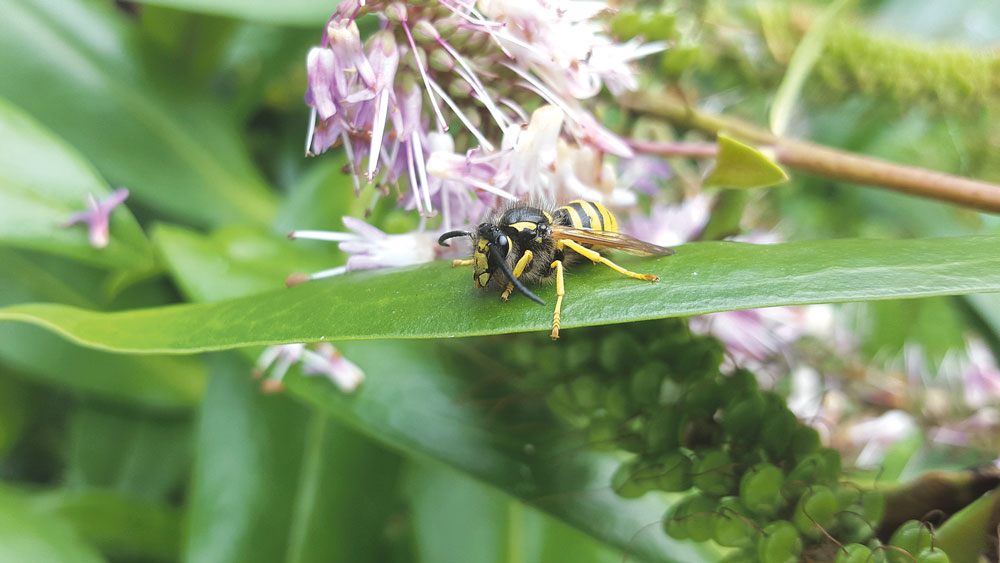
Adult wasps hunt flies, insects and spiders - but not for themselves
Nature on our doorsteps: Autumn wasps
Rosaleen Dwyer is the County Heritage Officer at South Dublin County Council – every week she gives us an insight into the natural heritage around us and the beautiful biodiversity of the plants and creatures.
IN LATE autumn, wasps can sometimes cause panic outdoors, especially when they buzz around our heads or when they investigate our sugary drinks and snacks.
They are not, however, deliberately targeting us.
They are simply on the hunt for food. More precisely, they are looking for sugar.
The very narrow waist of a wasp means that their digestive system is very limited, supporting mainly only a liquid diet.
Wasps may be seen sipping nectar from flowers, or licking leaves for the sugary waste left behind by aphids.
Wasps, however, are also hunters, but they do eat the prey they catch.
They hunt flies and other insects and spiders, bringing these back to their nests where they chew them into small pieces before feeding them to their carnivorous larvae.
In return, the larvae produce a little drop of liquid containing sugars and vital proteins and minerals which the adult wasps eagerly sip up.
This drop provides all the daily nutrients that the adult needs to survive.
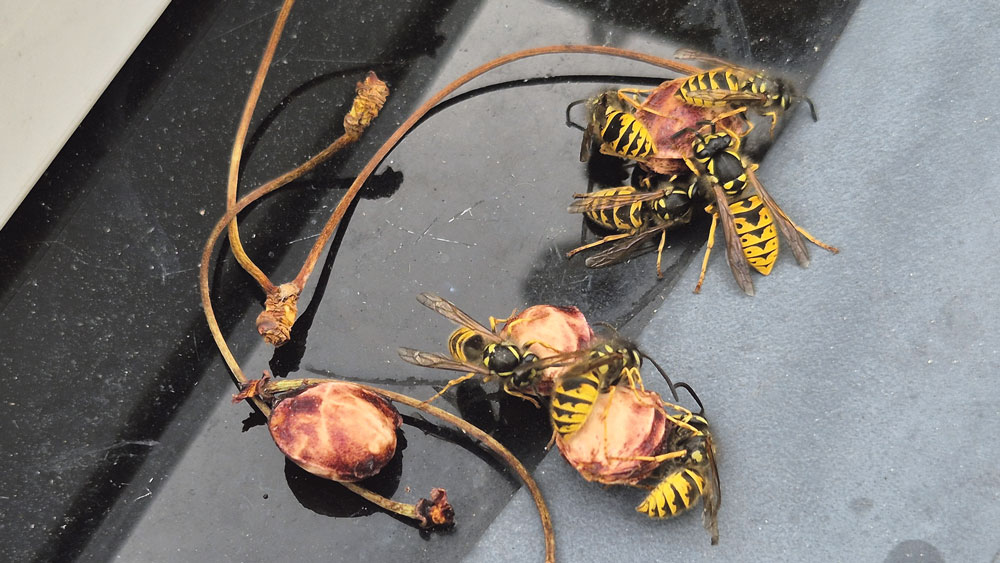
Draw investigating wasps away from picnic spaces by placing half-eaten fruit to one side
This sugar-rich bribe ensures that while the larvae are rapidly growing, the adult wasp is ‘laser-focussed’ on returning with food and receiving its nutrient payment. During this period, the wasps are not interested in us at all.
This system falls apart in early autumn when the newly mated wasp queens leave the nest and the old queen eventually dies away.
There are no more larvae to be fed, and this means that there are no more drops of vital nutrients readily available to feed the adult wasps.
The lack of a queen to direct their nesting behaviour, and the absence of any more sugary nutrients, make the wasps irritable and hungry.
Their hunting focus now switches to searching for sugar to feed themselves. This is when they can become bothersome around our sugary drinks and food.
The wasps will feed on nectar for as long as flowers are available but, eventually, any remaining wasps will die from starvation and the cold of winter.