
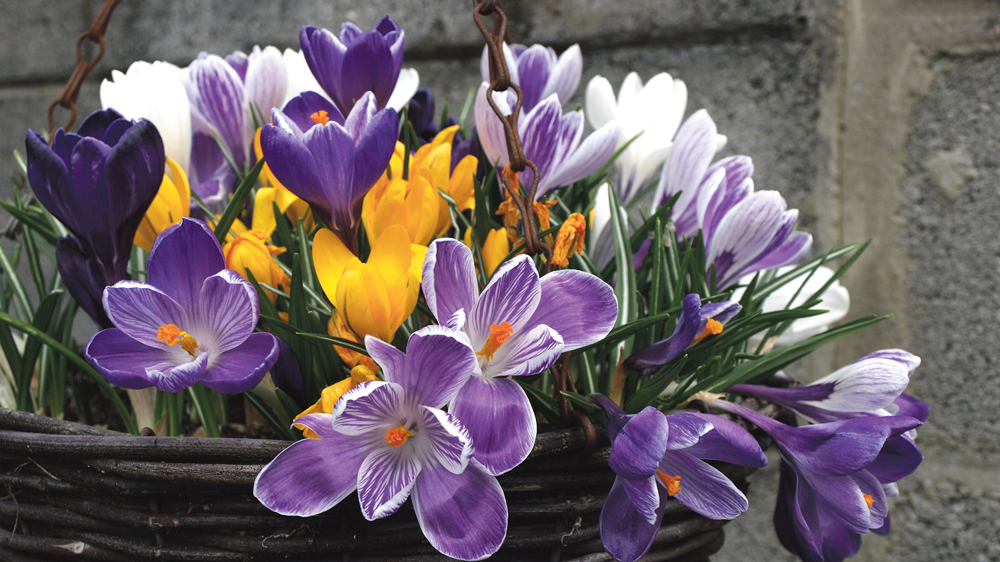
Even a hanging basket with pollen-rich Crocuses will help springtime insects
Nature on our doorsteps: Insects survive winter in many ways
Rosaleen Dwyer is the County Heritage Officer at South Dublin County Council – every week she gives us an insight into the natural heritage around us and the beautiful biodiversity of the plants and creatures.
INSECT populations have evolved in different ways to survive the annual seasonal drop in temperatures and the loss of food.
Social insects like honeybees prepare for winter by storing food in the form of nutrient-rich honey.
Honeybees need to ensure that their store lasts well into springtime, so they will generally continue to seek out flowers whenever winter weather is mild.
By growing winter-flowering bushes and flowers, we can help them extend their honey store until springtime flowers bloom.
While bumblebees and wasps are also social insects, they do not store honey. At the end of the breeding season, the newly mated queens leave the nest and the remaining workers die away.
The new queens prepare for winter by seeking out safe, dry places in which to sleep.
Before settling down, they will feed as much as possible.
Bumblebee queens will also gather and store some pollen with them to help them survive.
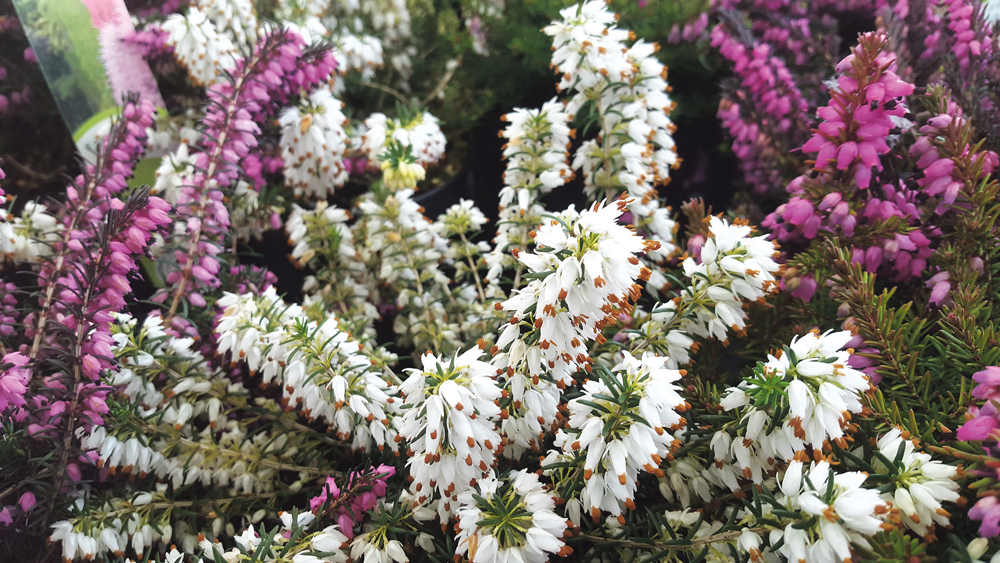
Garden Heathers can offer an important nectar source for bees in spring
Ladybirds generally overwinter in the adult form, hiding away deep in vegetation or in crevices in stone walls, log piles, or under fallen leaves and wood.
Some Ladybirds, like the invasive non-native Harlequin Ladybird, will cluster together in large groups in sheds and houses.
Some moths and butterflies hibernate as adults, ready to mate in early spring before they, too, die away.
The larvae of other butterflies and moths overwinter in a cocoon or chrysalis, while some hardy caterpillars and larvae survive by burying deep into grassy tussocks.
The first mild days of spring stir the honeybees and the queen bumblebees and wasps to emerge and search for food.
If they cannot easily find nourishing nectar and pollen to restore them after the long winter, they may die.
We can help by planting Heathers and spring bulbs now. Nectar-rich snowdrops, crocuses, and grape hyacinths (Muscari) are best. Daffodils, unfortunately, do not offer insects much pollen or nectar.
By planting even a window box, a garden tub, or a hanging basket of mixed crocuses and snowdrops now, it will be a very welcome pit-stop for springtime pollinators.
TAGS Life

