
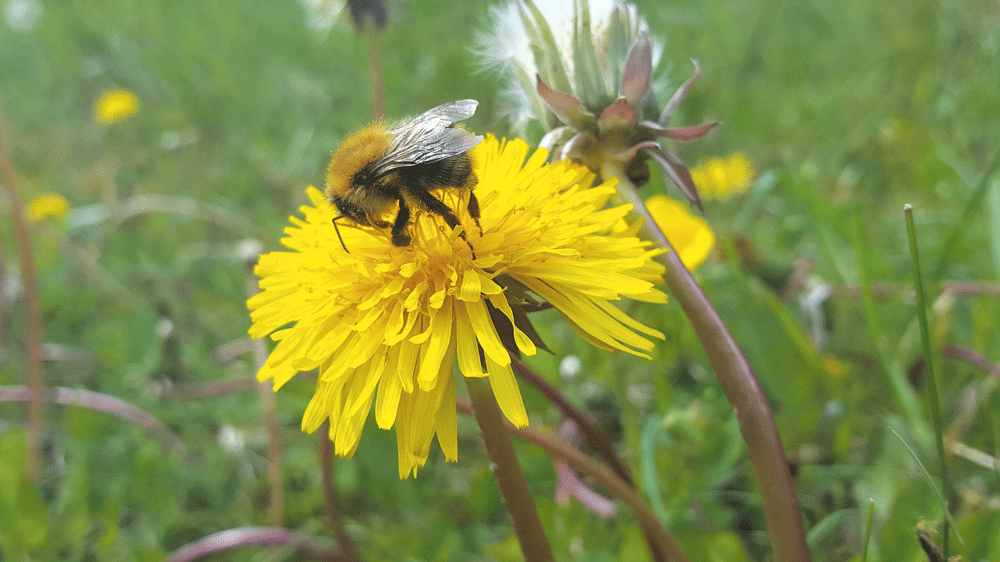
The Common Carder Bumblebee has a ginger back, but has no white band on its tail-end
Nature on our doorsteps: The recently-arrived Tree bumblebee
Rosaleen Dwyer is the County Heritage Officer at South Dublin County Council – every week she gives us an insight into the natural heritage around us and the beautiful biodiversity of the plants and creatures.
The Tree Bumblebee is a relatively new species in Ireland.
It is quite common across Europe and Asia, but it was only first recorded on the south coast of Britain in 2001.
It then spread northwards up through Britain and by 2014 it had crossed into Northern Ireland.
It has since been making its way down along the east coast of Ireland and into the midlands.
While it is not yet very plentiful, it has been recorded in a number of locations around south and west Dublin including Templeogue, Tymon Park, and Marlay Park.
The Tree bumblebee has a colour combination that is different to that of our native bumblebees.
It has a ginger-brown back like our Common Carder bumblebee, but the Tree bumblebee’s abdomen is distinctively black.
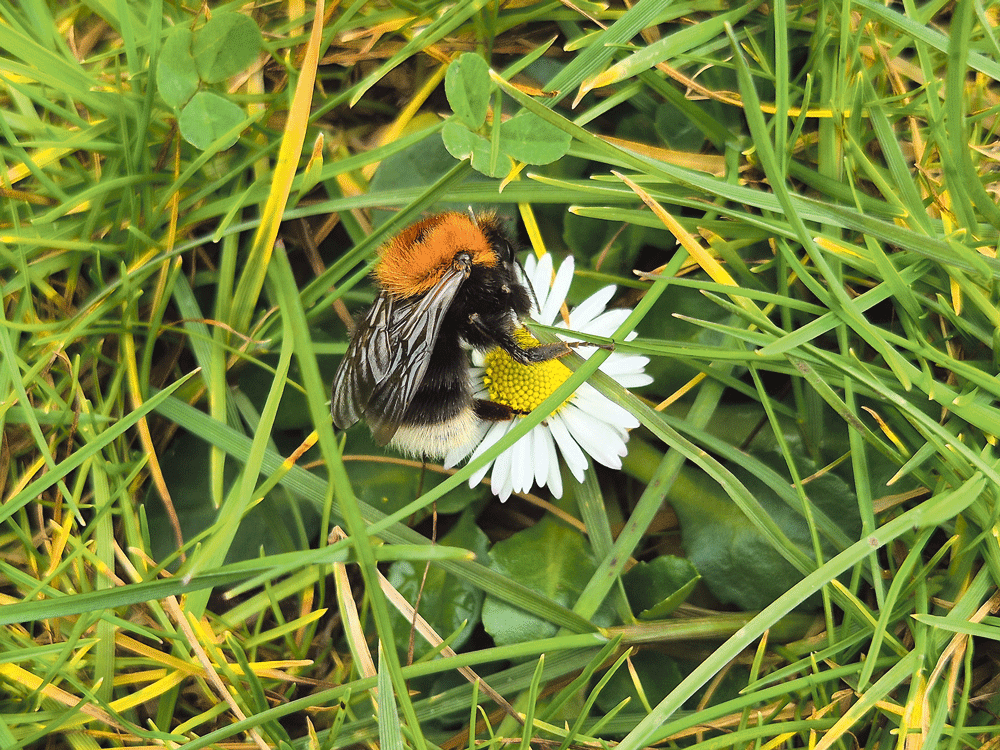
This queen Tree Bumblebee was spotted in Marlay Park
Also, the tail end of the Tree bumblebee is noticeably snowy-white, not ginger like the native Common Carder.
The natural habitat of the Tree bumblebee is in open areas of forests and woodlands where there is a mix of young and old trees and bushes, and where flowering plants take advantage of the bright space in which to quickly grow.
Unlike most other bumblebee species that prefer to nest in, or close to, the ground, the Tree bumblebee will nest in holes or cavities in trees. It will often use abandoned birds’ nests or empty nest boxes, but it will also sometimes nest under the eaves of houses and sheds, in cavity walls, or behind soffit boards.
At a time when loss of natural habitats and the challenges of climate change are negatively impacting other bumblebee species, the spread of the Tree bumblebee is interesting.
Its success might be because urban gardens can offer the same nesting and feeding opportunities as the Tree bumblebee’s natural woodland clearing habitat, with the added benefit of the many additional garden plants and shrubs that provide plenty of pollen and nectar to this species.
There is currently no evidence to suggest that the spread of this recently-arrived species poses a threat to existing native bumblebees.

TAGS Life

