
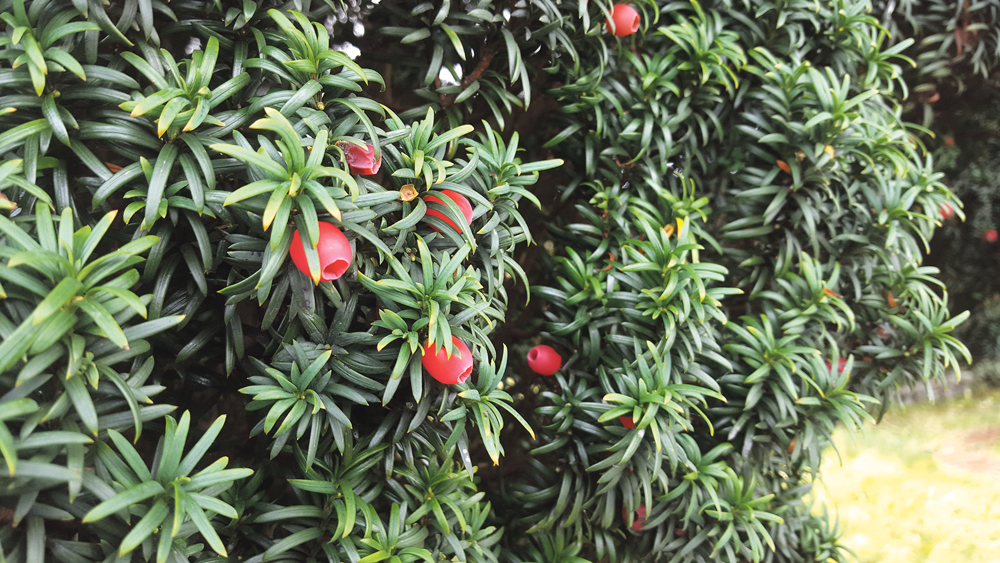
The fruit of the Yew tree is a red, berry-like structure
Nature on our doorsteps: The tree of Samhain
Rosaleen Dwyer is the County Heritage Officer at South Dublin County Council – every week she gives us an insight into the natural heritage around us and the beautiful biodiversity of the plants and creatures.
IN THE ancient Celtic tradition, different trees were associated with different times of the year.
This association was based on characteristics such as when they flowered or fruited, their usefulness as timber, the value of their leaves as food for animals, and the value of their fruit and nuts to us.
Certain trees were also highly regarded for their spiritual importance.
This reflected their value in providing physical or spiritual protection to us, or if they were deemed to be markers of sacred ritual sites or important land boundaries.
The Common Yew is one such tree, and it is this tree that our Celtic ancestors traditionally associated with Samhain, the month of November.
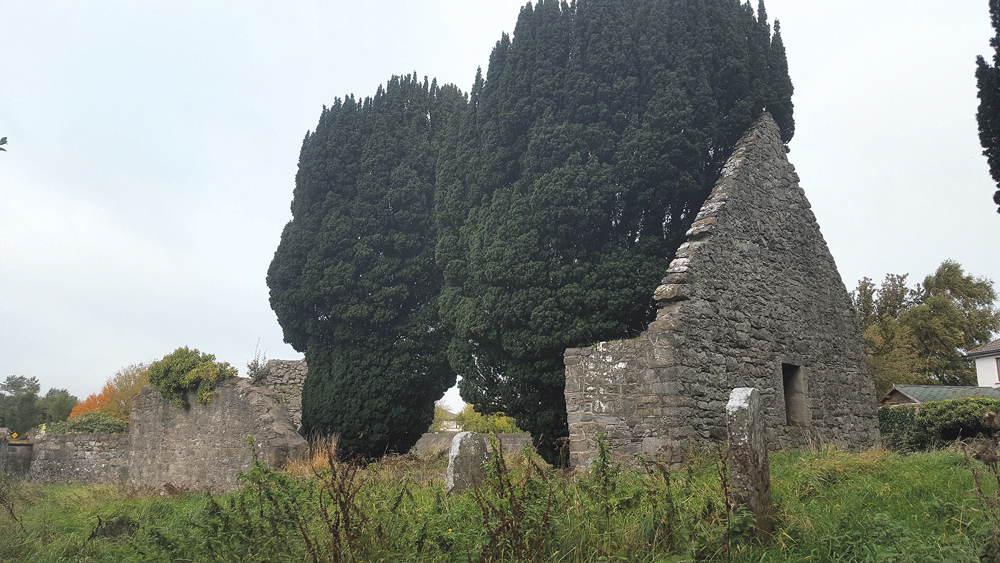
The Irish Yew was regularly planted in old churchyards and cemeteries
The Common Yew tree is a medium-sized evergreen conifer with a shrubby appearance.
It is a long-living tree, and it can exist for 500 years. ‘Champion’ trees, however, are suspected of being as old as 1,000 years. While some of the branches of very old Yews may be hollow, the tree still manages to survive and resprout, appearing almost everlasting.
These characteristics of strength, long life, death and regrowth, were seen by our Celtic ancestors to reflect the period of Samhain (Halloween), where life and death are celebrated and where people prepared themselves to survive the approaching winter season.
In pre-Christian times, sacred Yews were often planted by the Druids around their sacred sites as symbols of protection, strength, and longevity.
As Christianity spread and churches were established at these ancient sacred locations, Yews became associated with Christian churchyards and cemeteries.
Today, the Yew that is most associated with old churchyards is a variety of the Common Yew known as the Irish Yew. This variety was first found growing in Fermanagh at the end of the 18th Century.
While the Comon Yew is a shrubby tree, the Irish Yew has a much more upright shape, forming tall, dense, tapering columns. This tidier shape makes the Irish Yew more suitable for growing in churchyards where space might be tight.
TAGS Life

