
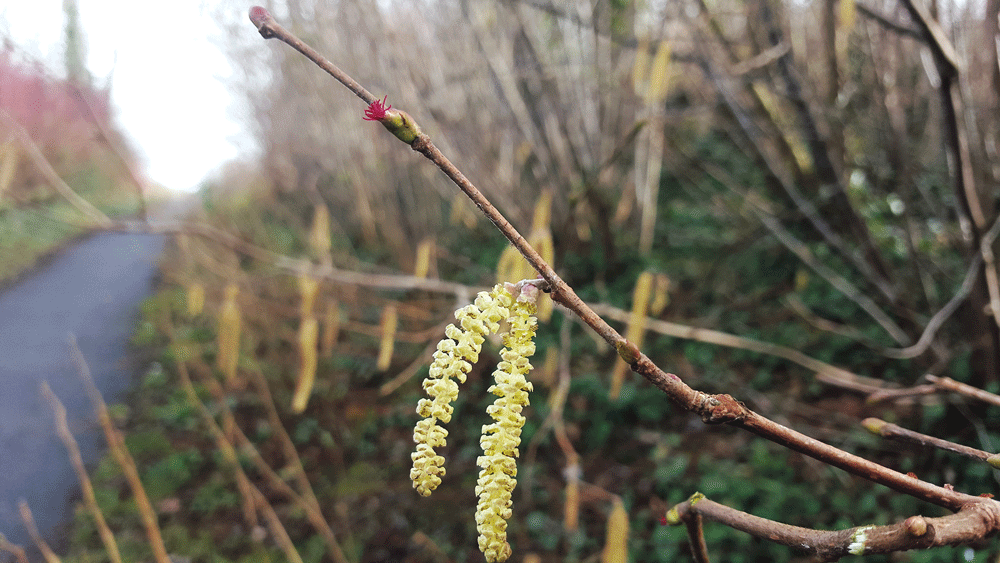
Hazel's small red female flowers are less noticeable than its yellow male catkins
Nature on our doorsteps: Yellow Lambs’ tails
Rosaleen Dwyer is the County Heritage Officer at South Dublin County Council – every week she gives us an insight into the natural heritage around us and the beautiful biodiversity of the plants and creatures.
Along roadside hedgerows and all through our parks, lovely bright yellow catkins are dancing in the breeze like little lambs’ tails.
These are the male flowers of the Hazel.
This shrubby tree is one of the first of the hedgerow bushes to send out its flowers early in the new year.
There are very few pollinating insects flying about in the cold winds of January and February to collect pollen, so the flowers of many of our native trees and bushes cannot rely solely on insects for pollination at this time of the year.
Instead, early flowering trees rely on the wind to assist them with their pollination processes in late winter and early spring.
These trees produce dangling stems known as catkins which carry many tiny male flowers.
These tiny flowers do not waste any energy producing bright showy petals to attract insects that do not fly at his time of the year.
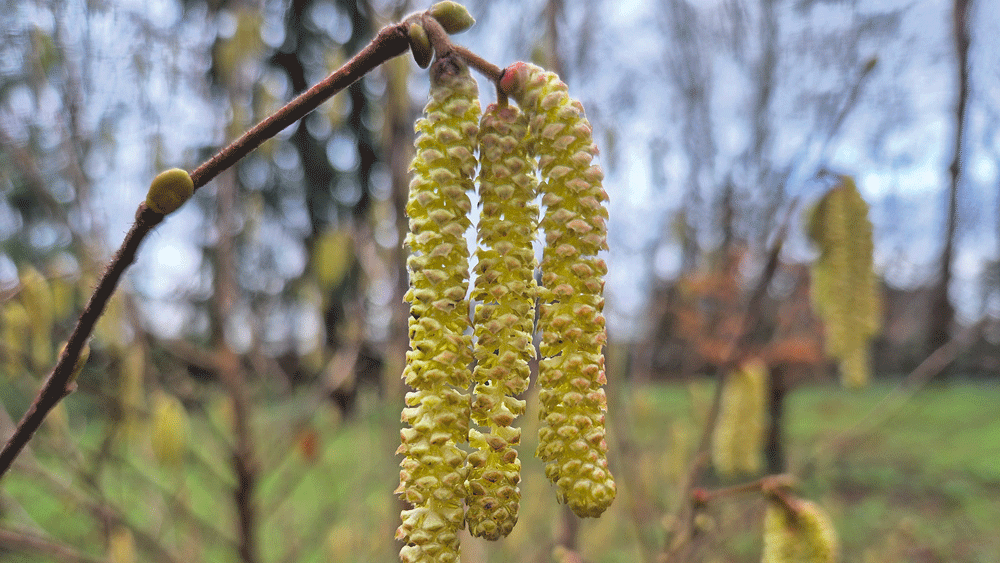
Dangling stems of Hazel catkins are like little lambs’ tails
Instead, the male anthers, which produce the pollen, are free to dance in the breeze, like little lambs’ tails.
The slightest breeze will shake their pollen directly into the air, and as there are many clusters of tiny male flowers in these catkins, together they can produce little visible puffs of yellow pollen under the right weather conditions.
Once it is in the air, the pollen has a good chance of landing on a nearby female Hazel flower.
Hazel’s yellow catkins are easy to spot, but its female flowers are far less noticeable.
A much closer look is required to see the small, rounded, female structures on the twigs, with red ‘hairs’ trailing out at the top that make them look more like sea anemones than flowers.
Any Hazel pollen in the air that lands on these hair-like structures will fertilise the flower, forming the edible hazelnuts that will ripen later in the autumn.
Hazel’s catkins will be followed in late February, March and April by the equally delightful catkins of other trees like Alder, Birch, and Willow.
TAGS Life

