Stronger You: The essential guide to building strength to elevate your midlife
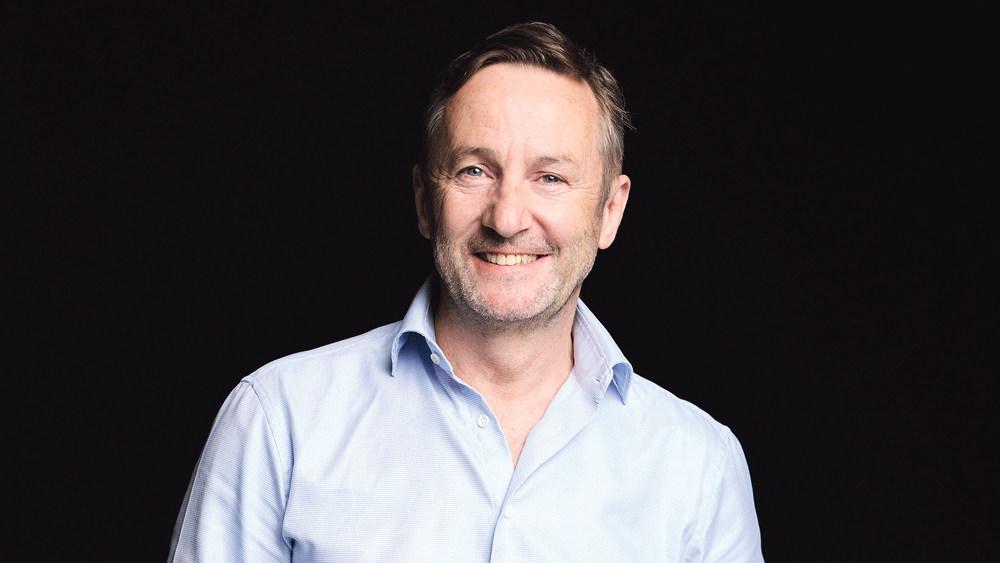
By Emma Kennedy
Certified strength and conditioning coach
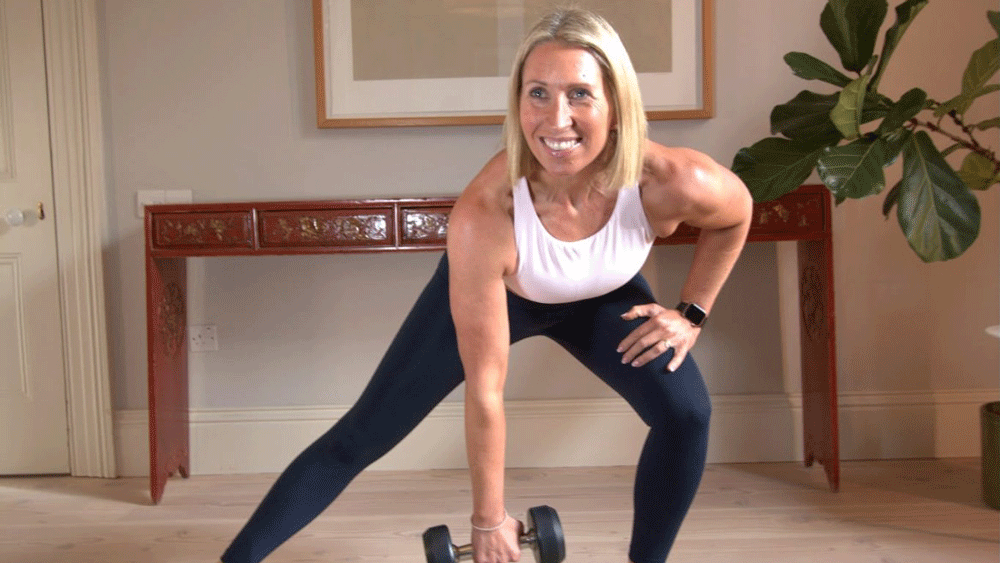
Qualified personal trainer and fitness trainer with fitness nutrition. Certified strength and conditioning coach. Emma is passionate about the importance of strength and cardio training. Her classes improve your technique and knowledge, while providing a strong workout that will help you get the maximum benefit from your chosen sport or activity.
Most of us know how important strength training is, especially in midlife. It can be transformative for your longevity and confidence. The tricky bit is getting started, understanding “Where do I even begin?”
It is simpler than you think and doesn’t need to be complicated. You don’t need a gym or lots of equipment. If your goal is to feel stronger, more confident, and more capable in your everyday life, you can build strength at home!
At Stronger You for Life, we believe that strength isn’t just about aesthetics, it’s about being capable, resilient, and ready for whatever life throws at you. Whether that’s carrying a sleeping child, lugging heavy suitcases on a holiday, or enjoying your favourite sport without nagging aches, then strength is your foundation.
What is strength training, and why does it matter?
Strength training (or resistance training) is any movement where your muscles work against an external force.
This could be a resistance band, a weight, or simply the weight of your own body.
As we navigate midlife, our bodies undergo natural shifts – including a gradual decline in muscle mass and bone density.
But here is the empowering part: you have the power to change that narrative.
By challenging your muscles safely and with intention, you send a vital signal to your body to repair, reinforce, and renew.
The midlife advantage
- Bone health: Heavy-duty support for your skeletal system
- Metabolic fire: Muscle is metabolically active, helping you feel more energized
- Joint stability: Think of muscle as the “armour” that protects your knees, hips, and back
- Mental clarity: The focus required for lifting translates into a sharper, more resilient mind
Your “Get Started” toolkit
You don’t need a room full of equipment to see results. To build a stronger version of yourself from the comfort of home, to begin with you only need a few basics:
- A yoga mat: for stability and comfort
- Light resistance: a pair of 2kg dumbbells or a medium resistance band
- Your own body: the most effective piece of equipment you own!
Commonly asked questions about strength training
Will I bulk up?
This is highly unlikely to happen for the average person, particularly women, engaged in sensible strength training.
This is because women possess significantly lower levels of testosterone, the primary hormone responsible for large-scale muscle growth.
Achieving substantial bulk naturally is exceedingly difficult and requires an extreme, dedicated regimen that most people aren’t pursuing.
“Bulking” is a specific goal for bodybuilders, involving very heavy lifting, extremely high training volumes, and a substantial caloric surplus.
Your typical fitness routine won’t trigger this.
Will it help me to lose weight?
When it comes to fat loss, cardio is often hailed as the ultimate tool.
But resistance training can be even more effective.
Besides using energy, it also stimulates hormonal growth, which speeds up fat metabolism and muscle growth.
For the most balanced and effective body fat reduction, do resistance training three times a week and add in two cardio sessions.
Do you need to eat loads of protein?
Most people – including athletes – consume enough protein without using supplements.
If you are active, you need 1–1.5kg of protein per kg of body weight each day. And don’t ignore carbohydrate intake.
This food group supports muscle growth indirectly by boosting insulin, which reduces muscle breakdown.
For most active people 3–6g carbohydrate per kg of body weight daily is about right.
Do you need to lift heavy weights?
No, it is much more important to focus on correct form than to lift heavy.
Lifting weights triggers myofibrillar hypertrophy – which is when the body works to repair micro-tears in muscle fibres – and can lead to increased muscle strength and density.
Four reps of 10, with the last two reps of each set being challenging, is our recommendation.
Do you need to train every day?
The body needs time to repair so that muscle fibres can come back stronger, Training 3–5 times a week is the sweet spot, doing classes that are a minimum of 30 minutes in length.
Should it hurt?
No – pain is a signal to stop!
Some discomfort is fine, but not if it is a sharp or stabbing pain.
Listen to your body.
If you are unsure, stop, check your form and possibly go back to the weight where you could comfortably perform the exercise that is now causing you pain.
If this feels okay, stay with this weight and do more reps rather than go heavier right now.
You will get there. It is a bit trial and error.
BUT you should NEVER BE IN PAIN!
Our top strength exercises
To begin with we recommend focusing on a few key compound movements, which are the building blocks of a strong, balanced body and will set you up for long-term gains.
Taking the time to learn and master them will help you move with confidence, reduce injury risk, and continue progressing safely as you get stronger.
Six key moves
These compound movements recruit multiple joints and muscle groups and so give you the “biggest bang for your buck”.
They also mimic how you move in the real world while protecting your body from the inside out.
| The move | Benefits |
| Squats | Builds powerful glutes and quads, which protects your knees and makes getting up from a chair effortless. |
| Lunges | Enhances single-leg stability and hip mobility, reducing your risk of falls and stumbles. |
| Press-ups | Strengthens the chest, shoulders, and triceps, improving your ability to push heavy objects safely. |
| Planks | Develops a “steel” core that shields your spine and improves your posture all day long. |
| Shoulder press | Increases shoulder health and upper body power, making reaching for high shelves pain-free. |
| Deadlifts | Strengthens the entire posterior chain (back and glutes), which is essential for preventing lower back injury when lifting at home. |
Joining our classes
At Stronger You For Life, we believe in inclusivity. Our full-body workouts are designed to be adapted to wherever you are today.
If you are a beginner, you should start by using your body weight or light weights for resistance.
And everyone should always listen to their body – if anything hurts, stop.
Or you may want to start by using our Introduction to Resistance Training class.
It’s 20 minutes long and covers all the basics.
You’ll be surprised how quickly you progress – you will soon find yourself wanting to move on to more resistance as your fitness levels climb!
To ensure you feel supported every step of the way, we also provide a library of ‘how-to’ films.
These are perfect for building your confidence and mastering your form during those first few weeks.
The secret to a stronger you isn’t found in a single, perfect workout. It’s found in the small, manageable goals you hit week after week.
Your future self will thank you for the strength you’re building right now.
Joining our classes
SPONSORED CONTENT