
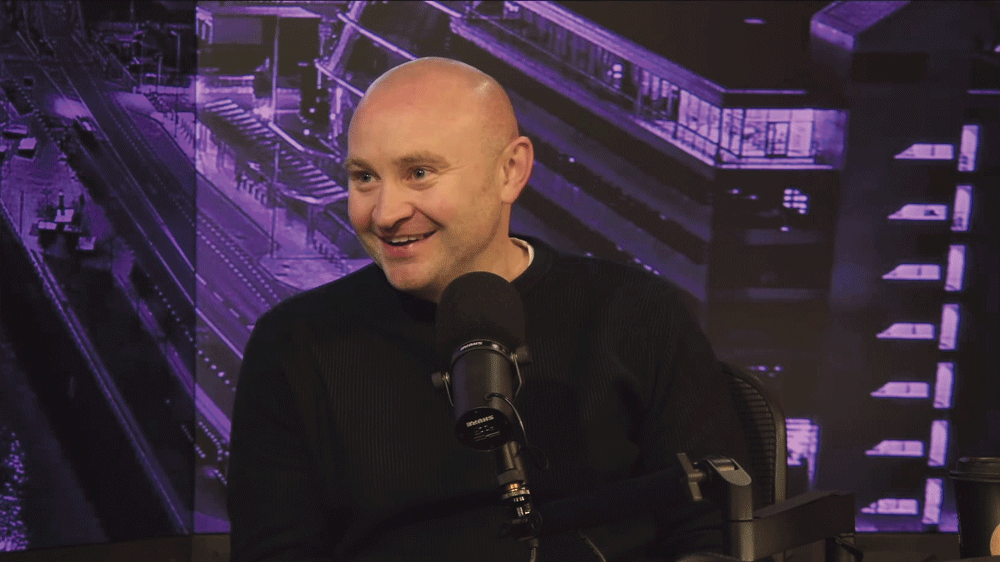
Tom Ryan
‘They’re not protecting the survivors of a criminal trial of abuse’
“It’s stopping people from actually coming forward.”
A Clondalkin man has called for a ban on using counselling notes as evidence in court after his records were read out in a sexual assault case against his half-brother.
Thomas Ryan (37) was sexually abused by his half-brother Philip Murphy from the age of six over a period of four years in the mid-90s.
Murphy was also found guilty of the rape of two young sisters that occurred in Clondalkin in the early 90s.
Tom Ryan had to go through a process following the conclusion of the trial to allow his counselling records to be used and he is now calling for a ban on this practice, believing it to be an invasion of privacy among other things.
Mr Ryan said: “I feel the disclosure of such records constitutes a profound violation of personal dignity, privacy and offends the sanctity of the therapeutic relationship between a counsellor and a survivor.
“These records are not evidence but rather notes of refuge. I have a profound concern that the use of such notes in the criminal trial process, prevents victims from seeking help and chills the very trust that counselling requires.
“A principled legal system protects the inner sanctum of healing and ought not exploit it.”
Tom’s case was heard in the South Dublin County Council chambers at the recent monthly council meeting.
Councillors agreed to send a letter to Minister for Justice Jim O’Callaghan TD to call on him to implement the ban.
Councillor Francis Timmons stated: “This ban is supported by the Oireachtas Joint Committee on Justice and calls for a complete and unconditional ban on the use of victims’ counselling notes as evidence in sexual offence trials.”
The letter will urge the Minister to amend the Criminal Law and Civil Law (Miscellaneous Provisions) Bill 2025 to remove “judicial discretion in this matter.”
Tom said that there’s more than just the survivors of sexual abuse that could be relieved by a ban such as this and that it is stopping people from coming forward.
He noted that he feels the Government does not currently protect survivors of many forms of abuse and that the ban would be a step towards better care for these individuals.
“They’re not protecting the survivors of a criminal trial of abuse, sexual abuse, rape, coercive control… people can get bogged down on just talking about sexual crimes here, but there’s a lot more in this.
“People have been abused by partners [and others], verbally and physically, that need counselling and won’t go because they’re afraid it’s going to be used against them.”
Funded by the Local Democracy Reporting Scheme

