
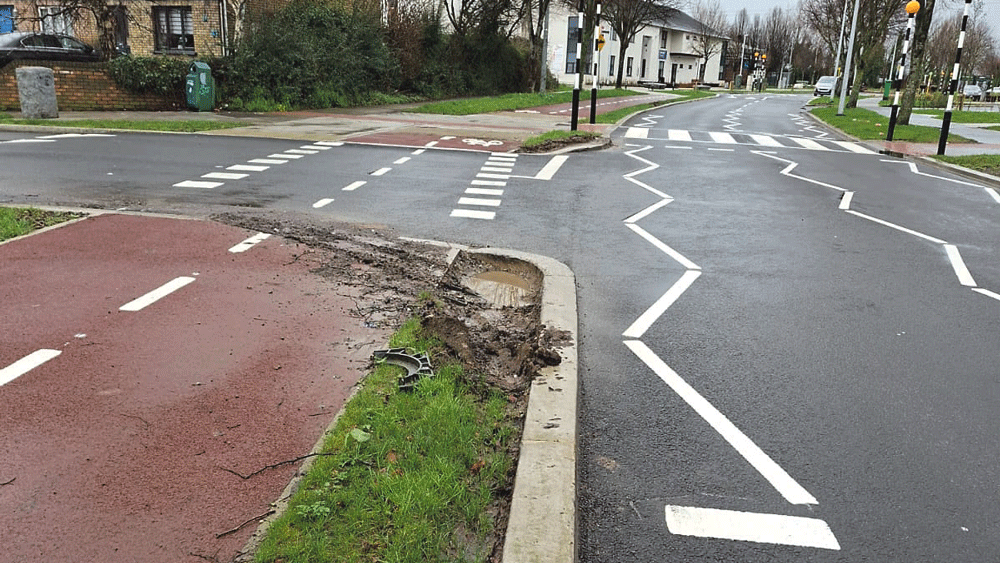
The controversial turn on Bawnogue Road into Lealand Estate
Traffic calming measure ‘not just a nuisance, but a hazard’
“It’s becoming not just a nuisance, but a hazard.”
The controversial turn at Lealand junction in Bawnogue, Clondalkin was seen by council engineers as part of a meeting with local councillors.
Representatives from the Clondalkin area and council road engineers met to discuss the traffic calming measures implemented so far in South Dublin at the turn to Lealand Estate in Bawnogue.
Residents had previously described the turn from Bawnogue Road into Lealand Avenue as “ridiculously sharp and dangerous” and it has been the central part of a hot topic for the council in recent months.
Councillor William Carey noted that the engineers did not commit to a redesign of the problematic junction in Bawnogue, which has been the subject of several complaints and an infamous moment with a van stuck on the kerb.
Engineers had come into the meeting with the view that the measurements for the improved junctions was to prevent drivers from entering turns at greater speeds.
Cllr Carey said: “While the engineers would not commit to a redesign, they did suggest that they would look at addressing some of the issues around the curves, around the radii.
“To see if it could be made more amenable for traffic turning in there.”
However, the local councillor stated that he does not feel it is “an acceptable view” to place the problem solely on bad driving and that more is needed to remedy the situation, which has caused problems for many motorists, including delivery drivers.
Part of the intention of the new measures being brought in across the county is for residents to make use of more sustainable modes of transport such as walking or cycling, but many motorists still make the turn daily – multiple times in many cases for homeowners.
Cllr Carey called for a less restrictive approach, one that does not take away from the safety benefits gained from the measures.
He pointed to large vehicles that have “run over the verge” at the junction to be able to make the turn, which he believed is down to the Design Manual for Urban Roads and Streets specifications that were followed – national guidelines from the Department of Transport.
“With the traffic being so busy there, it tends to mean that even when they pull up to a full stop, they’re taking the turn too sharp and the result is all of the verges are being destroyed.
“So, we were trying to emphasise the need to grow back a bit on the extreme nature of the DMURS specifications.”
Funded by the Local Democracy Reporting Scheme.

