
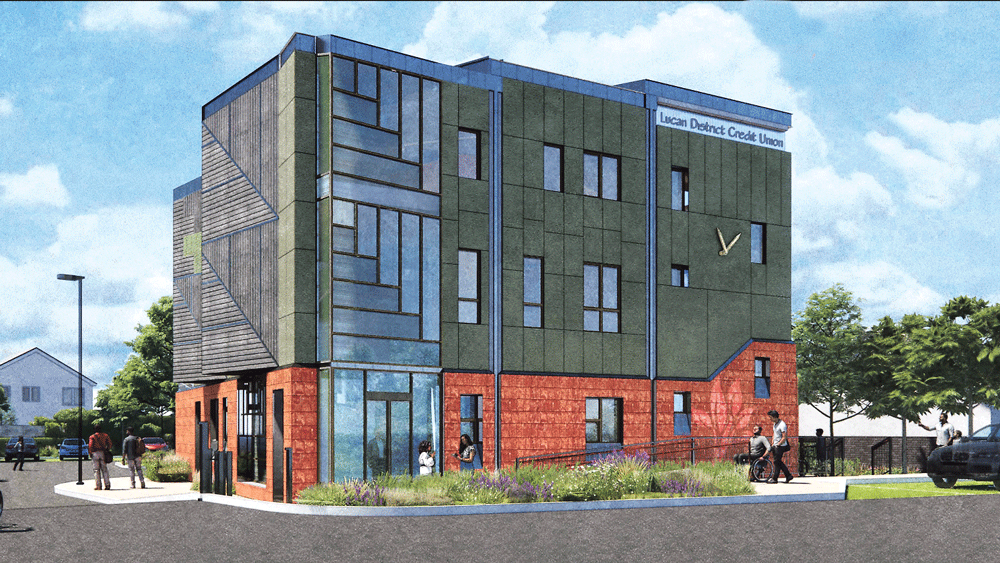
An artist impression of the plans for Lucan Credit Union
Credit Union appeal refused for office building
A council decision to refuse permission for a new office building for Lucan District Credit Union has been upheld by An Coimisiún Pleanála, on the grounds it would “seriously injure the visual and residential amenities of the area”.
The credit union had applied for permission in July 2025 to demolish a disused bungalow, The Laurels in Ballydowd, Lucan, which has been “unoccupied for circa eight years and in advanced disrepair” and to replace it with a three-story office building and cycle and car parking areas with EV charging points.
They lodged an appeal with An Coimisiún Pleanála after South Dublin County Council’s planning department refused permission for the development in August, asking the commission to “review the architectural merits of the proposal afresh and assess the application de novo”.
Permission was refused on the grounds that the design of the three-story office building “is at odds with the surrounding street context of Lucan Road… characterised by low rise single and two storey dwellings”, and that it would overlook residential properties on either of the site.
The council also noted that no “sunlight and daylight and/or an overshadowing assessment” had been included in the application, and cited the many public objections and representations that revolved around the height of the proposed development, loss of built heritage and village character, light pollution and overshadowing, a dangerous precedent for commercial development in the area and poor engagement with immediate neighbours.
In their appeal, Lucan District Credit Union stated that because they are a not-for-profit enterprise, the proposed development is not commercial but rather a “bespoke, architect- designed facility for owner-occupiers to create a socially, economically and environmentally sustainable, member-owned facility”.
They also complained that eight of the submitted documents were not made available by SDCC on the online planning portal and were inaccessible during the consultation period and that this had caused “confusion” over the application.
According to the inspectors report to ACP, the council responded that while the files were “erroneously classed as private” on their planning portal and not made publicly visible, they were visible to all council staff involved in the planning process.
“I am satisfied that all relevant files were available to council officers to allow them to fully evaluate the application,” the report said.
In their decision published on January 21, ACP upheld the council’s decision to refuse permission as the “proposed demolition of a single store residential property and its replacement with a three storey financial services/office building would fail to integrate well into this established residential area” by virtue of the proposed use, height, scale and design.
Funded by the Local Democracy Reporting Scheme

