
How Automation Is Helping Irish Food Businesses Scale
Talk to any food producer and you’ll hear the same mix of pride and pressure.
Pride, because the product is good. Often very good. Pressure, because once demand starts creeping up, the “small batch” way of working can turn into long nights, sore backs, and a constant worry that one rushed day will lead to inconsistent packs.
This is where automation has started to shift things, especially in filling and sealing. As demand rises, it becomes a practical step. It feels like a steady move from ‘we’re barely keeping up’ to ‘we can actually scale and maintain or improve our standards.’
The real challenge isn’t making food. It’s packing it well, every time
Most producers can cook, bake, ferment, blend, or prep to a high level. That’s their craft.
Packing is different. It’s repetition. It’s speed. It’s trying to keep fills, seals, and the overall look the same on a sticky afternoon, with orders piling up and a gap on the rota.
If you’re still filling and sealing by hand, you’ll know exactly where the day starts to slip.
- portion sizes drift during a busy run
- sealing takes longer than it should
- waste creeps in, bit by bit
- one person becomes the bottleneck because only they can keep the line tidy
Automation doesn’t remove care from the process. It removes the avoidable errors that come with trying to do everything at pace.
What automation actually changes for a smaller producer
Automation is often seen as an all-or-nothing leap. But for many Irish food businesses, it’s just a step that removes pressure at the busiest point on the line.
They’re looking for practical wins.
- Consistency
A reliable fill level and a proper seal don’t just look better. They reduce product variation, protect product quality, and help avoid customer complaints.
- Capacity without chaos
A well-designed automated line boosts output predictably, freeing staff to focus on value-added tasks rather than repetitive manual work.
- Less waste
Overfilling is expensive. Underfilling is risky. Spillage adds up. Better control means less product lost and fewer packs binned.
- Time back
The time you get back can go into product development, quality checks, sales, or simply getting your evenings back.
Why filling and sealing is often the first place to automate
For many businesses, filling and sealing is where the wheels start to wobble first.
Whether it’s dips, spreads, sauces, soups, desserts, chilled meals, dairy pots, or prepared sides, the packaging needs to look consistent and seal properly. If the packs don’t look uniform, shoppers hesitate, even if the food itself is spot on.
Tighten up filling and sealing and you get tidier packs, fewer headaches, and a finish that looks the same from the first unit to the last.
Cup filling and sealing isn’t just for big dairy
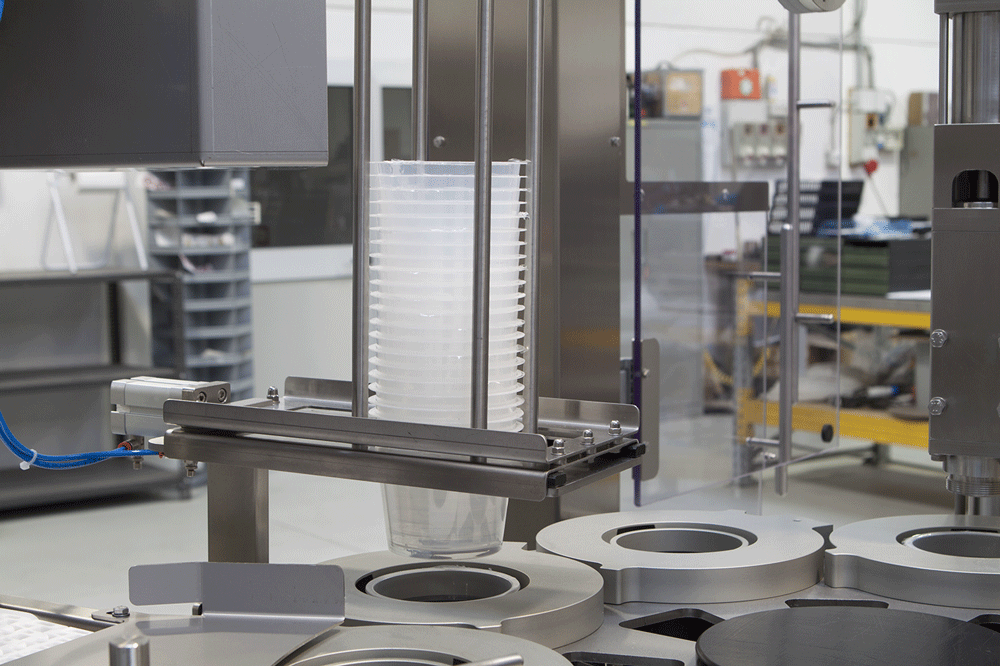
Cups work well for chilled products. They’re easy to handle, they store neatly, and they look good in a chiller. Doing them manually is the grind: fill, wipe the rim, check the weight, lid on, seal, then straight back around again.
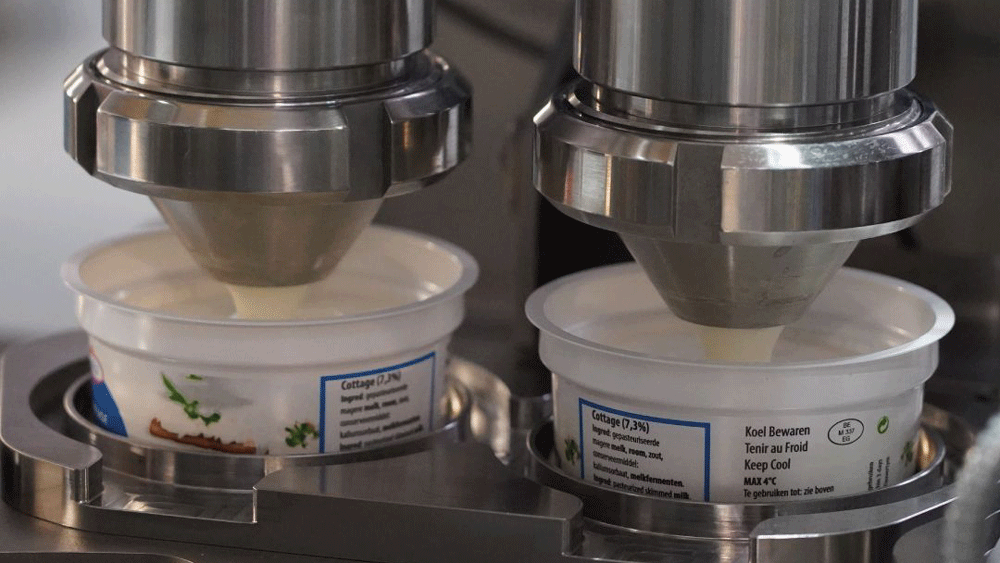
A cup filling and sealing machine takes the repetitive parts and standardises them. Same placement. Same seal pressure. Same cycle. That consistency is what helps smaller producers grow without quality dipping when orders rise.
What to look for before you invest
Producers don’t have the luxury of buying the wrong kit and forcing it to work. A few checks save a lot of pain later.
Before you look at machines, look at what you’re filling. Is it pourable, thick enough to sit on a spoon, or full of pieces that need gentle handling?
Be honest about volumes too. If you’re doing small weekly runs now but stockists are asking for more, the right choice is often the one you won’t outgrow straight away.
Finally, think about changeovers. If you run lots of flavours or formats, cleaning and switching needs to be realistic, otherwise “automation” can create a new bottleneck instead of removing one.
Where NPP fits into the picture
Suppliers matter here, because most producers don’t just need a machine. They need equipment that fits what they make, where they make it, and how they actually work.
NPP supplies filling and sealing equipment across different pack types, which is handy when you’re weighing up cups, tubs, pots, and everything in between. More importantly, it helps you match equipment to what you actually make, rather than forcing your product into a system that doesn’t suit it.
Automation doesn’t replace the craft. It protects it.
Automation doesn’t change what you make. It changes how reliably you can pack it.
When filling and sealing stop being the stressful part of the day, you get time back and the results stay steady. That’s when growth stops feeling like firefighting and starts feeling manageable.
Automation is changing the game for Irish producers because it makes growth feel possible while actually improving consistency. And for a lot of businesses, that’s the difference between staying stuck at the same output, and finally having room to move.

