
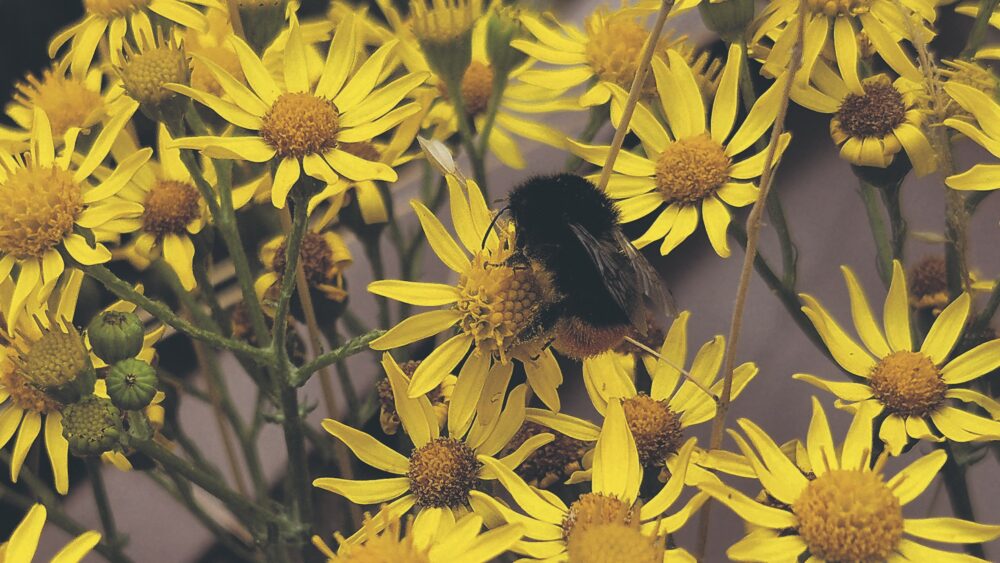
The Red-tailed bumblebee is a target of certain Conopid flies
Nature on our doorsteps: A really gruesome bumblebee parasite
Rosaleen Dwyer is the County Heritage Officer at South Dublin County Council – every week she gives us an insight into the natural heritage around us and the beautiful biodiversity of the plants and creatures.
IN NATURE, a wide range of control mechanisms exist that help prevent individual species becoming too dominant over others. The most obvious is predation, where species hunt and feed upon one another in order to live.
There are also many types of fungal and bacterial diseases and parasites, all of which may kill their host or reduce the strength and ability of the host to reproduce effectively.
Parasitic relationships can be especially gruesome. This is where one species lives inside or on another species, feeding on the host which may or may not survive the event.
One such relationship occurs between a particular species of fly and a bumblebee. With its bands of light yellow and black colours, this fly looks wasp-like.
It has, however, only 1 pair of wings, unlike wasps which have 2 pairs. The fly also, does not have the long individual antennae of the wasp. This fly is one of the group of flies known as the Conopids.
While these flies do not have regularly used common names, they are sometimes referred to as ‘thick-headed’ flies, due to the relatively large size of their heads.
They have also been referred to as being ‘bee-grabber’ flies, because of what they do to unsuspecting bees. One particular Conopid species will wait patiently on a flower.
When its target, a Red-tailed bumblebee, passes by, the fly launches into the air and grabs the bee. In mid-flight, the fly very quickly makes a little cut in the bumblebee’s body and inserts an egg inside before releasing the bee.
When the fly’s egg hatches inside the unfortunate bumblebee, the larva lives as a parasite by feeding on nutrients in its host’s body until the insect finally dies.
The fly, however, has not finished with its host yet. The larva then makes use of the empty bee corpse by using it as a safe place in which to make its cocoon. It overwinters as a pupa in the carcass, where it develops into a new adult fly ready to emerge the following spring.
TAGS Life

