
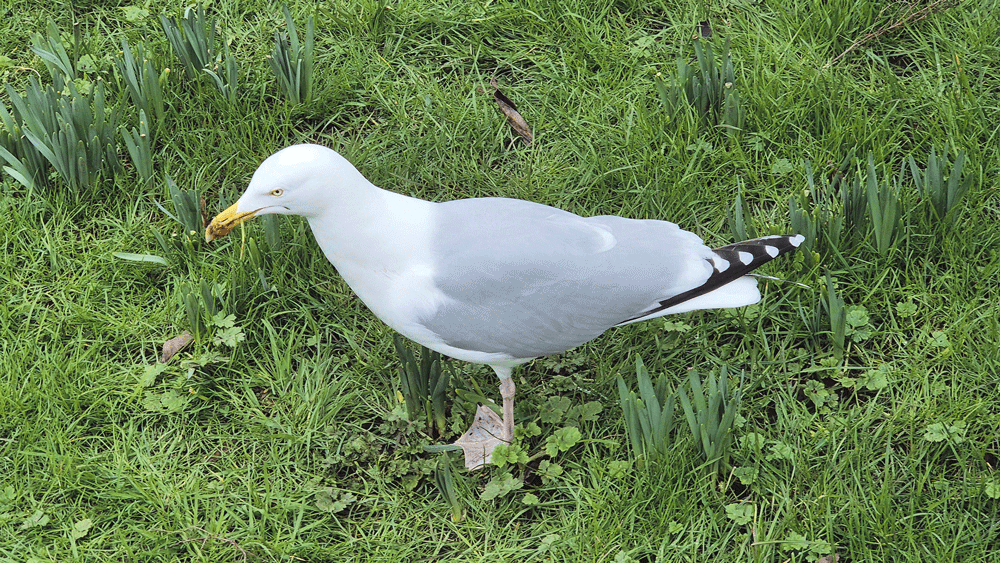
Seagulls have an interesting way of hunting for worms.
Nature on our doorsteps: An unusual way to catch worms …
Rosaleen Dwyer is the County Heritage Officer at South Dublin County Council – every week she gives us an insight into the natural heritage around us and the beautiful biodiversity of the plants and creatures.
Seagulls are mainly a bird of coastal areas, but they are also very comfortable visiting and living inland.
While many inland seagulls will scavenge on left-over food discarded in our streets, they will also feed on more natural food, such as worms that live in the soil.
These seagulls, however, have a fascinating worm-hunting technique.
They begin by quickly tapping or stamping their webbed feet on the ground.
They stop and bend their heads to one side as if listening carefully, and then they step to one side and begin stamping again.
They will continue like this, moving around in a small area as they continue to ‘dance’.
This unusual behaviour has been referred to as worm-dancing or worm-charming.
The gull is, in fact, drawing worms up to the surface of the soil where it can more easily catch them.
It is thought that the stamping sends a vibration down through the ground which sounds like raindrops to the worms down below.
Worms often respond to rainy weather by coming up to the surface.
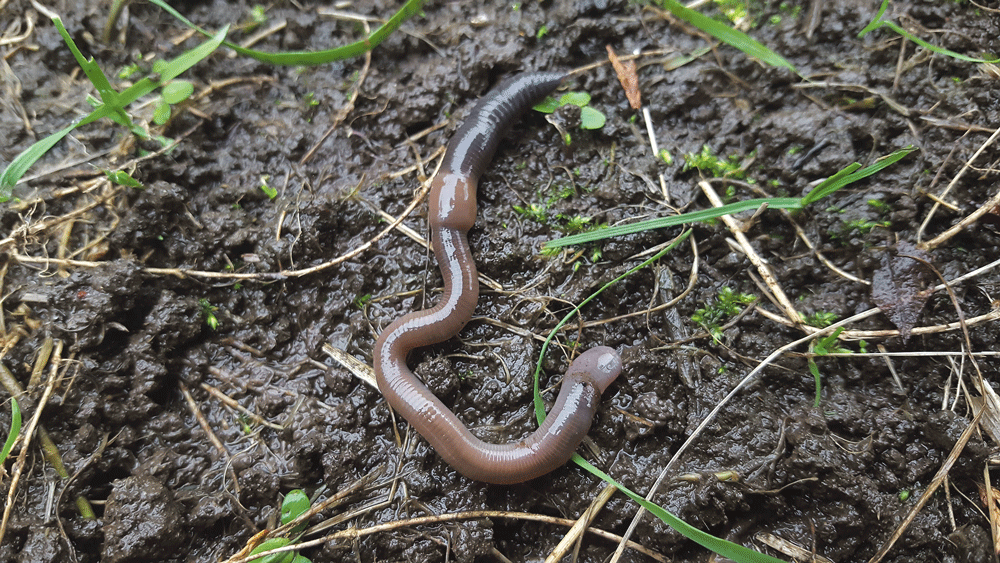
Worms are a nutritious protein-rich snack for seagulls
As rainwater filters down into the ground and fills the small air spaces in the soil, some of the soil-dwellers come up to the surface where they can breathe more easily.
Worms may also take advantage of the wet slippery surface to move around and find new feeding grounds.
It could also be possible that the worm’s response to the raindrop vibrations is simply an effort to escape an unusual noise.
Crows like Rooks and Jackdaws sometimes join the gulls in the worm feast, but they do not need to perform a dance.
The crows have sharp pointed beaks which can penetrate the soil much easier than the gull’s more hooked tip.
When Rooks and Jackdaws feed alongside gulls dancing in the grass, it is likely that they are simply benefiting from the gull’s hard work.
They are probably simply picking off any worms that the gulls miss as they dance around.

