
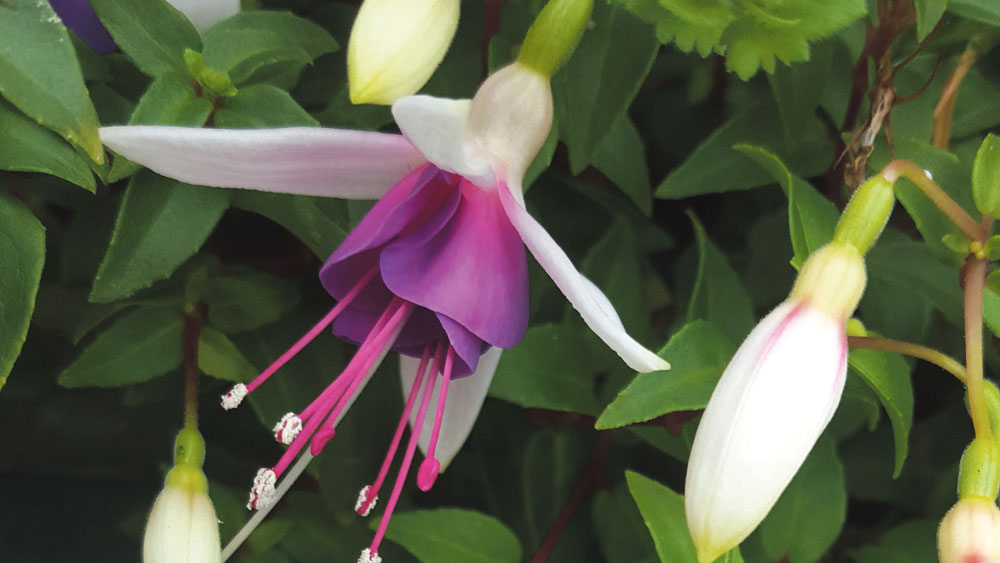
A wide range of Fuchsia colour varieties have been bred in recent years.
Nature on our doorsteps: Fairy-like Fuchsia
Rosaleen Dwyer is the County Heritage Officer at South Dublin County Council – every week she gives us an insight into the natural heritage around us and the beautiful biodiversity of the plants and creatures.
A VERY familiar bush that grows along roadways, hedgerows and in gardens is the Fuchsia.
Fuchsia was named in honour of the 17th Century herbalist and botanist Leonard Fuchs, and is a native of Chile and Argentina. It has become naturalised in Ireland where it grows well in our mild climate.
Fuchsia is particularly common in the west and southwest of Ireland where it is hardy enough to withstand the winds and exposed conditions that occur along the coasts.
In those locations, it often becomes the dominant bush growing along roadsides.
Fuchsia flowers have a very distinctive shape.
Their highly visible red, petal-like structures are actually sepals which protect the developing flower when it is a bud.
When these red sepals open, they point outwards, revealing the true, purple petals underneath and the thin red pollen-producing stamens that dangle below.
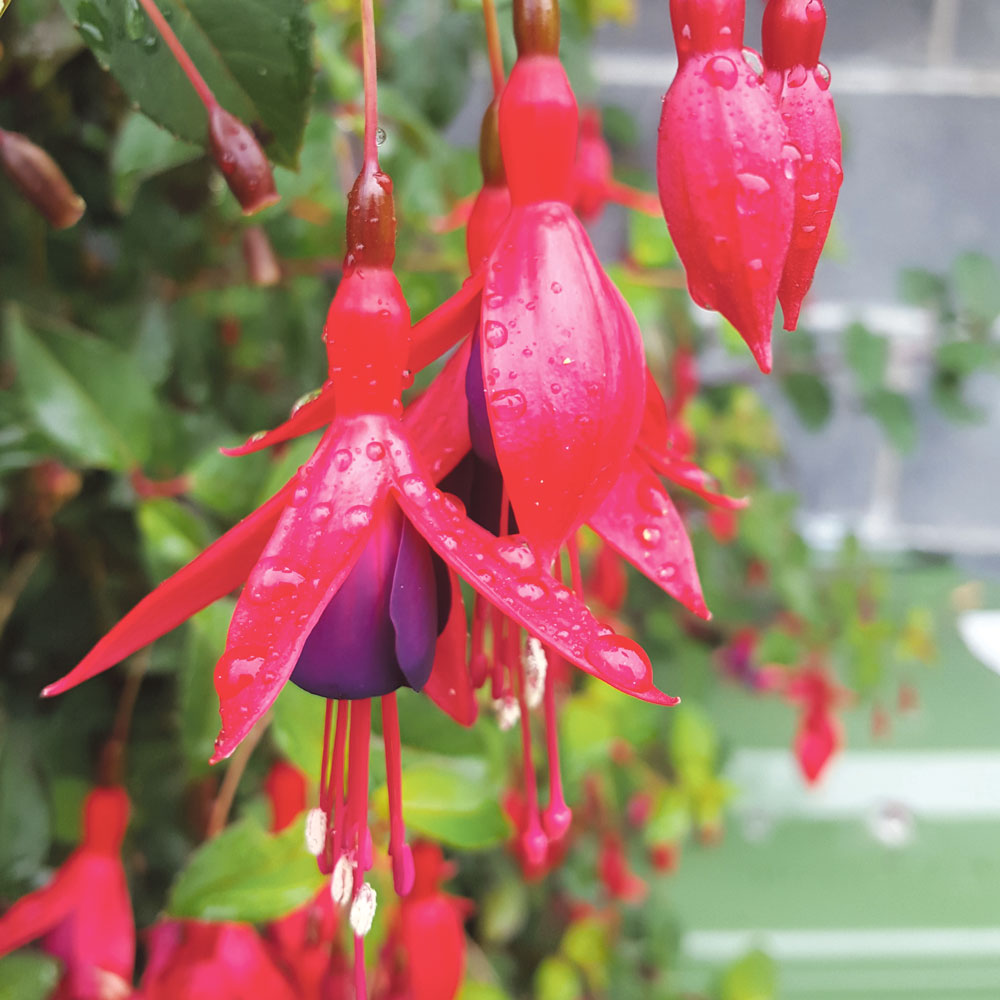
Fuchsia’s red sepals protect the developing flower when it is still in bud
This arrangement of flower parts creates the dainty fairy-like shape of the Fuchsia flower, and plant breeders have created a wide range of other colour combinations that include pink, white, cream, and lilac.
The tips of the dangling stamens turn white when the pollen is mature.
This pollen attaches to visiting insects as they scramble up underneath the purple petals to access the rich store of nectar inside the flower.
We too can access this nectar by pinching the flowers off and tasting the sweet fluid.
In its native South American countries, Fuchsia is pollinated by hummingbirds.
In Ireland, pollination is completed by honeybees, wasps, and bumblebees – but only those bumblebees that are small enough to squeeze into the narrow tunnel formed by the purple petals.
A range of Fuchsia varieties have been bred that include shrubs, trees, climbers and miniature potted plants.
Delightful double-flowered varieties have also been bred, and many of the shorter, low-growing plants have been developed to tumble from tubs and hanging baskets.
TAGS Life

