
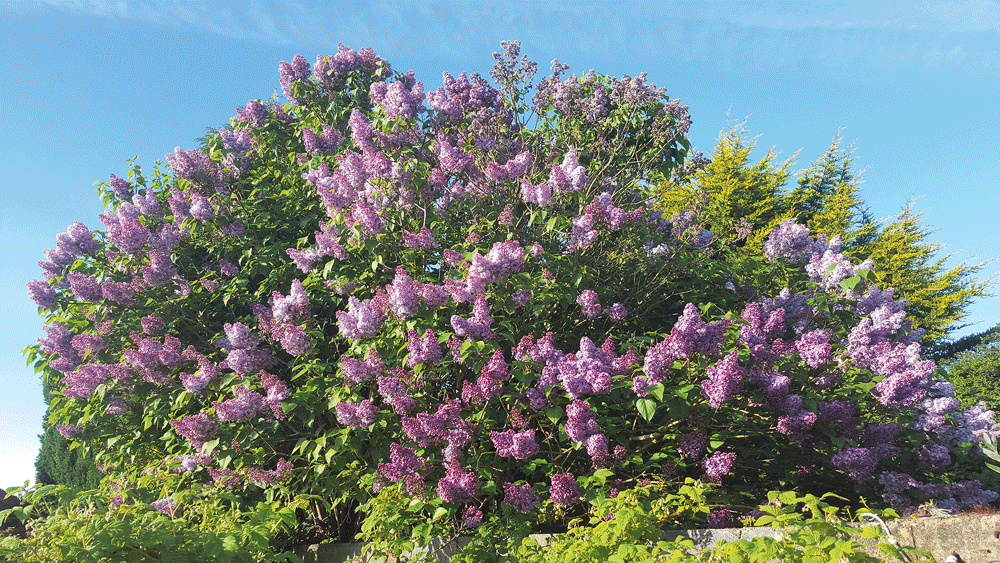
Lilac's spikes of blue-purple flowers bring an intense scent into small gardens
Nature on our doorsteps: Flowering trees for the small garden
Rosaleen Dwyer is the County Heritage Officer at South Dublin County Council – every week she gives us an insight into the natural heritage around us and the beautiful biodiversity of the plants and creatures.
In the months of May and June, two lovely flowering trees bring contrasting colours to the small garden.
The yellow-flowering Laburnum and the purple spikes of Lilac look particularly pretty planted close to one another, as they often were in the past.
These two plants were a feature of the old cottage garden.
They do not grow too large, and they produce plenty of colourful flowers which fill a small garden with scent, especially on a warm, still evening.
Laburnum has long dangling bunches of golden yellow, vanilla-scented blossoms which give the bush a very elegant look. It also has a narrow trunk with attractive olive-green coloured bark.
Laburnum originated in the mountainous areas of Central and Southern Europe.
It has been widely planted in gardens for its flowers and its compact size.
In some places, it has ‘escaped’ from gardens and has become naturalised along roadsides and the edges of woodland.
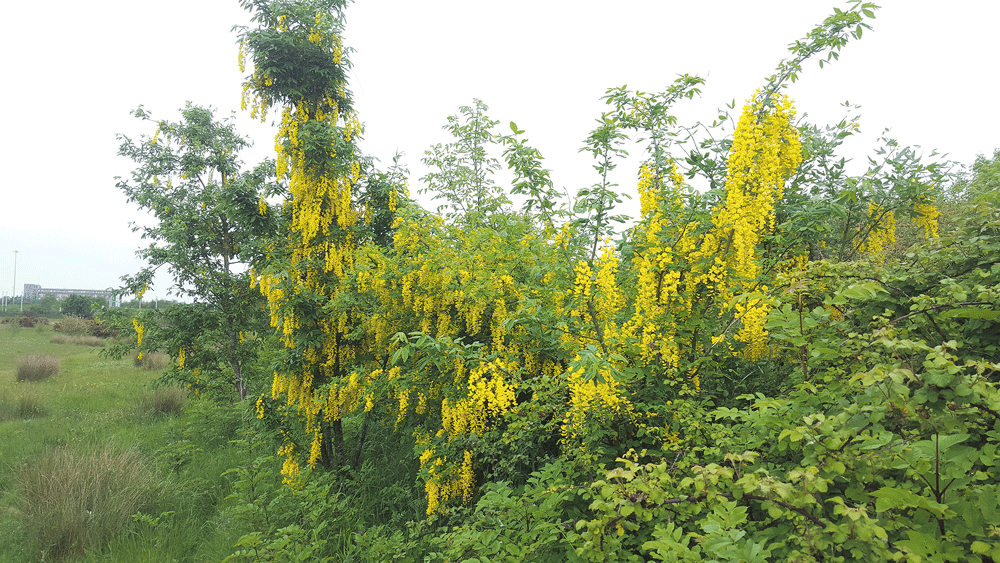
Over time, Laburnum escaped from cottage gardens into the wild
Laburnum belongs to the pea family of plants. Its individual yellow flowers have the typical shape of pea plants, and it also produces the recognizable long pods in which small black seeds develop. As the pods mature, they twist as they dry, splitting open to scatter the seeds.
Lilac is native to the rocky hillsides of the Balkans region of south eastern Europe.
It was first brought to Europe in the 16th Century, but it was during the Victorian and Edwardian period that it became the height of fashion to plant them widely in gardens for their colour and fragrance.
Apart from their beautiful spikes of lilac-pink flowers, it is Lilac’s fragrance that is an instant trigger for many people, recalling nostalgic memories of sunny childhood days in early summer.
Like Laburnum, Lilac also escaped over time into the wild.
They can still be found today, surviving in old hedgerows as well as in old, long-established or neglected gardens.
Lilac’s heady fragrance is most intense at twilight or in the early morning, suggesting that moths may be the primary pollinators for this flowering bush.
TAGS Life

