
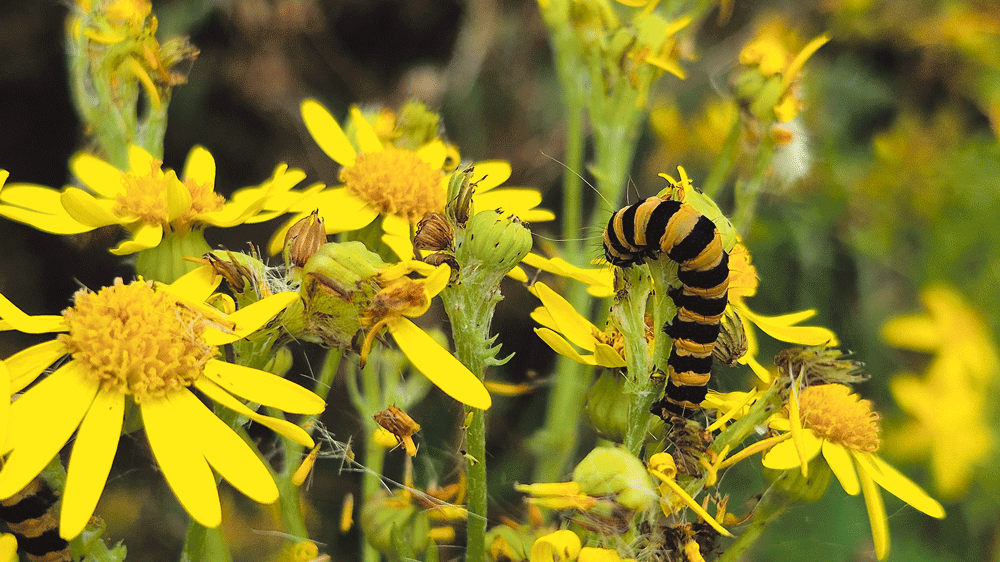
The Cinnabar Moth’s caterpillars can strip the plant of leaves and flowers
Nature on our doorsteps: Ragwort and the Cinnabar Moth
Rosaleen Dwyer is the County Heritage Officer at South Dublin County Council – every week she gives us an insight into the natural heritage around us and the beautiful biodiversity of the plants and creatures.
From early July, Ragwort’s bright yellow daisy-like flowers are noticeable along roadsides, in grassy meadows, and on abandoned urban sites.
Ragwort is listed as a noxious weed due to the toxins contained in its leaves which are poisonous to grazing animals.
The plant is important, however, in the food chains of a wide range of other species.
The flat shape of Ragwort’s flowers makes its rich supply of pollen and nectar easy for pollinating insects to access like honeybees, solitary bees, bumblebees, butterflies, moths, hoverflies, beetles, and flies.
One species, the caterpillar of the Cinnabar Moth, relies almost completely on Ragwort for its food.
After hatching from their eggs, these caterpillars stay together to feed on Ragwort’s leaves and flowerheads, often stripping plants of its vegetation.
This helps to naturally control the spread of Ragwort, as it reduces the plant’s capacity to flower and set seed.
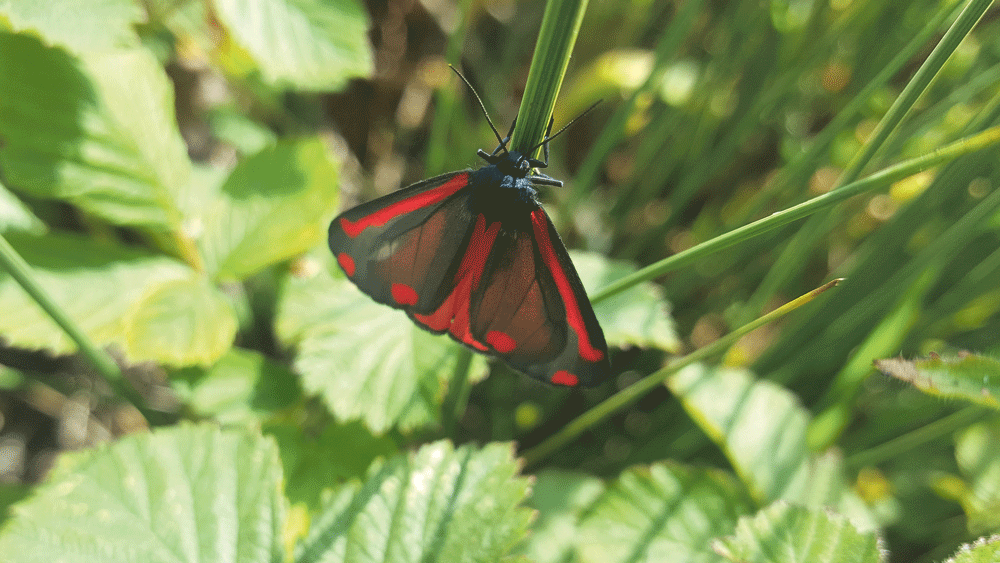
The red and black colouring of the Cinnabar Moth indicates to predators that it tastes unpleasant.
Numbers of Cinnabar Moths had significantly declined in the late 20th century due to the agricultural control of Ragwort. Ragwort control measures have slackened in recent years, and Cinnabar Moth numbers are beginning to increase again.
Moths now being recorded in locations they had long disappeared from.
The Cinnabar Moth gets its name from the bright red colour of its hind wings. Its front wings are black with a striking pattern of red spots and bars.
Cinnabar is a toxic mineral ore that yields mercury, and in the past, this mineral was the source of one of the red pigments used by artists in painting.
The Cinnabar caterpillar is just as striking, with black and orange bands around its body and long hairs scattered around its body as it matures.
Although the Cinnabar Moth is generally a night-time moth, it is sometimes seen in bright sunshine.
Both the adult moth and the caterpillars, however, are protected from daytime predators.
As the caterpillars feed on the plant’s leaves, they absorb the plant’s toxins. This makes both them and the adults very unpalatable to predators.

