
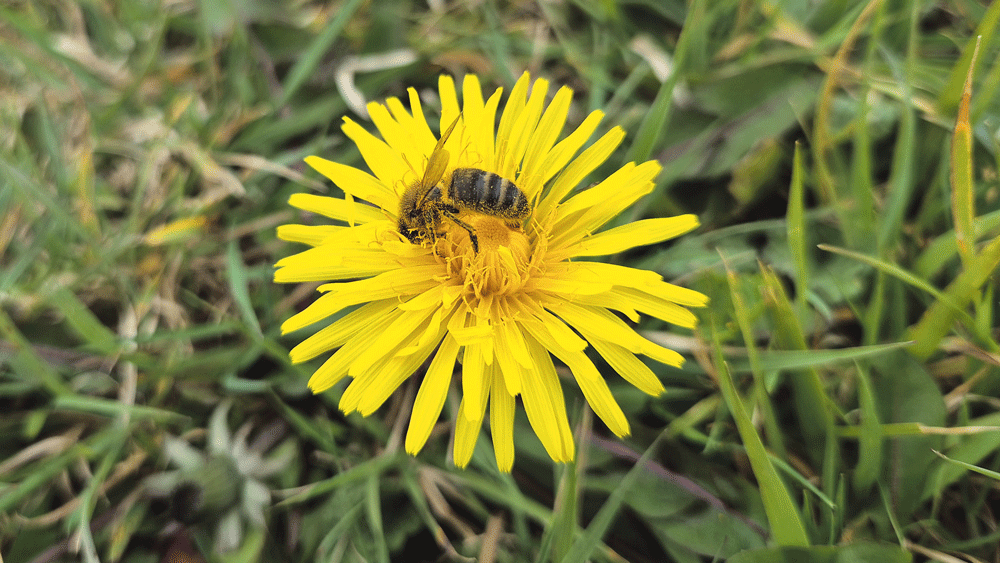
Dandelions are the most visited flowers by bees in springtime
Nature on our doorsteps: The top ten favourite plants for bees
Rosaleen Dwyer is the County Heritage Officer at South Dublin County Council – every week she gives us an insight into the natural heritage around us and the beautiful biodiversity of the plants and creatures.
Every year, the National Biodiversity Data Centre (NBDC) gathers thousands of records from around the country of birds, insects, plants, animals, fish, fungi, and invertebrates.
Last year, the Centre received over 1,700 records of bees, including honeybees, bumblebees, and solitary bees.
Many of these records also identified the flowers that the bees were visiting.
This gives us important information on the types of plants that bees prefer at different times of the year.
Ten particular plants came out tops in terms of bees’ favourite food.
At No.1 was the Dandelion, which is no surprise.
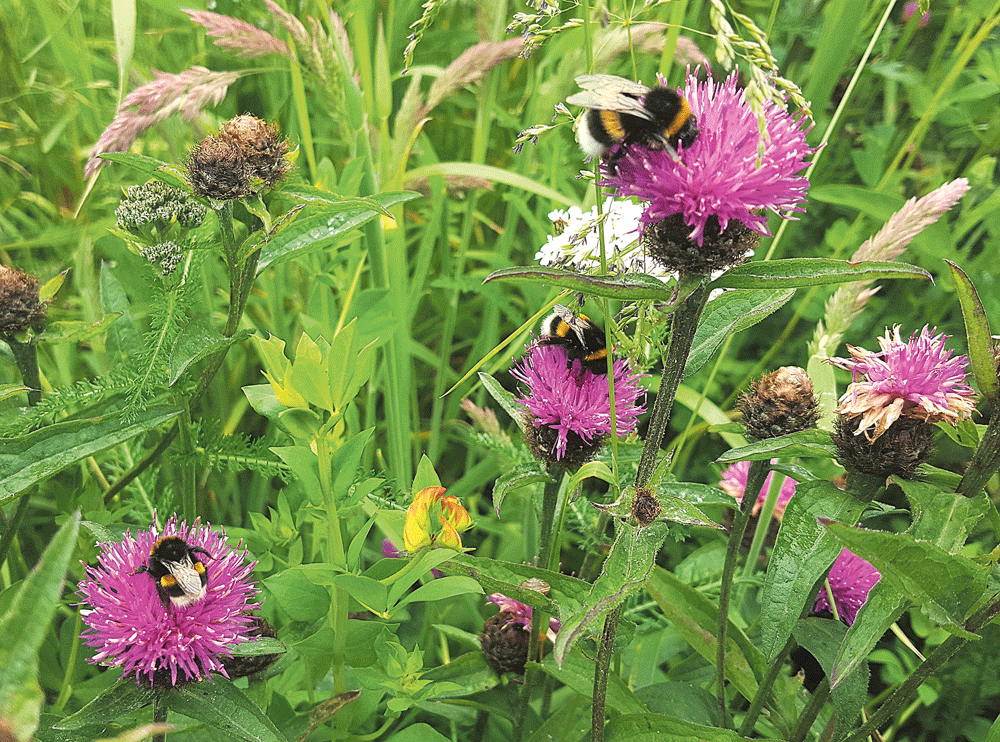
Number 2 in the Top Ten favourite plants for bees is Knapweed
Dandelions are full of pollen, and because of the flower’s flat, open, shape it is easy for bees to collect the sticky grains.
Also, Dandelions are plentiful in springtime, at precisely the time when bees and bumblebee queens are building up their energy after the cold, hungry winter.
Pollen is an incredibly rich natural food.
It contains sugars, protein, carbohydrates, vitamins, minerals, and natural enzymes.
Allowing Dandelions to grow and flower is therefore critical to the survival of bees and other insects in early springtime.
The second most preferred flower was seen to be Knapweed, the purple-headed flower that blooms in summer and autumn.
After Knapweed came Thistles, Bramble, Clovers, Heathers, the Vetches, Lavender, Bird’s-foot trefoil, and Comfrey.
While ornamental garden flowers like Lavender and Comfrey are important for bees, the remaining eight of the top ten preferred plants were seen to be wild species.
In March, April and May the most important plants for insects are Dandelions, garden Heathers, Willow, flowering Red Currant, Rosemary, and Bush Vetch.
In June, July and August, Bramble, Clovers, Lavender, Catmint, Knapweed, Ragwort, and Thistles are important.
In September and October, Devil’s-bit Scabious, Comfrey, Ragwort, Verbena, Aster, and Ivy help extend the bees’ feeding time into late autumn.
Growing a mix of the bees’ preferred flowering plants throughout the year can therefore make a huge difference to survival, not just for bees, but for a wide range of insects.
TAGS Life

