
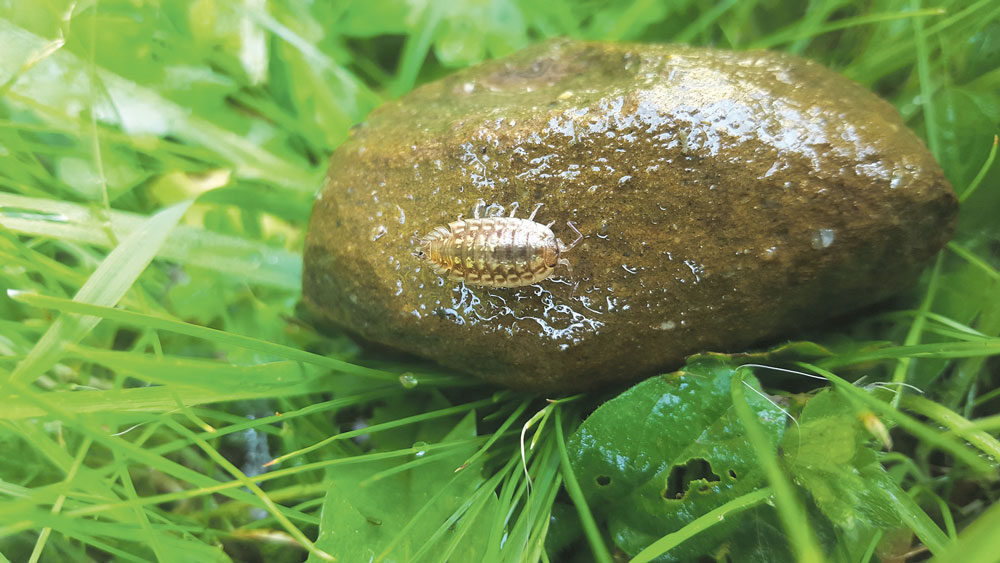
Woodlice live in damp, cool, shadydamp, cool, shady environment
Nature on our doorsteps: The Woodlouse Fly
Rosaleen Dwyer is the County Heritage Officer at South Dublin County Council – every week she gives us an insight into the natural heritage around us and the beautiful biodiversity of the plants and creatures.
WOODLICE are small, flat, oval-shaped creatures that live in damp, cool, locations under stones, flowerpots, rotting leaves, and decaying wood.
Woodlice are not insects, they are crustaceans.
Like lobsters and crabs, they have an outer skeleton that looks like a segmented shield. The woodlouse
‘exoskeleton’ has seven segments, and each segment has a pair of legs.
Unlike the hard waxy outer shell of insects, the exoskeleton of the woodlouse is porous, meaning water can be lost from the woodlouse’s body.
It is for this reason that they prefer to live in damp, cool environments where they will not dry out.
Woodlice have many predators that hunt for them, including shrews, centipedes, spiders and birds.
There is also a group of parasitic flies, the Woodlouse Fly, that specifically target woodlice.
As woodlice grow, they need to shed their skin.
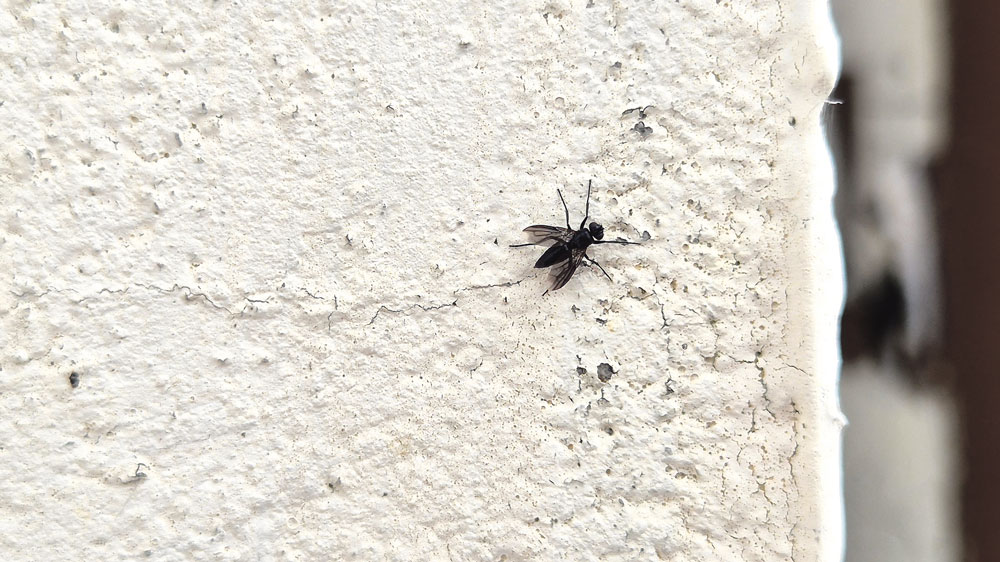
The female Woodlouse Fly has whitely tips to its smoky black wings
They do this by first shedding the back half of their exoskeleton and then, a day or so later, they shed the front half.
It is at this moulting stage, when their bodies are soft, that they are most vulnerable.
The Woodlouse Fly lays its eggs directly on the soil, or on any surface where the scent of a woodlouse occurs.
When the egg hatches, the larva positions itself vertically, waving the upper part of its body into the air waiting for a woodlouse to pass by.
Once the larva attaches onto a woodlouse and enters its body, the larva feeds on its blood and organs until the woodlouse dies.
The larvae then pupates in the empty carcass and emerges later as an adult.
The adult Woodlouse Fly is small, measuring only 3mm to 5mm long. It has a black body and smoky black wings that appear to hold a triangular shape.
The female fly has white tips to its wings.
These flies occur in the same damp habitats as woodlice, and they can often be noticed sitting on walls.
They are an important element of the natural processes of balance and control of species in nature.
TAGS Life

