
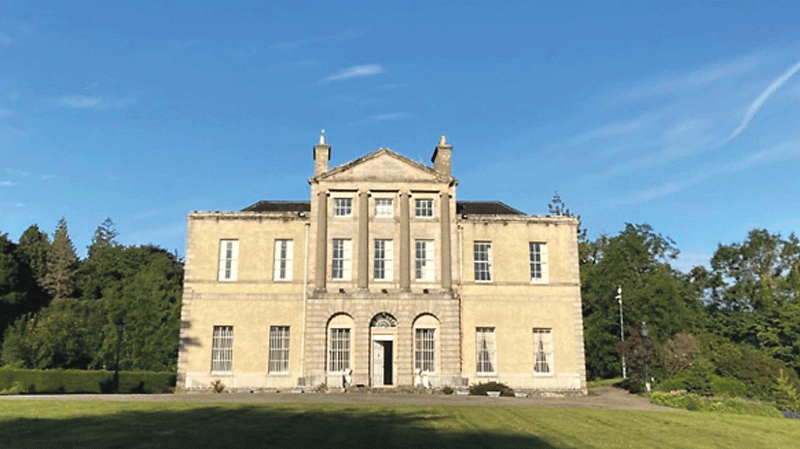
Lucan House
Public to have the benefit of Lucan House over the summer
Lucan House will open to the public once more on the weekend prior to the next Bank Holiday Monday, May 4, and will open on a weekend basis over the summer.
The former residence of the Italian ambassador to Ireland was acquired by the local council in December 2024 for €10 million, and it will be turned into a public amenity and visitor destination.
South Dublin County Council published the Lucan House and Demesne
Masterplan in July 2025, which details an initial €20m investment into the facility and surrounding area.
SDCC Chief Executive Colm Ward stated: “Procurement is progressing for consultants to manage delivery of the full masterplan for Lucan House, from planning consent through to construction, after which we will provide a detailed update on project timelines.
“Some priority conservation and repair works were undertaken on the property and public access to the grounds will commence later this month, on weekends initially.”
Improved access to the location as well as stronger connectivity between it and St Catherine’s Park, Lucan Demesne, and the wider green network through new walking and cycling routes will be created.
Enhanced biodiversity and green infrastructure, including pollinator-friendly planting, riparian edge protection, and ecological corridors will be introduced.
The conservation and reuse of historic buildings such as the bath house, boat house, and stables will be undertaken, supporting cultural, recreational, and enterprise activities in the local area and helping the location to become a hub for the community.
New community and cultural amenities are also set to be delivered, including an outdoor amphitheatre, performance spaces, playgrounds, picnic areas, and interpretive trails that share the story of Lucan.
Work will also be undertaken to ensure that Lucan House is celebrated for its historical significance.
Climate-resilient design will intend to incorporate permeable surfaces, shaded areas, and sustainable landscaping into the aesthetic.
Accessible public facilities, including toilets, changing areas, and a community-focused café will also be delivered to ensure a comfortable experience for all visitors.
The masterplan reflects the views of local residents gathered through surveys, workshops, and public meetings.
Community input shaped key priorities such as restoring heritage features, ensuring universal accessibility, creating quiet spaces for reflection, and providing everyday amenities that serve both locals and visitors.
The project is co-funded by the Government of Ireland and the European Union under the ERDF Southern, Eastern and Midland Regional Programme 2021–2027.
It will be delivered in stages, allowing early access to key areas and ensuring that income from heritage, hospitality, and cultural uses is re-invested in the long-term care and enhancement of the site.
Funded by the Local Democracy Reporting Scheme.

