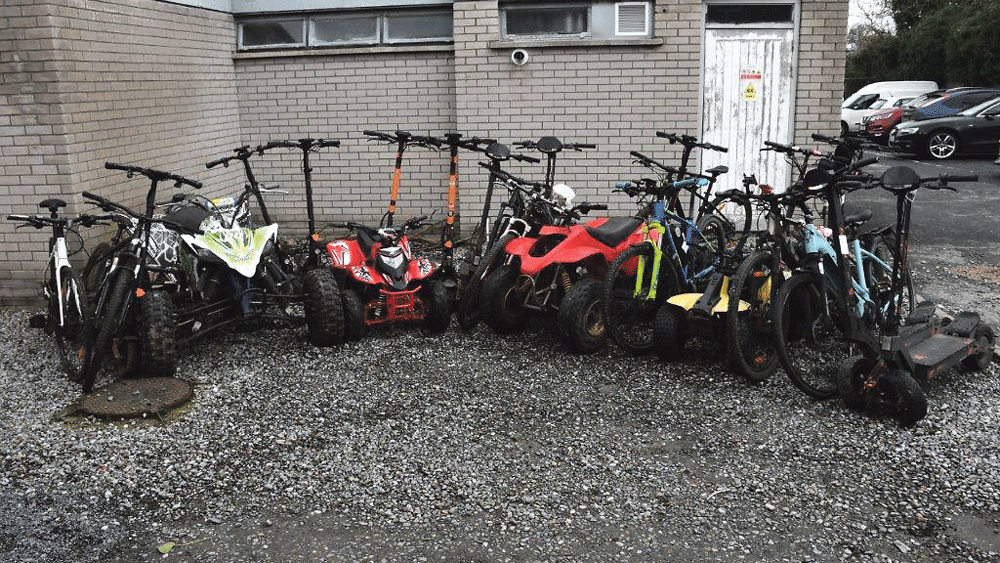
Some of the bikes seized by gardai on Monday. Photo by An Garda Siochana
‘Their job is to hide it, ours is to find it’
IT’S 7am on Monday morning at Ballyfermot Garda Station.
A briefing is being delivered to a room full of gardai ahead of an operation targeting the use of e-bikes and e-scooters involved in drug dealing and criminality.
Sergeant Darren Swan, responsible for the task unit meeting, goes over the details one last time before members head out to work.
Operation Meacan is a frequent day of action targeting electric bikes in Dublin since 2023.
Today it will see three garda search teams heading out to 12 properties in Ballyfermot, Cherry Orchard and Clondalkin.
Similar operations are in place across Dublin policing districts throughout the day.
Bench warrants have been obtained in the district court in the days ahead of the operation, issued under Section 26 of the Misuse of Drugs Act.
“All our actions have to be lawful and justifiable,” explains Aidan Shaughnessy, Detective Sergeant, Serious Crime South Clondalkin.
“The bench warrant allows guards by law to go in and seize anything they believe is evidence of criminal activity.”
“Lads have made all enquiries”, he adds, alluding to the groundwork that is carried out before the day’s operation.
Frequent days of action for different types of crime categories are conducted by gardai in the DMR West division, which includes Clondalkin, Ballyfermot and Rathcoole.
Previous searches under Operation Meacan have led to the seizure of hundreds, if not thousands of e-bikes, scooters, quads, quantities of drugs, cash and paraphernalia.
Despite this, there is no shortage of e-bikes used in criminal activity and dealing across the city.
They are used prominently by mostly young males, some of whom are lured into crime at extremely young ages in places like Cherry Orchard.
After the briefing, The Echo goes out with Detective Sgt Shaughnessy and Detective Garda Sharon Hanley in an unmarked car, to trail some of the search teams.
Outside one property in Cherry Orchard, gardai are removing what looks like a sword.
It appears the occupants are familiar with the protocol of the search process.
E-bikes will be a main feature of the day, particularly the Surron, which retails for an average of €4/5k.
It is the transport of choice for drug dealers in the capital these days due to a range of factors: speeds similar to a car, it can access all areas, nip through parkways, pedestrian bridges, bollards, laneways, and it is so quiet you can hardly hear it coming or going.
They are also difficult to catch, stingers won’t slow them down and gardai are reluctant to chase young people on bikes due to the dangers involved.
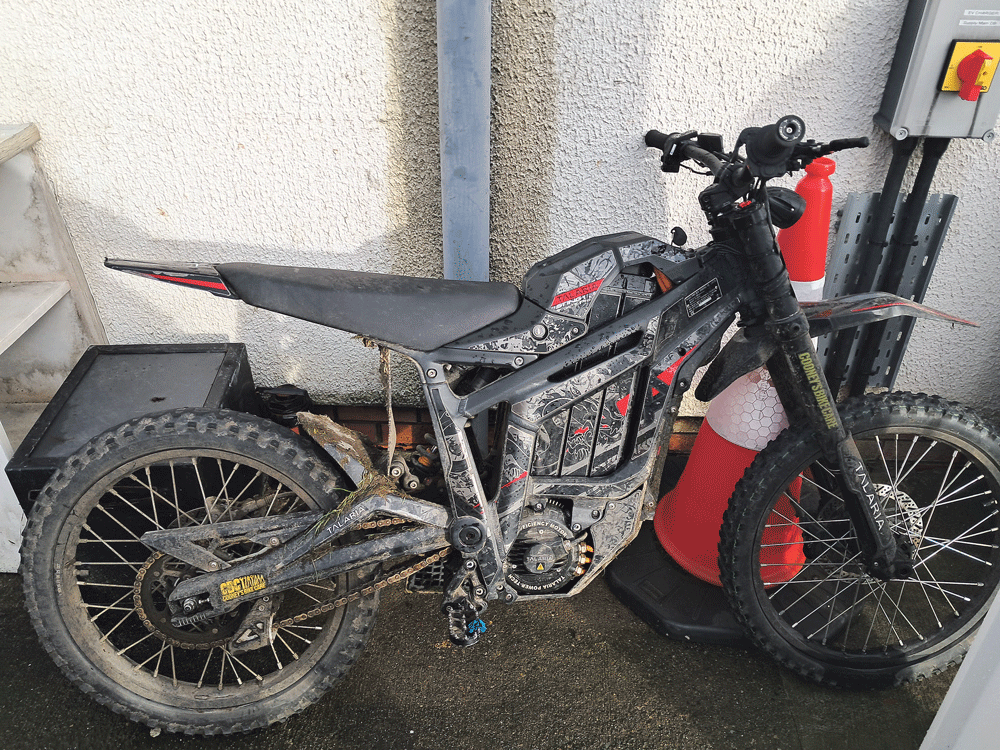
The Surron bike seized by gardai retails at an average €4,000/€5,000
People involved in the drug trade use ‘go phones’ which are shared among dealers within their own patches and territories across the city to arrange meet ups for buyers. Go phones, along with the e-bikes, are also shared between members.
“This is the bottom of the chain. At the top you have people bringing cocaine into the country. Cannabis can be grown here, in houses, attics, industrial units. People can be flown in from Asia to water the plants, turn on the lights and are left there for weeks and weeks,” said Shaughnessy.
He is at pains to clarify that the crime aspect represents a tiny minority of the community, but it is one that has a negative impact, hurting lives, and e-bikes have led to deaths and serious injuries in the area.
Another feature of the day that comes up repeatedly is drug intimidation, acknowledged by the detectives as a “huge problem.”
If a search results in a seizure of €5k worth of drugs, the person involved could find that they now owe €7k or €10k to higher ups, and may receive a visit that night threatening them to pay up or see their house set on fire.
“Kids who are vulnerable might be given something to lure them in the first place,” expands Shaughnessy.
“Things might be bad at home, these are not your typical kids. Vulnerable kids are targeted to be drug dealers. But they will only use you until you are no good. They can easily find another person.”
Outside another house on the list in Cherry Orchard, gardai have seized two quad bikes and are dealing with a male occupant who has a bench warrant and was obstructing gardai in their search.
Risk assessment before arriving to the scene is vital, according to Detective Garda Sharon Hanley.
“You never want to go in blind. That’s not just for your own safety, it’s for theirs as well. We will discuss beforehand the locations, check the maps, the layout, have some cover in the back area, know if they have dogs. We try to limit surprises.”
Strength in numbers at the scene helps defuse potential conflict, but XL Bully dogs are not the best friend for visitors and have caused serious injury to gardai before.
As part of Meacan, gardai are operating checkpoints to check for the use of e-bikes/scooters involved in crime, but also checking the usual particulars for drivers.
Within a few minutes of arriving at a checkpoint at Watery Lane gardai have already discovered a driver without motor insurance, confiscating his hatchback.
“You might think we set this up,” quips Shaughnessy.
The car will be collected by a tow company and brought to a yard, or driven to a garda station if the tow truck will take too long to get there.
“If the driver is insured they can get it out of the yard, get it towed themselves, or face a daily fee of €35,” says Hanley.
As The Echo was leaving Ballyfermot Garda Station later on that day, another couple of cars were being towed on the flatbed, due to infractions of the Road Traffic Act at checkpoints.
New technology allows gardai to type in a registration and check insurance details. It has also cut down on people who got a quote, received a disk and cancelled payments but kept the disk.
“Much easier now for us to check driver details straight away and a big help in stopping that,” said Shaughnessy at the Watery Lane checkpoint.
Data this week by the Motor Insurers’ Bureau of Ireland (MIBI) revealed close to 20,000 vehicles were seized by gardaí last year for being driven without insurance.
Access to CCTV is important for investigations, and on patrols around the division during the day, Shaughnessy explains how it was pivotal in cases involving the murder of Croation Josip Strok in Grangeview Way, Clondalkin, in 2024.
“That’s the wall a pickaxe handle used in the attack was thrown into a back garden,” points out Shaughnessy.
“Gardai put tarpaulin over the scene to preserve it and prevent rain destroying evidence.”
CCTV is also used to track movement and activity on the Grand Canal, which has seen major resources by gardai and local authorities in recent years to curb drug dealing and thefts.
As with the case of recent arson attacks on wrong targets, nearly killing innocent people at Landen Road, Ballyfermot, and at Oak Downs Estate, Clondalkin, CCTV helps the investigation piece together movements.
For the Landen Road attack, CCTV determined which way the two youths arrived on and another who provided fuel from a service station.
Corkagh Park is another part of the beat, gardai seized 42 kilos of cocaine (€3million value) in a suitcase a few years ago, and there is a number of hiding spots around the park for lower level dealing.
“Their job is to hide it, ours is to find it,” says Hanley.
Funded by the Local Court Reporting Scheme