
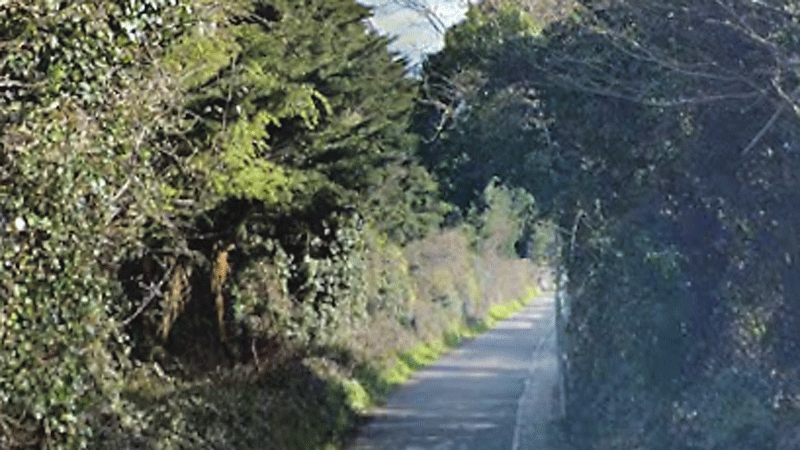
Knockmeenagh Lane
Framework aims for a greenway link along Knockmeenagh Lane
The draft Clondalkin Local Planning Framework will work towards an active travel link or greenway along Knockmeenagh Lane as part of the area’s regeneration.
The Knockmeenagh Framework site lands are expected to be included as part of the review of zoning for new housing targets and land capacity within South Dublin.
The potential for a mixed-use development to be erected within the lands was identified in the draft LPF for Clondalkin.
The wider lands at Knockmeenagh are currently zoned for employment, aside from the residential St Brigid’s Cottages.
The potential mixed-use development could also include the creation of a central open space.
Knockmeenagh Lane in Clondalkin is set to receive a high level of protection from the latest variation to the draft Clondalkin LPF.
South Dublin County Council noted that they wish to maintain the historic lane and the walls, while also serving as an active travel route in the future.
The local authority recognise that the lane is a route that is recognisable in maps dating back to the early 1800s and facilitated access for pilgrims travelling from Dublin City to St Brigid’s Holy Well, a pilgrimage recreated every year as part of the village’s St Brigid’s Day festivities.
The lane is also connected to An Slí Mor, a historic pathway that connects Dublin City to Galway through Clondalkin, and also included areas such as Bluebell and Drimnagh.
Any improvements made to the lane will be done without “compromising the integrity” of the historic route.
SDCC Senior Planner for Forward Planning, SDZ and Schools Hazel Craigie stated: “Given the constraints to the widening of the lane due to current ownership and historic quarrying on either side at its eastern end, the Clondalkin LPF has examined potential solutions for improved active travel solutions which would meet universal design standards without compromising the integrity of the lane.
“This can only be achieved as part of regeneration of the lands on either side of the lane.”
Funded by the Local Democracy Reporting Scheme.

