
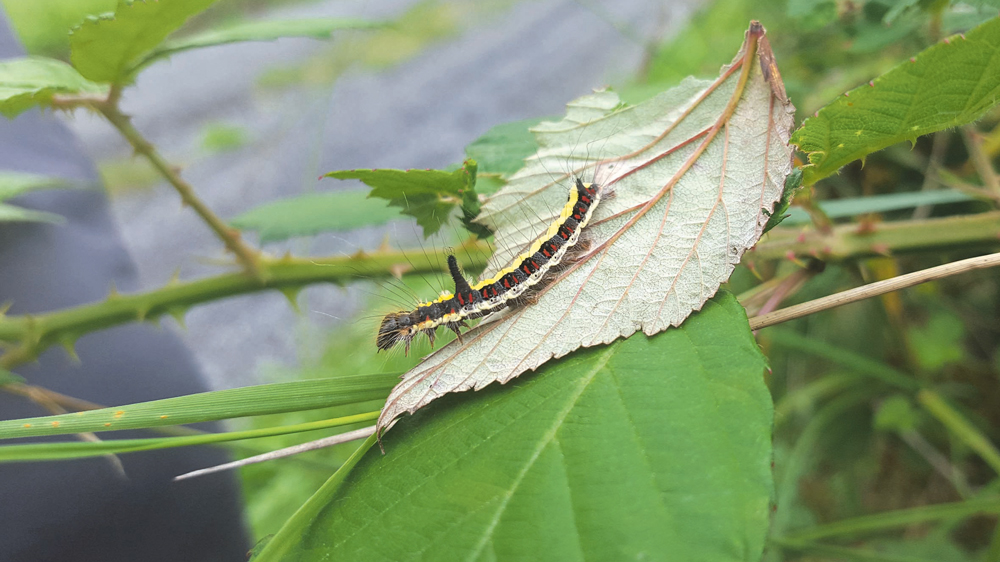
The distinctive caterpillar of the Grey Dagger Moth feeds on Hawthorn leaves
Nature on our doorsteps: A bumper Hawthorn harvest
Rosaleen Dwyer is the County Heritage Officer at South Dublin County Council – every week she gives us an insight into the natural heritage around us and the beautiful biodiversity of the plants and creatures.
THE good weather this summer has resulted in a great harvest of wild fruit.
In the hedgerows, fruits like haws, sloes, rosehips, elderberries, and crab apples are plentiful, drawing the attention of hungry birds and human pickers.
The berries of the Hawthorn, in particular, appear to be abundant this year, spreading a gentle red haze over the hedgerows.
The word ‘haw’ is suggested to be the Old English word for a hedge, and it is also the name given to the bush’s little red berry.
These fruits have only a relatively thin layer of soft flesh, with most of their size being taken up by an inedible stone or seed in the centre of the fruit.
Haws are a vital source of food for fruit-eating birds like blackbirds, starlings, wood pigeon, and thrushes, while the large seed inside the haw also attracts seed-eating birds like chaffinches and greenfinches.
Haws are rich in Vitamin C, but they are not very tasty to us.
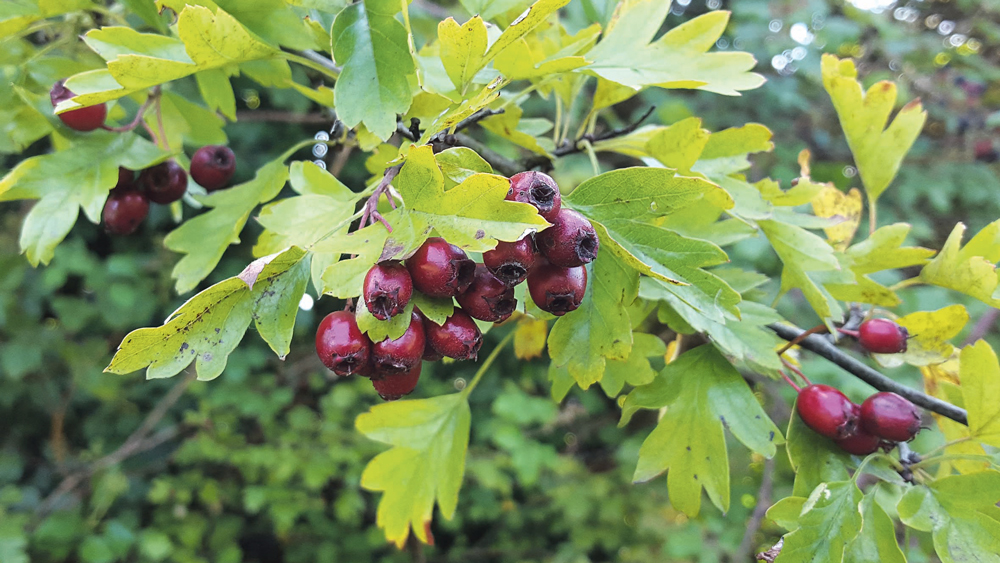
The fruit of the Hawthorn is known as the Haw.
In the past, however, our ancient ancestors saw the annual supply of haws as a valuable harvest to be collected and stored.
The fruit was first squeezed by hand to separate the inedible stones from the fleshy layers.
The mass of soft flesh was then either eaten immediately or was dried in the sun for later use.
Hawthorn’s leaves are also eaten by a range of insects and caterpillars.
One caterpillar that may be seen in the hedgerows at this time is the distinctive larva of the Grey Dagger moth.
This is covered in long fine hairs and has bright red spots and yellow stripes, with a prominent tall hump on its back behind the head.
Its bold colours and long hairs serve as a warning to predators that it is not very palatable.
Later in autumn, wintering birds including fieldfares and redwings will arrive from northern Europe.
These visitors will be escaping the harsher Scandinavian winter to feed on our bumper hedgerow harvest, before returning home again in early spring to breed.

TAGS Life

