
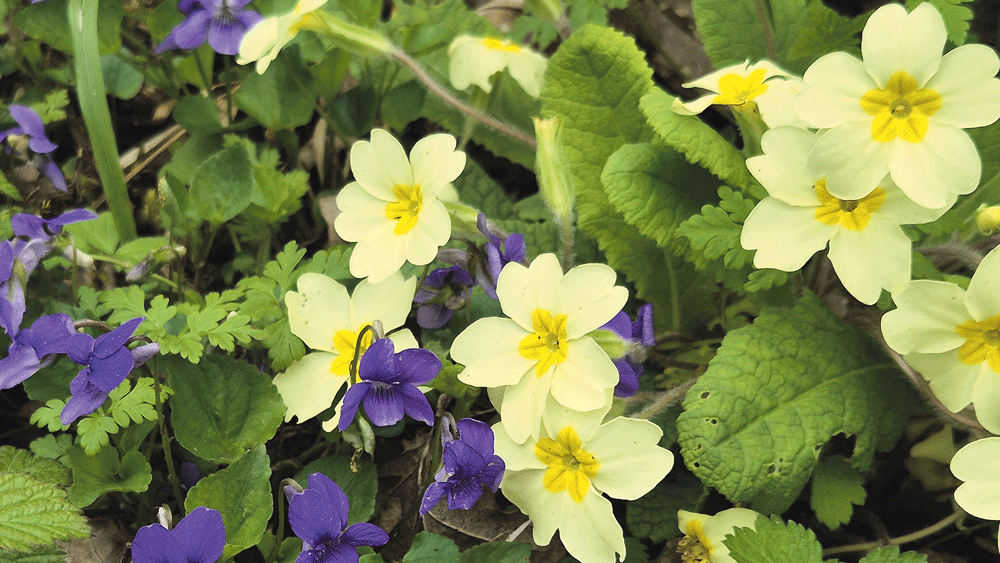
The seeds of Primroses and Violets carry packets of fat that attract ants
Nature on our doorsteps: A springtime partnership
Rosaleen Dwyer is the County Heritage Officer at South Dublin County Council – every week she gives us an insight into the natural heritage around us and the beautiful biodiversity of the plants and creatures.
Springtime Primroses and Violets can be found growing in sheltered sunny locations along the edges of woodlands, hedgerows, or on grassy banks by the side of the road.
These two spring flowers offer valuable pollen and nectar to early insects that are just emerging from their winter sleep.
This is not the only gift that they offer to insects, however.
Their seeds are also of interest to certain insects, especially ants.
Ants are not interested in eating the seeds themselves, but they are drawn to a little fleshy packet of rich fat that is attached to one end of the seed.
This little packet of food is called an elaiosome, from the Greek words for ‘elaion’ meaning oil or fat, and ‘soma’ meaning body.
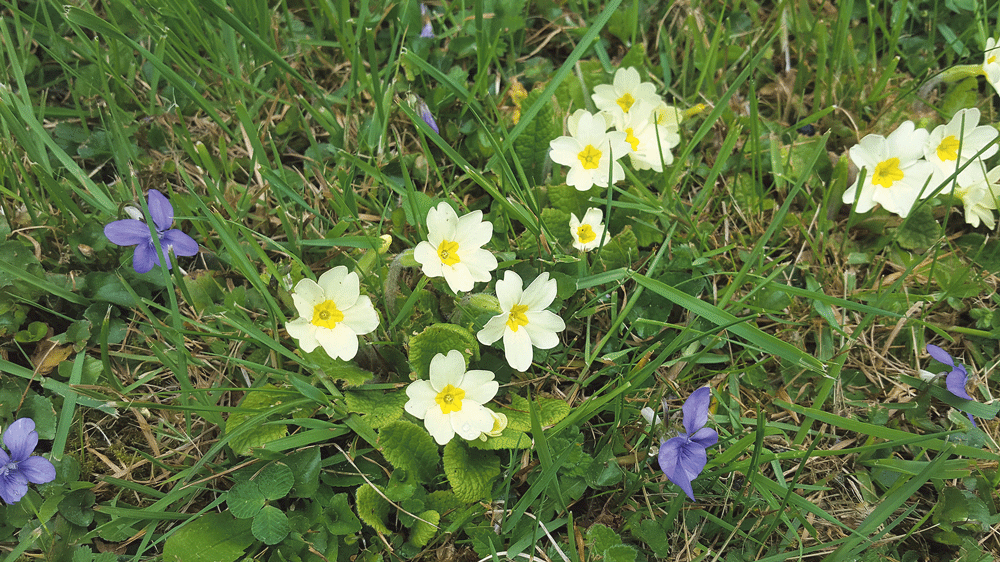
Yellow Primroses and blue Violets make a lovely colour combination
Studies suggest that the fatty elaiosomes emit a chemical scent that attracts the ants to the seeding plants.
It is thought that the scent of this chemical mimics the scent of a dead ant.
Some species of ants carry their dead back to their nest, so when the ants smell the elaiosomes they are fooled into collecting the seeds and carrying them home.
Once inside the nest, the ants remove the nutrient-rich elaiosomes and feed them to their rapidly growing larvae.
The ants have no interest in the seeds, so they dispose of them on their waste heap inside their nest.
This waste heap is composed of ant frass (ant droppings) and any other waste such as dead ants or larvae.
The waste forms a nice rich pile of fertiliser in which the discarded flower seeds can safely germinate and grow, away from other nibbling insects.
In this special relationship between the plants and the ants, both partners benefit.
The ants get a valuable source of food in the form of a nutrient-rich lump of fat, and the plant benefits because the ants carry its seeds away from the parent plant, helping to spread the plants elsewhere in the vicinity.
TAGS Life

