
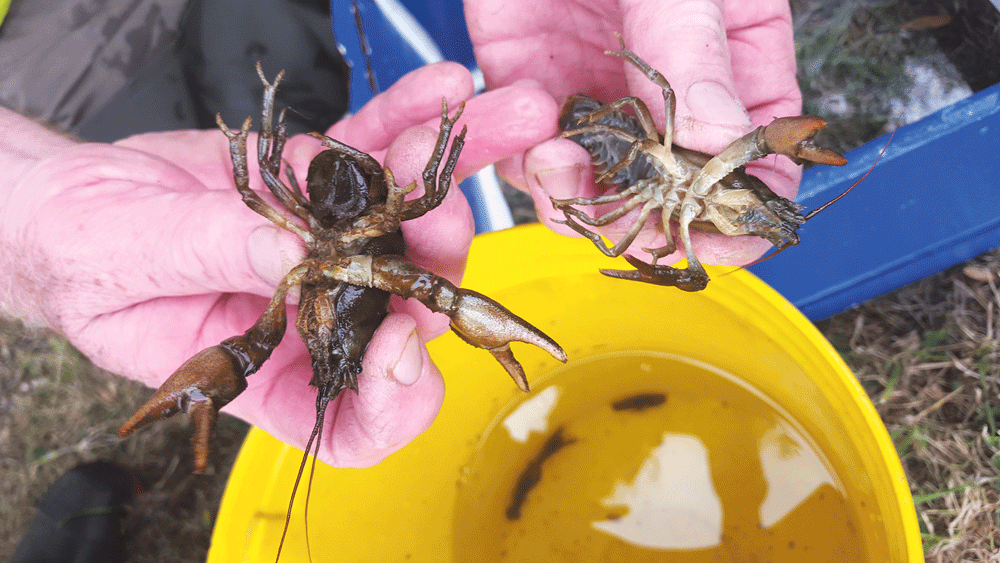
The undersides of the claws on the White-clawed Crayfish are a creamy colour
Nature on our doorsteps: ‘Check, Clean, Dry’ to protect threatened Crayfish
Rosaleen Dwyer is the County Heritage Officer at South Dublin County Council – every week she gives us an insight into the natural heritage around us and the beautiful biodiversity of the plants and creatures.
Ireland has only one naturally occurring crayfish species, and that is the White-clawed Crayfish which lives in clean, fresh waters.
Crayfish species across Europe are threatened by a disease known as Crayfish Plague.
Protecting the Irish crayfish populations is therefore critical.
For this reason, the White-clawed Crayfish is a protected species under both Irish and European law.
They occur mainly in rivers, lakes, and canals in limestone areas.
Their shell-like skeleton occurs on the outside of their body, and the developing crayfish absorb dissolved limestone in the water to build this shell.
Much of the underlying rock in South Dublin County is composed of limestone, so the rivers that drain this County have the potential to support good populations of White-clawed Crayfish.
This species grows to only between 7 and 12 cm long.
They have 5 pairs of legs, with the front pair developed into large, powerful pincers or claws.
They eat a wide range of water-plants and insects, and they will also scavenge on dead and decaying fish.
They are prey themselves for other animals like the otter, making crayfish an important part of a healthy river’s food chain.
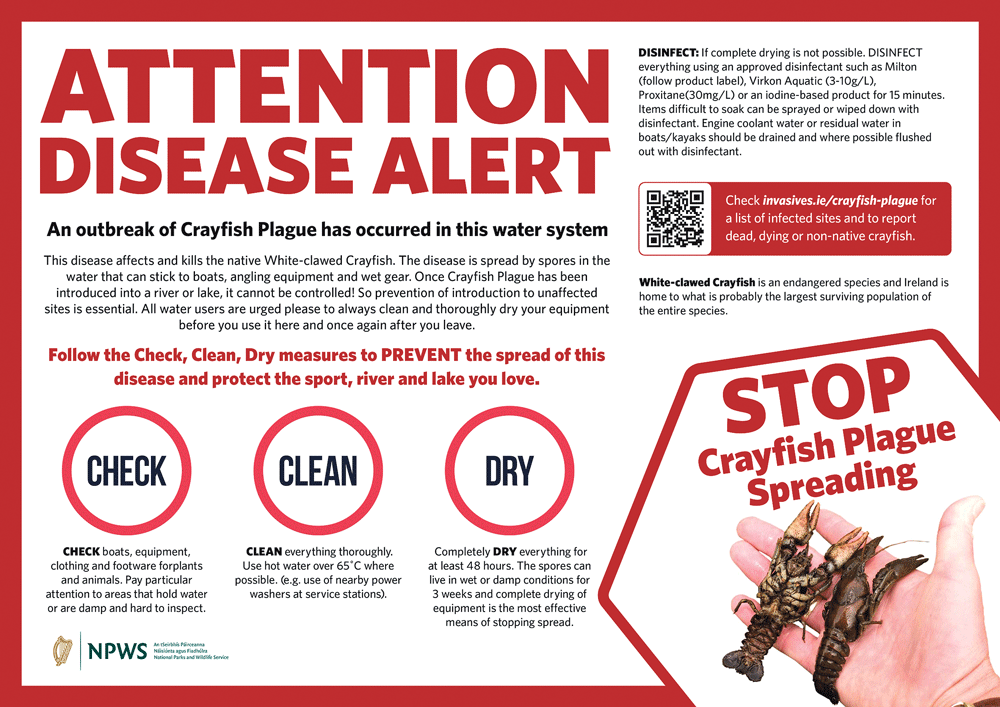
Unfortunately, an outbreak of the disease Crayfish Plague has recently been detected in South Dublin County for the first time, in the River Camac.
While the disease does not affect any other creature and is not harmful to humans, it is almost always fatal for the White-clawed Crayfish.
Its arrival in the River Camac is therefore devastating, and not just for the Camac.
As the disease can be transferred from river to river, all other streams and rivers in Dublin, including the Grand Canal, are at risk.
The disease is spread on contaminated fishing rods and tackle, nets, boats, kayaks, waders and boots.
Ensuring that all equipment is checked to remove any plant or water-based insects, then sterilised with disinfectant and, finally, dried thoroughly before using again, are critical steps to prevent the further spread of this disease.
As more people go to fish, paddle, kayak, or swim in rivers and the canal over the summer, the critical protocol to protect our crayfish populations is to Check, Clean, Dry.
TAGS Life

