
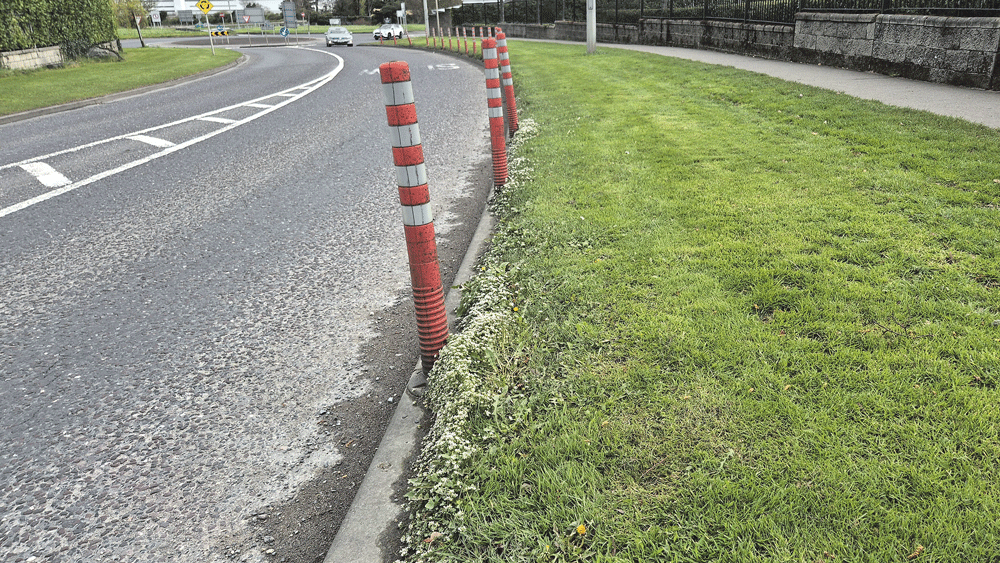
A margin of Scurvygrass in full flower along the edge of the road in Rathcoole
Nature on our doorsteps: Flowering far from the sea
Rosaleen Dwyer is the County Heritage Officer at South Dublin County Council – every week she gives us an insight into the natural heritage around us and the beautiful biodiversity of the plants and creatures.
Scurvygrass is a plant that normally grows along the coast, but it can be seen in flower now, here in landlocked South Dublin County.
Scurvygrass is a flowering plant that contains high levels of Vitamin C.
In the past, it was used to treat scurvy, which is a skin condition caused by a lack of this vitamin.
It is said that sailors gathered and ate Scurvygrass before sailing, to help prevent scurvy developing.
It is a small, low-growing plant, with very small flowers which have four petals that occur in the shape of a cross.
This places the plant in the family group known as the Crucifers, or the cabbage family.
The plant grows on light sandy, stoney soils along the edges of coastal paths, banks, and along cliff edges.
It has evolved like other seaside plants to grow in nutrient-poor soils and to withstand the harsh salty spray from the sea.
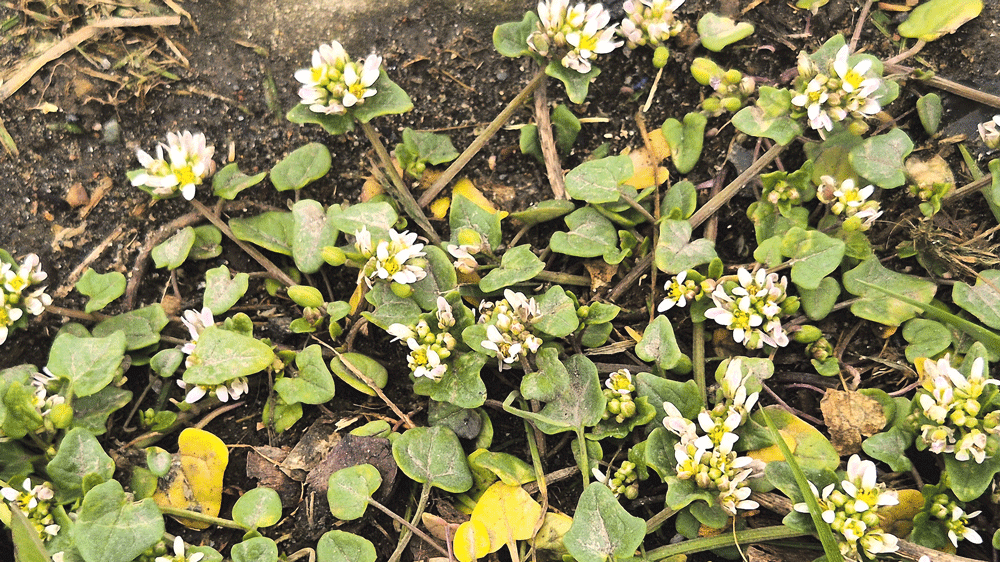
Scurvygrass’s dense mat of stems helps to trap and stabilise loose soil
It is described as being a pioneer species, meaning it is often one of the first plants to take hold in loose sand and soil.
It grows quickly from seed, and it rapidly sends its long stems out in every direction over the loose soil.
This traps even more sand and soil particles under the plant, and in this way the plant stabilises the loose soil.
This provides solid ground for other plant seeds to settle and grow.
For this reason, Scurvygrass is also said to be an ‘ecological engineer’.
Its presence and its way of growing change the environment around it and create conditions that support the growth of other plants and soil creatures.
Although it is a seaside plant, Scurvygrass is sometimes seen flowering further inland. It has found a niche along the bare edges of busy roads and dual carriageways.
It does particularly well along road sections where salty grit and sand is spread during times of frosty weather.
These gritty, salty, conditions inland match its seaside home, allowing Scurvygrass to grow, flower, and set seed far from the sea.
TAGS Life

