
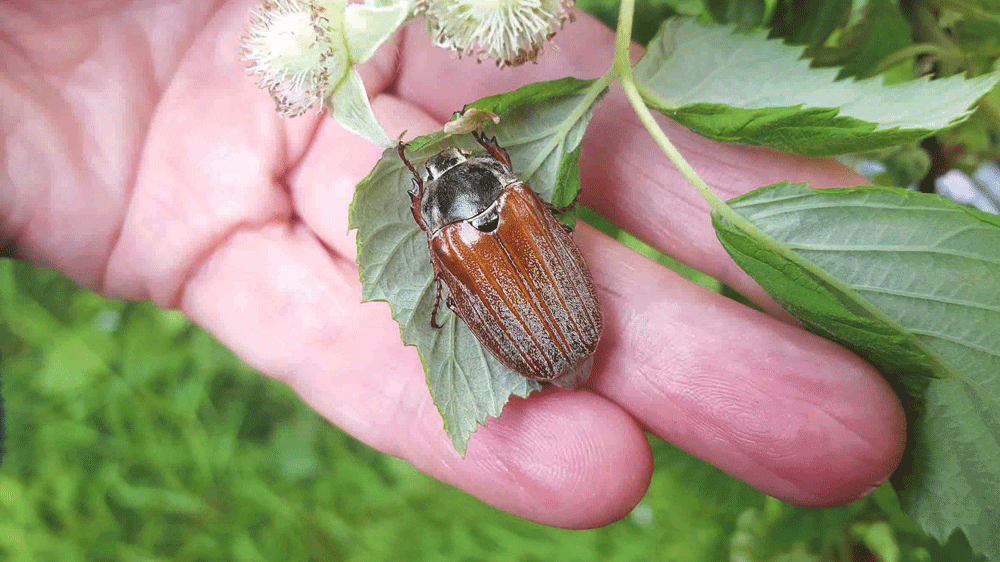
The edges of the May Beetle's front legs are scalloped-shaped
Nature on our doorsteps: The ‘Doodlebug’ May Beetle
Rosaleen Dwyer is the County Heritage Officer at South Dublin County Council – every week she gives us an insight into the natural heritage around us and the beautiful biodiversity of the plants and creatures.
In May and early June, one of Ireland’s largest beetles, the Cockchafer, or May Beetle, is sometimes seen in shrubs and trees in gardens, parks, and hedgerows.
The name Cockchafer originates from Old English, meaning ‘big beetle’, and it can indeed grow up to 3.5cm long.
Its brown body with white wedge-shaped marks along the sides is thick and stocky, making it quite noticeable.
This large species is a member of the Scarab family of beetles, which includes the burying Dung beetle and the impressive looking Rhinoceros Beetle.
Scarabs have specialised antennae where the tips are fan-shaped, and these open out into feathered ends.
The May Beetle’s peak breeding season is between mid-to-late May.
The female’s abdomen is tipped with a pointed ‘tail’ known as a pygidium. This is not a sting, but it is used by the female to lay her eggs in the soil.
The adult beetle lives for only six weeks.
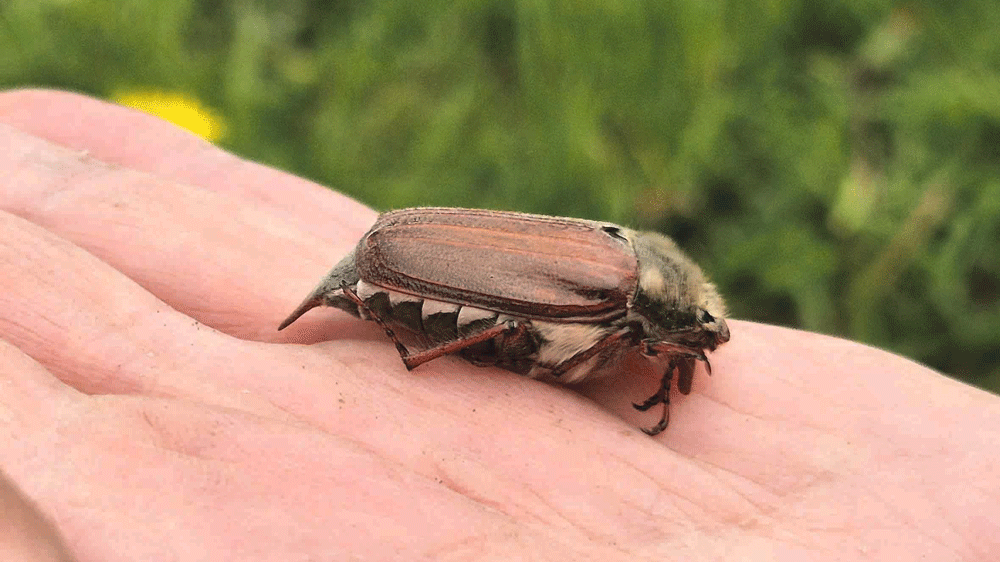
The pointed tip at the end of the May Beetle’s body is used to lay eggs
After mating in May, the female lays her eggs in soil. When these hatch, the larvae remain in the soil for over three years, feeding on plant roots.
Like many Scarab beetles which are burrowing beetles, the outer edges of the May Beetle’s front legs have scalloped edges that help them dig and move soil aside easily.
The May Beetle makes a distinctive whirring sound as it flies. It is a powerful flier and can travel up to 3m per second.
It is a clumsy flyer, however, and it takes a wandering, unpredictable route as it flies.
This is probably why it has also been called the Doodlebug.
The ‘doodle’ term was also given to the V1 bomb that caused great destruction in Britain towards the end of the second world war.
The doodlebug bomb was an unmanned flying missile, and like the May Beetle, it had a distinctive buzzing sound and an unpredictable flight pattern.
The May Beetle, however, is an inoffensive insect, accidently bumping into things as it harmlessly flies around looking for a mate.
TAGS Life

