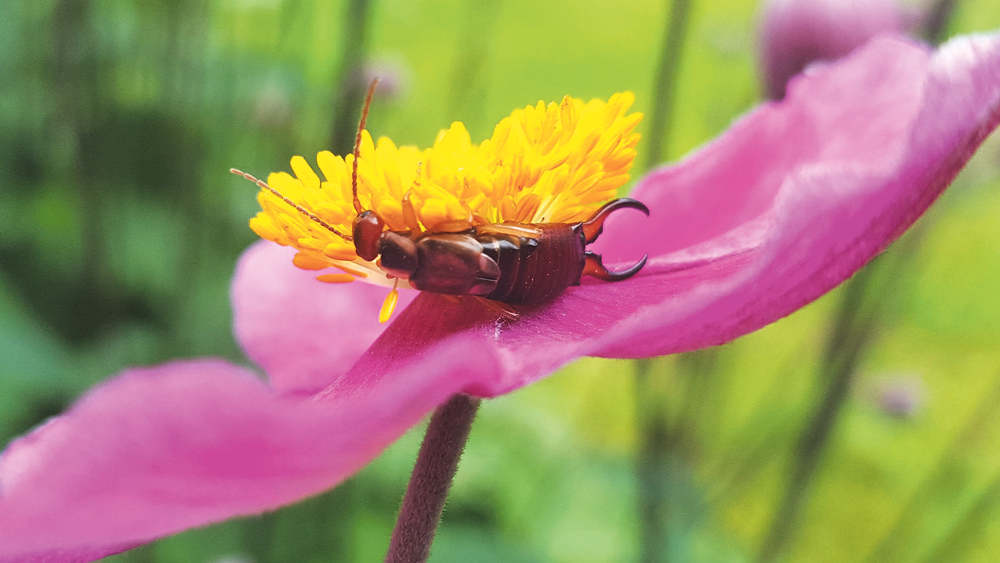
Male earwigs have curved pincers
Nature on our doorsteps: The unusual Earwig mother
Rosaleen Dwyer is the County Heritage Officer at South Dublin County Council – every week she gives us an insight into the natural heritage around us and the beautiful biodiversity of the plants and creatures.
FOR many people, the most well-known insect is perhaps the earwig.
There are three species of earwig in Ireland, but the Common Earwig is the most widespread and well known.
Earwigs are distinctive insects with narrow, flattened bodies that grow to about 1.5cm long.
The head is a chestnut brown colour, with two long, threadlike antennae.
The rest of its narrow body is brown, and its six legs are yellow-brown.
Earwigs have wings, but they rarely fly.
These wings are carefully folded away underneath a protective wing case on the insect’s back.
When opened out, the semi-circular wings are ear-like in shape. This perhaps originally gave rise to the ‘ear’ part of their name.
The term ‘wig’ is an old English name for insect.
The earwig’s most notable feature, however, is the forceps, or pincer, that occurs at the tip of the body.
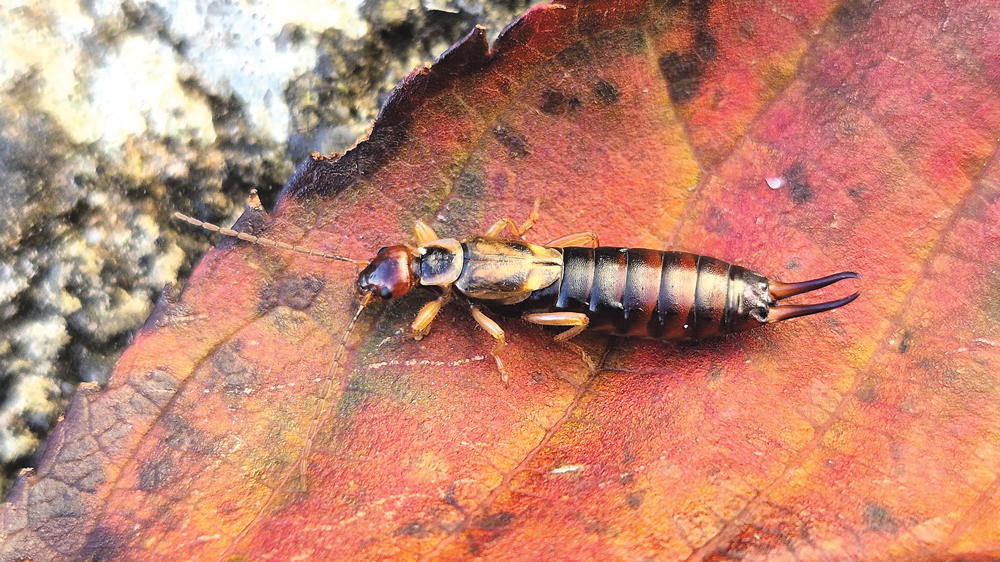
The pincers on a female earwig are straight
They use these forceps for defence purposes, for hunting prey, and to help fold away their wings under the wing cases.
Female earwigs have straight pincers, while the male’s are curved almost into a circle.
Earwigs prefer to live in narrow, cool, damp crevices where they can feel a surface both above them and beneath them.
This behaviour is called thigmotaxis, and it is why earwigs are usually found hiding under tree bark, underneath stones and plant pots, in hollow plant stems, or between the dense petals of a rose or a dahlia flower.
The female earwig is unusual amongst non-social insects in that she stays with her eggs, licking them clean every day to prevent mould growing on them.
After the eggs hatch, she also continues to mind the young, hiding them under her body until they can fend for themselves.
Contrary to popular myth, earwigs are very unlikely to crawl into our ears and cause deafness.
They are nocturnal creatures and will nibble on flowers, plants, and seedlings.
They will also eat slugs, aphids, and fly larvae, so they can also be a useful friend in the garden.