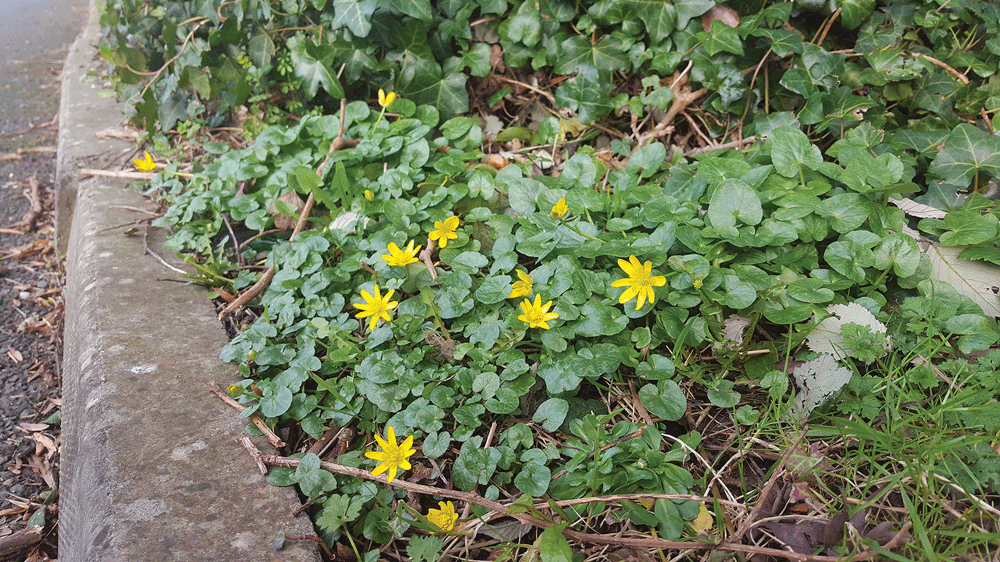
Lesser Celandine grows in clumps in shady woods and along hedgerow margins.
Nature on our doorsteps: Three-trick buttercups
Rosaleen Dwyer is the County Heritage Officer at South Dublin County Council – every week she gives us an insight into the natural heritage around us and the beautiful biodiversity of the plants and creatures.
Like all springtime plants that grow in woodlands and along damp hedgerows, Lesser Celandine blooms while the trees are still bare.
In mild winters this can begin as early as late January, but they are normally in full bloom between February and mid- April.
Once the leaves emerge on the trees and cast their shade onto the woodland floor, it will be too dull under the tree canopy for most plants to flower.
Lesser Celandine is the first of the buttercup family to flower in springtime.
Because of the shady locations where they grow, and because the unpredictable weather can prevent early-season insects flying out, Lesser Celandine has three little tricks it uses to ensure that they are visited by pollinators.
The first trick is its long, narrow, yellow petals. These have a high gloss finish on their surfaces that extends from the tip of the petal almost to the centre of the flower.
This glossy surface makes the flowers look star-like in bright March sunshine. In shadier conditions, however, this high gloss serves a very practical function.
As the flower dances in the breeze, the shiny petals reflect little flashes of light out into the shady spaces around them.
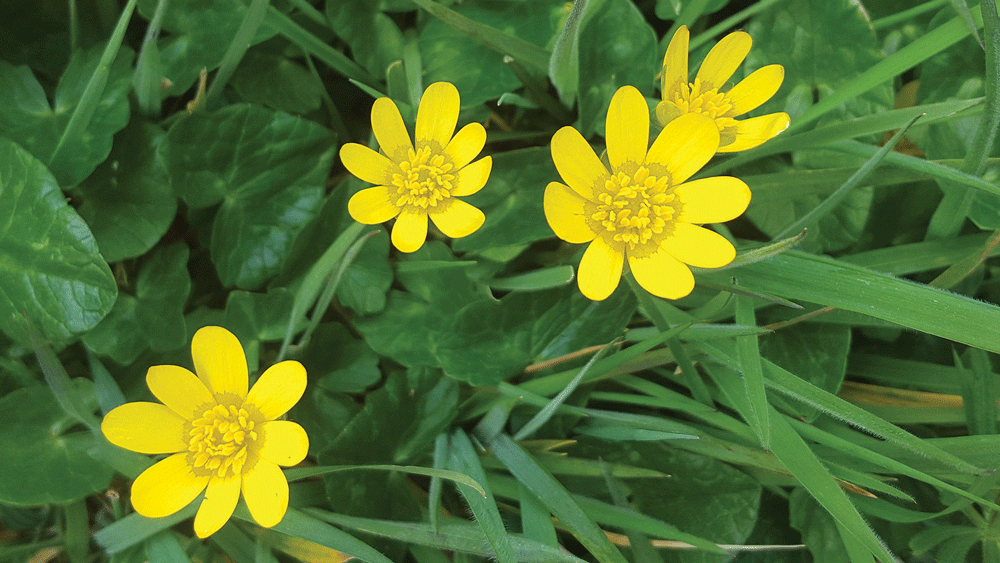
Lesser Celandine’s long narrow petals have a high gloss finish
Insects, looking for the limited springtime nectar and pollen, see these little flashes from a distance and they come to investigate.
As the insects approach the flower, the flower’s second little trick comes into play.
Ultraviolet colouration in the petals, which we can’t see but which insects can, directs the insect towards the centre of the flower where the nectar is stored.
Lesser Celandine also has a third trick.
When its flowers are only barely open, the petals’ shiny surfaces bounce light back down into the centre of the flower.
This light helps to warm the nectar and the delicate seed-producing areas of the flower, while also making it a cosy place for small insects to want to visit and feed.
Having a number of interesting ways to attract insects in shady places when insects are not very plentiful is therefore a vital adaptation for this springtime buttercup.