
The Small Space Fitness Trend: How Irish Homes Are Making Room for Strength Training
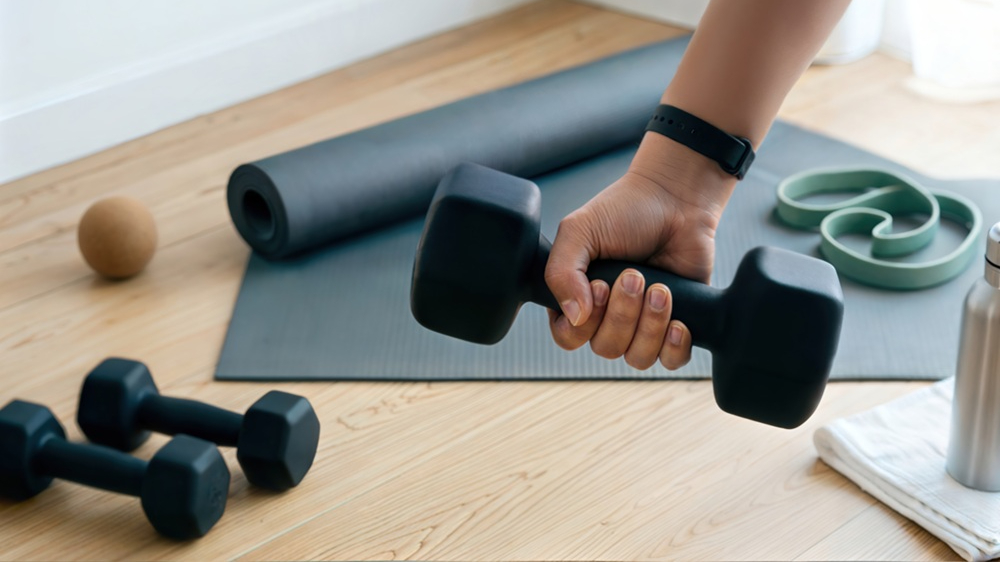
Picture the corner of a spare room in Tallaght, a box room in Clondalkin, or the end of a sitting room in Lucan. There may not be space for a treadmill. There may not even be space for a full weights bench. But there is often enough room for a mat, a compact stand, and a pair of dumbbells beside the wall.
That is how strength training is finding its way into Irish homes. Quietly. Not through large garage gyms or expensive renovation projects, but through practical workout spaces built around equipment people can store, move and use during a normal week.
The shift makes sense. Fitness advice has moved well past the old idea that staying active is mainly about running, cycling or getting steps in. The HSE’s guidance on getting active recommends at least two and a half hours of moderate activity across the week for adults. Strength work should feature too, ideally on two days or more.
The challenge is making strength work practical at home. Most people do not want to sacrifice half a room just to fit in a few squats, rows or presses. That has made compact strength equipment easier to justify, especially dumbbells, which can suit anything from a short morning session to a more structured routine. Fitness Equipment Ireland’s dumbbells range gives a good sense of how broad the category has become, without requiring the floor space associated with larger gym equipment.
There is nothing especially flashy about this type of equipment. That is part of its appeal.
Why Dumbbells Suit the Irish Home
Space is the obvious reason. Few homes have a whole room waiting to become a gym. More often, the available space is a corner of the sitting room, part of a landing, a shed, or whatever room is left beside a desk.
Dumbbells make sense in those settings because they do not dominate the room. A pair can usually be stored without much fuss. Under a bench, beside a mat or on a small rack is often enough. Then, once training is finished, the room does not have to keep looking like a workout space.
They are also flexible. One pair can be used for upper body exercises, lower body work and core training. As someone gets stronger, the exercises do not necessarily need to change. Often, the weight simply goes up. That gives beginners time to learn a handful of movements properly before moving on to a broader routine.
The right style depends quite a bit on the room and on how the weights will actually be used. Some of the main options include:
- Adjustable dumbbells: a good fit for tighter rooms because several weight options are built into one set.
- Hex dumbbells: their flat sided shape keeps them more settled on the floor, which is useful during exercises where the weights are being picked up and put down often.
- Neoprene dumbbells: generally better suited to lighter exercises, warm ups and faster paced routines.
- Dumbbell bundles: worth considering if different weights will be used regularly. They can work well for shared home setups or for someone who wants more choice as their training develops.
What works best will depend on how often the weights are used, how much room is available and where they will be stored afterwards.
The Workout Corner Has Replaced the Home Gym for Many People
The phrase “home gym” can sound bigger than the reality. In many Irish homes, it is closer to a workout corner.
That might mean a mat beside a wardrobe, a pair of weights under the desk and a resistance band on the back of a door. It is simple, but it removes some of the practical barriers that can make a workout easier to postpone.
This is where compact strength equipment has an advantage over larger machines. A few sets before work can still count. The same goes for a quick session at lunch. Even twenty minutes later in the evening can be enough for a worthwhile session.
You can cover quite a lot with very little floor space. Goblet squats, rows, lunges and floor presses all work well, while farmer carries only need a short clear stretch of room.
Strength Training Is Becoming More Normal
Weights once had a fairly narrow image. They were associated with bodybuilding, serious sport and people who already felt comfortable in the weights area of a gym.
That picture has changed. Strength work now sits comfortably within general advice about staying active, and its benefits can be felt in ordinary parts of daily life. Everyday tasks, from carrying shopping to climbing stairs, can start to feel easier.
Progress can be easy to notice as well. A weight that once took real effort may, after a few months of regular training, start to feel far more comfortable.
The wider activity picture in Ireland also helps explain the interest. The Healthy Ireland Survey 2024 reported that 41 percent of respondents were meeting the national physical activity guidelines. Among those who were not, 67 percent said they wanted to increase how active they were.
Sport Ireland’s Irish Sports Monitor 2024 points in a similar direction, with personal exercise remaining the country’s most popular sporting activity and attracting more than twice the participation seen in swimming or running.
This is where home training earns its place. A session can happen when there is a spare half hour, rather than depending on a class timetable, travel time or the weather outside.
What People Often Get Wrong When Buying Dumbbells
A common mistake is buying for an imagined future routine, rather than the routine someone is likely to follow now.
Weights that are too heavy can sit unused. Go too light and they may stop being useful sooner than expected. For a beginner, having two weight options can be more useful than relying on one pair.
A lighter pair may be enough for curls, raises and some presses, while heavier weights are often more useful for rows, squats and loaded carries. More experienced users may find adjustable dumbbells more practical, especially if they want several weight choices without storing multiple pairs.
Storage is worth considering too. A small rack, corner shelf or dedicated spot keeps dumbbells off the floor and makes the setup easier to manage.
Grip matters as well. Neoprene can feel more comfortable for lighter training. Rubber coated hex dumbbells tend to suit heavier floor-based work. With adjustable sets, it is worth checking how easily the weight changes and whether the handle feels comfortable. Those small details matter when the equipment is being used several times a week.
The best choice is rarely just the heaviest option available. It is the weight that gets used regularly and suits the way the person trains.
A Small Setup Can Grow Over Time
A sensible strength setup does not need to be bought all at once.
There is no reason to fill the room on day one. A mat and a couple of dumbbells may be plenty to begin with. Once the routine becomes established, it is easy enough to add another weight later if the current pair starts to feel too light.
Adding equipment gradually can also keep costs manageable and give each new purchase a clear purpose.
Any piece of fitness equipment has to justify the space it takes up at home. Dumbbells have remained popular because they are compact, straightforward to store and useful for far more than arm exercises.
The Takeaway
The small space fitness trend is less about creating the perfect home gym and more about being realistic. Most homes have limits. So do most schedules.
For a busy household, a pair of dumbbells beside the wall can make the difference between putting a workout off and getting a short strength session done before dinner, between calls or later in the evening.
That is why dumbbells still make sense in compact home setups. They are familiar, practical and useful for shorter sessions as well as more structured strength work. Above all, they fit into real homes, which is often what decides whether a fitness habit lasts.
TAGS Life

