
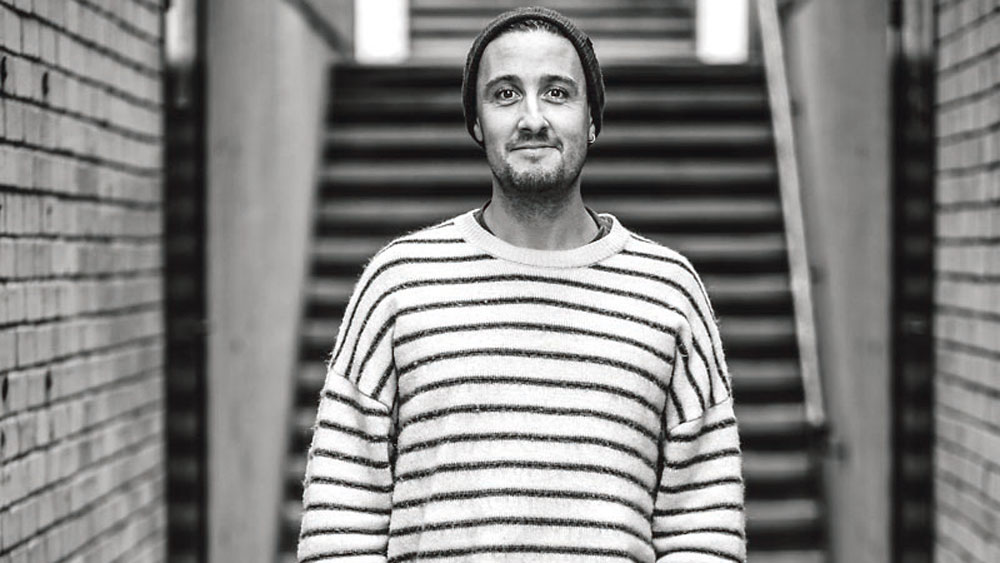
Director and co-writer Adam McGuigan
Acrobatics and ambition collide in Afronauts at the Civic Theatre
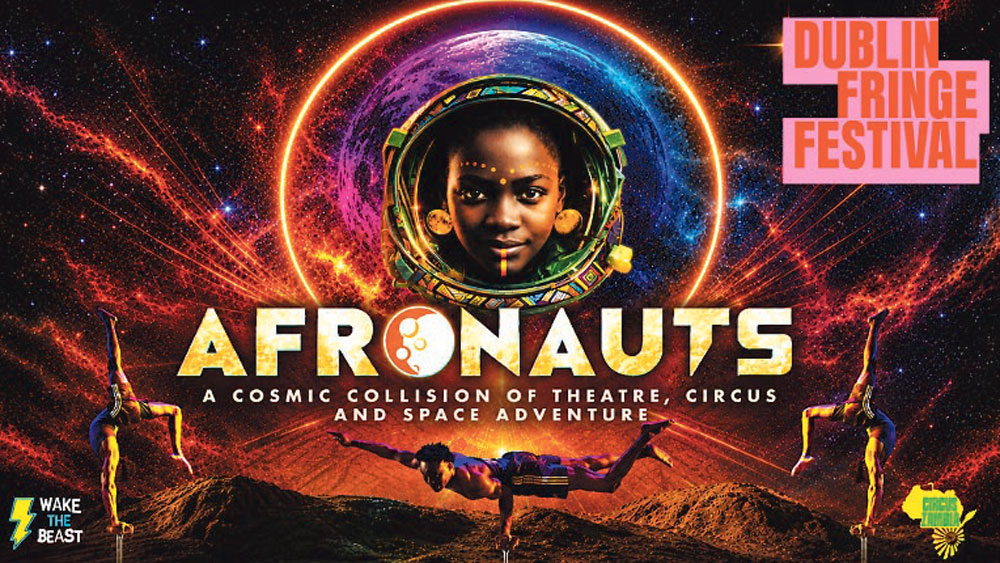
AN ALL-ages, high-flying collision of circus, theatre, and space adventure is in store for theatregoers as Wake the Beast and Circus Zambia launch them into a story of dreamers, daredevils, and impossible possibilities.
This “astonishing” all-ages show bursts to life with “breathtaking” acrobatics, theatrical spectacle, and “irresistible heart” as it recounts the little-known story of Zambia entering the Space Race in the 1960s.
It is a true story of hope, courage, and the kind of audacity that might just take theatregoers “all the way to the moon… or at least make you believe you could”.
‘Afronauts’ is presented by Wake the Beast and Circus Zambia in association with the Civic Theatre as part of Dublin Fringe Festival.
This week, The Echo sat down with director and co-writer Adam McGuigan to discuss ‘Afronauts’, which performs in the Civic Theatre from September 10 to 12.
For booking information, check civictheatre.
What can you tell us about ‘Afronauts’ without giving too much away?
‘Afronauts’ is a collision of circus, music, dance, theatre and spectacle.
It charts the pretty unknown story of the time Zambia entered the Space Race in the 1960s.
It’s based on true events, but we present the story through a contemporary lens.
We look back at what inspired this extraordinary moment, what its impact was, and what its legacy has been.
But apart from all of that, it’s also really fun.
It’s dynamic, heartwarming and, we hope, a story that everybody can relate to.
At its heart, it’s about what you do when you have a dream and the whole world laughs at you.
What inspired you to write this story?
Gift Chansa and I have been working together for many years through Barefeet Theatre, Circus Zambia and Wake The Beast.
We toured a show called ‘Empire to Dublin’ in 2019, and when we were thinking about what we wanted to do next, Gift came to me with the story of the ‘Afronauts’, which he’d been thinking about adapting for many years.
The ‘Afronaut’ story is really built into the folklore of Zambia.
We’ve both worked with organisations supporting young people and could see how much this story inspired them; it seemed like a no-brainer to take ourselves into the world of the Afronauts and revisit this extraordinary period in history.
We wanted to create something our young people would be excited to see onstage but also something that might motivate and inspire them.
What has been involved in this production? How did you approach the writing, directing, etc.?
It’s been a huge endeavour. We originally wanted to tour the production in 2020, and then COVID hit, which put us on the back foot for a couple of years.
The logistics of bringing a company of young Zambian artists to Ireland, the UK and Europe are gargantuan.
Not everybody initially had passports or national registration cards, so even getting everyone to the point where they could apply for visas was a huge process.
Creatively, Gift and I wanted to have a first draft before taking it to the performers, so we spent time together developing that initial version.
We then brought it into the rehearsal room, where the company workshopped it with us.
A huge part of that process was exploring how circus itself could become a language for telling the story — rather than simply having circus acts within a play, how could the physicality, danger, trust and spectacle of circus actually help us tell it?
What has been your favourite part of working on ‘Afronauts’ so far, and why?
It’s just such a brilliant story. It’s full of fun, joy and ambition, but there’s another side to it too.
In some respects, the idea of Zambia actually reaching the moon in the 1960s was ludicrously ambitious.
But that’s exactly what we’ve found so fascinating: the dynamism of having that dream, that aspiration and that extraordinary self-belief.
Putting your head above the parapet and daring to imagine something gorgeous, audacious and completely unexpected.
And there’s been this strange parallel between the Afronauts’ journey and our own journey trying to get this production to Edinburgh, Dublin and festivals across Europe. The hoops we’ve had to jump through have sometimes been incredible.
It’s taken us six years to get here, so we’ve really felt the spirit of the Afronauts with us throughout the process.
I think that’s probably been my favourite part, seeing these unexpected parallels between the story we’re telling and the journey we’ve been on ourselves.
What have been some of the biggest challenges you’ve encountered?
Again, it feels like there’s a real parallel with the story itself, because we’ve faced some pretty enormous challenges.
The first was a global pandemic, which stopped our original tour and put the project on the back foot for several years.
Finance has also been a huge challenge. We’ve had incredible support from the Irish Embassy in Lusaka, without whom none of this would have been possible.
We also tragically lost one of the key members of our company during the process. That was a huge blow to everybody and took us some time to recover from.
Then there are simply the logistics of getting a company from Zambia ready to tour internationally: visas, flights, accommodation, freight, rehearsals, and everything that comes with it.
But ultimately, we really believe in the story and we really believe in the piece.
What’s next for you after ‘Afronauts’? I understand you still have a busy Dublin Fringe Festival ahead.
We’ve still got a lot ahead of us with ‘Afronauts’, including Dublin Fringe, and we’re already thinking about what the next life of the production might be.
I’m also working on another piece exploring the role South Africa played in the Northern Ireland peace process.
I’ll be heading back to South Africa to continue developing that, including a rehearsed reading at the Market Theatre in Johannesburg.
So there’s plenty coming up, but I don’t think we’re finished with the ‘Afronauts’ by any stretch.
Who would you like to thank for helping make ‘Afronauts’ possible?
There are so many people. First, the Irish Embassy in Lusaka.
This simply would not have been possible without their support and guidance. Bronagh Carr, the previous Irish ambassador to Zambia, has been integral to the project from day one.
We’ve also had an incredible amount of support from the community in Zambia.
We had a couple from Edinburgh, Kate and Mick, who generously donated their house to us for a month (without that support we would not have been able to make it happen).
The teams at Wake The Beast and Circus Zambia deserve enormous thanks, as do our producers and all the people working behind the scenes who have done an extraordinary amount to make this happen.
And the team at the Civic Theatre in Dublin has been incredible.
But more than anything, I’d like to thank our performers.
After everything it has taken to get here, they deserve an enormous amount of respect, and I’m just delighted that audiences are finally getting the chance to see what they can do.
TAGS Life

