Councillors welcomed the variations put forward for the Clondalkin LPF
Concerns remain about permeability and traffic in planning framework
Councillors praised variations that will be made to the Clondalkin Local Planning Framework, but concerns remain about permeability and traffic.
Elected members in South Dublin welcomed the variations put forward for the Clondalkin LPF, but listed concerns once more about the permeability and traffic objectives in the document as it moves closer to becoming reality.
Many submissions from the general public in previous consultations on the LPF objected to traffic calming measures and permeability routes proposed in the variation, citing a lack of privacy, increased anti-social behaviour and existing traffic issues.
Several councillors raised concerns about traffic changes proposed in Clondalkin and the level of infrastructure currently available to commuters.
Councillor William Carey does not see an immediate end in sight for the traffic discourse in the local area.
Cllr Carey said: “I do see that we will be having to return to the issue of traffic congestion in and around the Clondalkin area as we move forward.
“I don’t think this plan deals effectively with that issue. We did face challenges as the plan was being put together.
“Traffic congestion is something that we will seriously have to sit down as a council to address as we move forward in the future.”
South Dublin County Council noted that they are “trying to listen” as much as possible to the concerns of the county’s public on the issue of traffic.
The topic of permeability is also something that they must factor into traffic alterations and the council stated that they will continue to work with the National Transport Authority on these issues.
A submission to the variation stated that the NTA had asked to remove a line under Priority, Secondary and Strategic Permeability Routes that said the council would seek full agreement with those who are “directly impacted” by planned changes.
The submission stated: “It is not always possible to reach agreement with all those directly impacted by such schemes.”
In contrast, Councillor Linda De Courcy welcomed this alteration that promises engagement with directly affected members of the public on the topic of permeability.
Deputy Mayor of South Dublin County Council, Councillor Trevor Gilligan warned that traffic in Clondalkin “is at a standstill” at the moment and, with future works in the village planned, may only get worse.
The Deputy Mayor noted that the council has an obligation to the community to work to make their lives easier and noted that “the number one issue” is traffic, including delayed buses.
Cllr Gilligan said: “The huge worry is that this plan will have drastic and huge implications for traffic going forward for the next five or 10 years.”
However, other facets of the document were welcomed by the local representatives, including the benefit it could provide businesses and heritage.
Councillor Francis Timmons stated that challenges lay ahead but that the current version of the document provides a pathway to address them.
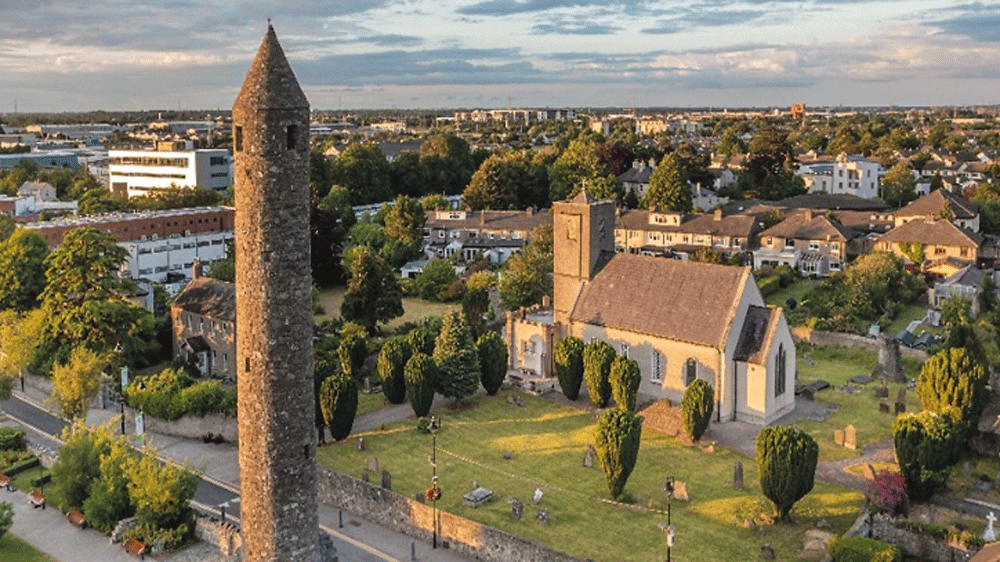
Cllr Timmons said: “This plan marks a good day for our village. The document affords greater protection to our heritage village, including the walls and heritage buildings and also includes policies and specific local objectives on future development opportunities should they arise.
“It will help revitalise our village and help with the ongoing issues of shop signs – fronts, it will help aid enterprise…
“…There are challenges ahead, but this document sets a pathway to address these.”
Funded by the Local Democracy Reporting Scheme.