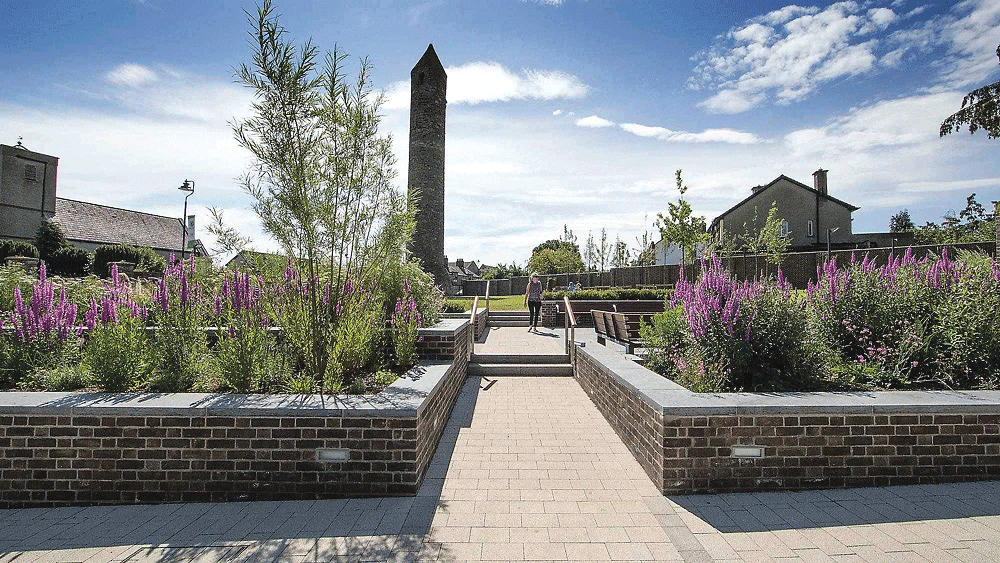
The local authority is now finalising an Implementation Plan to establish a zone in Clondalkin
Decarbonising zone plan testing a range of adaptation actions
The council’s Climate Action Team is now finalising an Implementation Plan to establish Clondalkin as it’s decarbonising zone to cut countywide emissions in half.
A plan is being put together after surveys and consultation workshops were carried out in 2025 to inform the plan to lower emissions in the village by 51 per cent by 2030, compared to 2018 levels.
Decarbonising is the process of removing carbon dioxide that is produced by people when they use energy and can be achieved through the removal of fossil fuels from electricity, heat, and transport in an area, such as Clondalkin.
The council’s Climate Action Team created the plan alongside Dublin energy agency Codema.
Every Local Authority was required to establish a decarbonising zone within its administrative area under the National Climate Action Plan 2023.
A zone is expected to create a platform for local authorities and communities to work together to reduce carbon emissions “by testing a range of innovative mitigation and adaptation actions, while maximising the potential benefits for the area,” according to South Dublin County Council’s Senior Engineer for Climate Change Juliene Helbert.
The success of the pilot in Clondalkin will help to inform future decarbonisation processes across South Dublin, and potentially the rest of Ireland.
SDCC noted that several active initiatives will complement the Implementation Plan that has been drawn up, including housing programmes.
One of the aims of the council’s social housing retrofit programme is to reduce the carbon footprint of a home and the delivery of the EnergyCloud initiative in Clondalkin will add to this.
EnergyCloud focuses on surplus renewable energy and ensures it is reused to help homes that are experiencing energy poverty. The upgrading of public lighting to LED lights across the region is 79 per cent complete and will continue.
Bawnogue’s district enhancement scheme is listed as an initiative that is set to help decarbonise Clondalkin – the new traffic calming measures are expected to lead to less emissions and encourage active travel.
The county’s bike sharing scheme as well as the soon to be established bike libraries initiative will reduce carbon created through personal transport.
The bike libraries will allow people to rent out bikes for a set period and the NTA-led project is mainly aimed at children and their journeys to and from school.
Free sustainability training was offered to local businesses in partnership with TCD and MTU and was delivered last year as the Climate Innovation Programme.
The local authority’s Climate Action Team is expected to bring their Implementation Plan to the Environment, Public Realm and Climate Change Strategic Policy Committee in Spring 2026.
Funded by the Local Democracy Reporting Scheme.