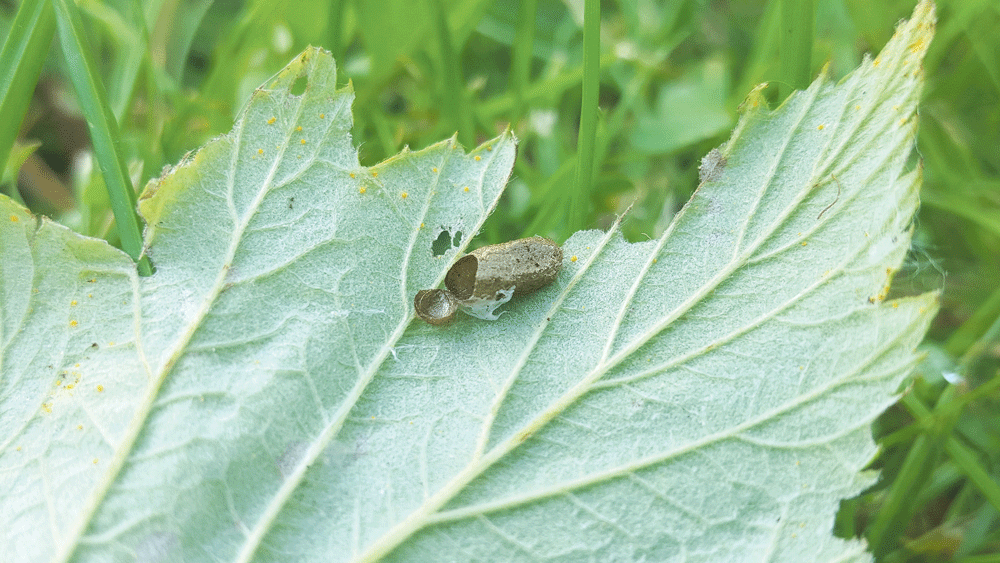
A fully developed adult moth emerged from this cocoon by cutting a neat hole at one end
Nature on our doorsteps: Is it a cocoon or a chrysalis …
Rosaleen Dwyer is the County Heritage Officer at South Dublin County Council – every week she gives us an insight into the natural heritage around us and the beautiful biodiversity of the plants and creatures.
THE caterpillars of butterflies and moths live similar lives.
They hatch from very small eggs and immediately focus on eating and growing, shedding their skins at different stages as they expand.
When the caterpillars are fully mature, however, moths and butterflies take slightly different approaches to pupation.
Pupation is the fascinating process by which they transform from pudgy caterpillars into flying butterflies or moths.
When this stage arrives, a butterfly caterpillar uses short silky threads to attach itself to the underside of a leaf or a twig.
It then sheds its outer skin for the last time, revealing the new, specialised skin underneath which hardens into a protective structure called a pupa.
The magical transformation into the new adult butterfly occurs in this pupa.
A butterfly’s pupa is also known as the chrysalis.
A mature moth caterpillar, however, generally spins a new outer casing known as a cocoon around its body.
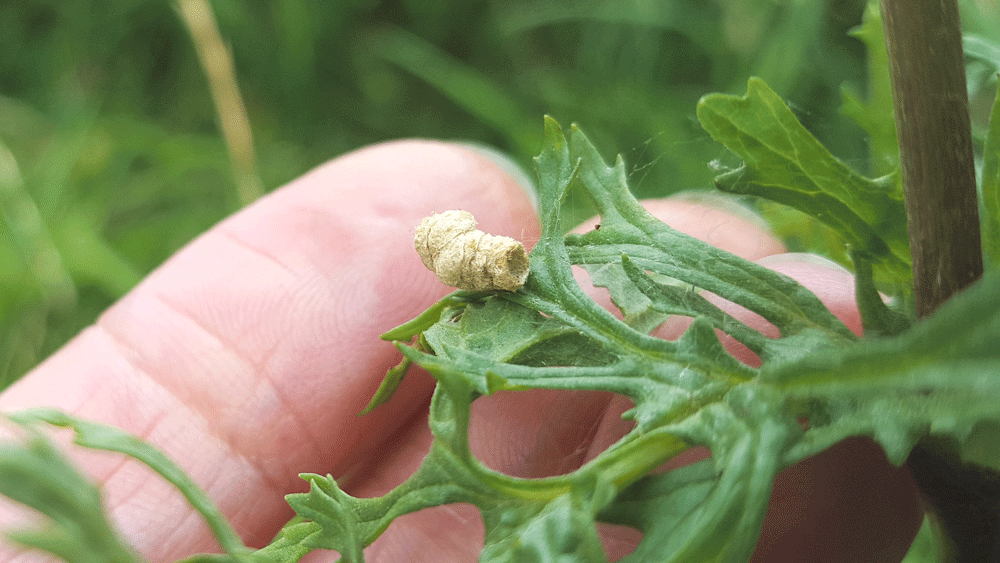
Moth caterpillars, and some insect larvae, overwinter in differnt types of protective cocoons
It does this using long, strong, silky fibres that it secretes from glands at the side of its mouth.
Once this cocoon is constructed, the moth caterpillar then has a safe place in which to shed its outer skin and transform into the hard-skinned pupa.
The cocoon helps keep the pupa hidden away from potential predators while protecting it from bad weather as it transforms into an adult moth.
Not all moth species, however, spin a protective cocoon.
Some, like the caterpillar of the Angle Shades moth, merely burrow under leaves or into the top layer of soil.
Here it produces mucous which it uses to stick grains of soil around itself.
Once it is enclosed in a little chamber, it sheds its soft outer skin.
The new skin underneath forms a hard, red-brown pupa where it will transform into an adult moth.
The transformation process takes between two or three weeks to complete, or longer if the insect overwinters in this pupa form.
The new adult insect emerges through a cut in the wall of the cocoon or chrysalis, pausing to fully expand and dry its wings before it flies away.