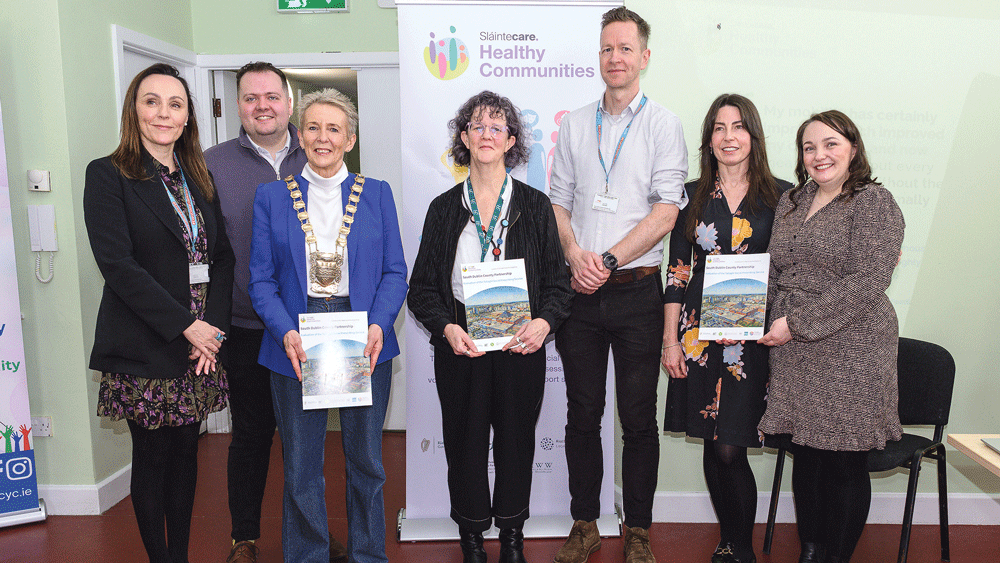
At the launch of the report with Mayor Pamela Kearns
Approach to address health inequalities and wellbeing
AN EVALUATION report into a programme set up in 2022 to address health inequalities was delivered this week by the South Dublin County Partnership.
At Fettercairn Community Centre, Tallaght, the Partnership launched its Social Prescribing Service Evaluation Report 2023-2024.
A wide range of community stakeholders and service providers, healthcare professionals, HSE staff, community members, and Partnership staff attended on the day, with Mayor Pamela Kearns officially launching the report.
SDCP’s Social Prescribing Service was established in Tallaght under the Sláintecare Healthy Communities initiative in 2022.
Social Prescribing is a healthcare approach used to address health inequalities, improve overall health and wellbeing, and to reduce social isolation by connecting individuals with non-medical activities or services, such as community programmes, social groups and recreational activities via the 1-1 support of a Social Prescriber.
The event marked the launch of the Tallaght social prescribing evaluation report, which looks at a year of the service provision between 2023-2024.
The report focuses on participant experiences and outcomes from engaging with social prescribing, measured through wellbeing scores and interviews conducted after programme completion. Findings suggest that participants experience a range of benefits, including improved mental and physical health, enhanced social connections, and greater overall wellbeing.
Darlene Dunne, Social Prescribing Link Worker with SDCP in Tallaght provided an introduction to the report findings and highlighted the positive benefits that engaging with social prescribing can have on health and wellbeing.
Social Prescribing is a one-to-one service that empowers people to address the social factors that weigh on their health—things like loneliness, isolation, and a lack of connection.
By bridging the gap between a person and their community—whether through an activity group or a mental health programme – practitioners say it offer a practical, community-based pathway to a better quality of life.
The research was commissioned by SDCP, and conducted by external evaluators S3 Solutions.