
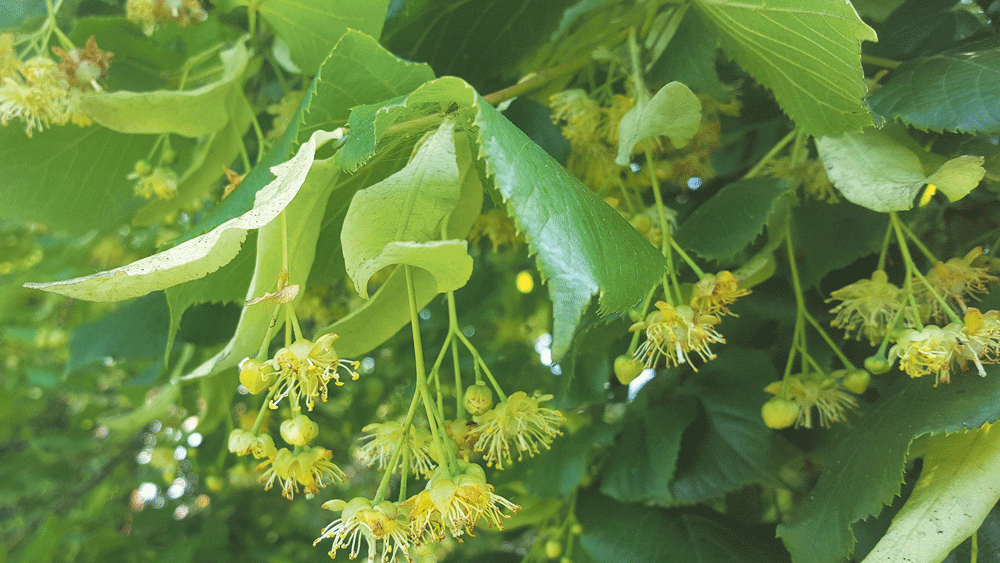
Fragrant bunches of Lime flowers are used to make Linden Tea
Nature on our doorsteps: Summertime trees in flower
Rosaleen Dwyer is the County Heritage Officer at South Dublin County Council – every week she gives us an insight into the natural heritage around us and the beautiful biodiversity of the plants and creatures.
Most of our street trees tend to flower early in the year, but one species is in flower around now, between mid-June and early July.
This is the Lime tree, which is known as the Linden tree across Europe.
Lime trees can grow to between 20-40m.
It is an elegant, impressive feature in park settings and along roadsides, whenever there is enough space for it to grow comfortably.
The Latin name for this tree is Tilia, which originates from the Greek word ‘ptilon’, meaning ‘wing’.
This describes the long, softly yellow, leaf-like structures (bracts) that hang beneath the cluster of flowers. These bracts help the tree’s seeds to spread in the wind later in autumn.
What makes the Lime tree particularly noticeable around now is the lovely scent of its nectar-rich flowers.
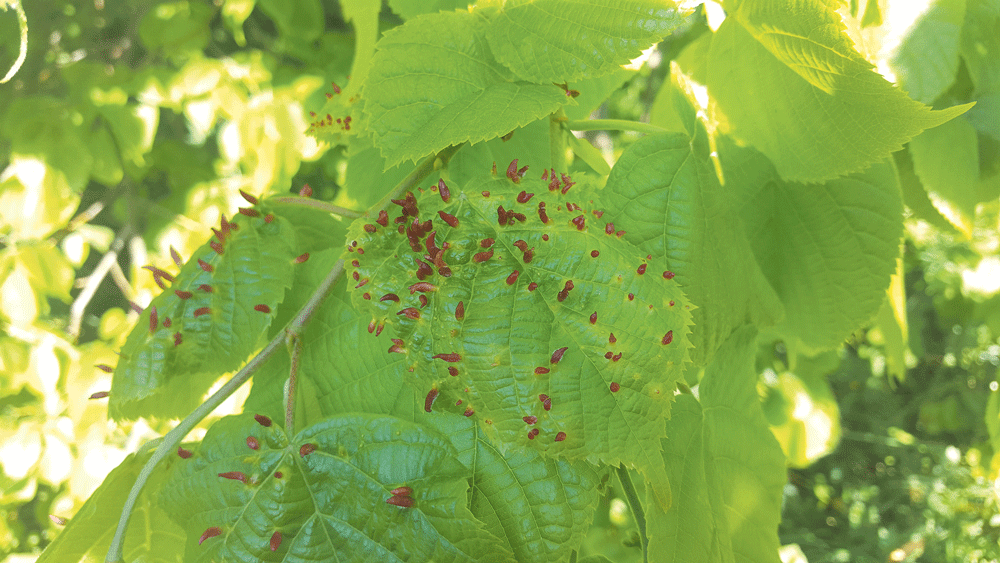
Lime’s soft green leaves often display red swellings, or galls
These bunches of dangling flowers attract many pollinators, especially honeybees and bumblebees.
For this reason, the tree was once extensively planted by beekeepers across Europe in past centuries.
The flowers are also said to be edible, and because of their high nectar content they make a delicate, sweetly fragrant tea known as Linden Tea.
This tea has long been used in herbal medicine, where it was used to treat fevers, colds and flu.
It was also used externally on the skin to treat boils, sores, and inflammation.
The soft green leaves of the Lime Tree are heart-shaped, with finely serrated edges.
These leaves are rich in sugary sap which attract insects like ants to feed.
It also attracts a small mite that causes the formation of small, pointed, red structures on the tree’s leaves that are sometimes referred to as ‘nail galls’.
These galls, or swellings, are caused when the mite feeds on the sap in the leaves.
The mite injects a chemical into the leaf which causes the leaf to react and form little swellings. The tissue in the swellings continue to produce sap, which makes it easier for the mite to feed.
TAGS Life

